
A simple, versatile egg pasta dough that rolls smoothly and cooks up tender with a gentle bite. Keeping the dough slightly firm at first, then letting it rest, is what makes it easy to roll thin without snapping back.
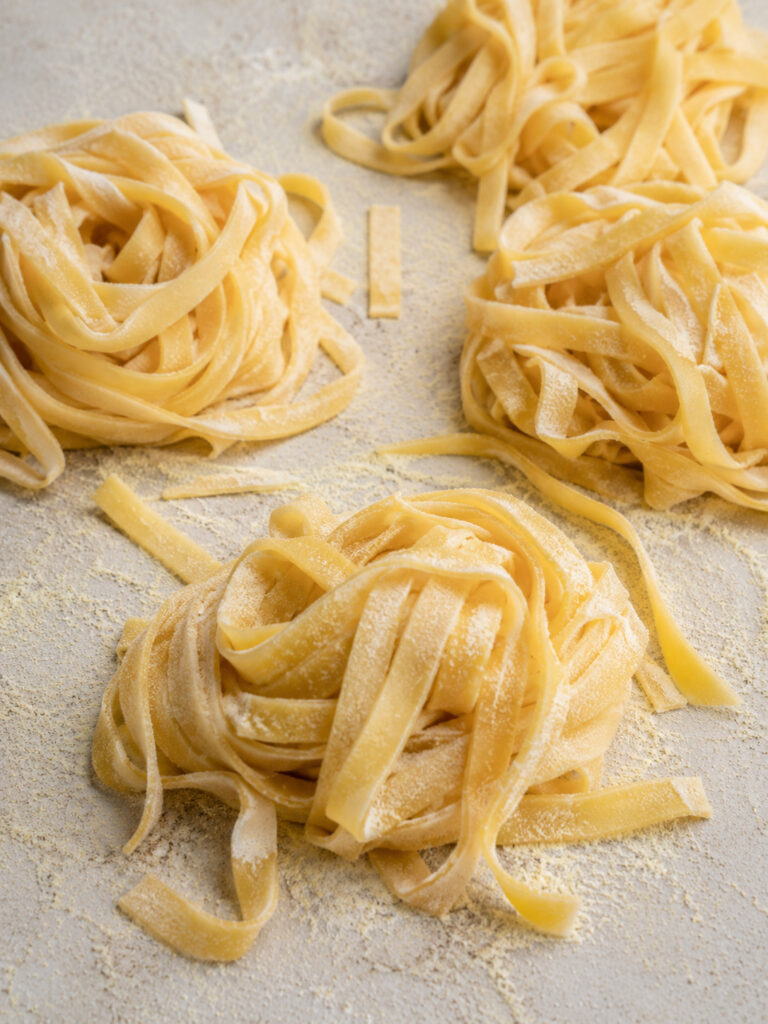
Fresh egg pasta dough is one of those base recipes that quietly upgrades everything it touches. When it’s mixed and kneaded properly, it feels smooth and elastic, rolls into thin sheets without tearing, and cooks quickly into noodles that taste eggy, wheaty, and rich in a clean way.
This dough is meant to be neutral and flexible: cut it into fettuccine, tagliatelle, pappardelle, or lasagna sheets, or roll it thin for filled pastas like ravioli. The eggs provide structure and tenderness, while the flour choice determines the bite, from soft and silky (00 flour) to a slightly sturdier chew (all-purpose).
The little rest after kneading is where the magic happens, giving the flour time to hydrate and the gluten time to relax, so rolling feels easier and the dough stops shrinking back. Cooked fresh, it turns satiny and springy in just a couple of minutes, making it perfect for quick sauces that cling and shine.
What to Serve With: Keep it simple and let the pasta shine: brown butter and sage, lemony olive oil with parmesan, or a quick tomato sauce. For richer meals, pair with slow-simmered ragù or creamy mushroom sauce, and add a bright salad to balance.
Table of contents
Egg Pasta Dough Ingredients
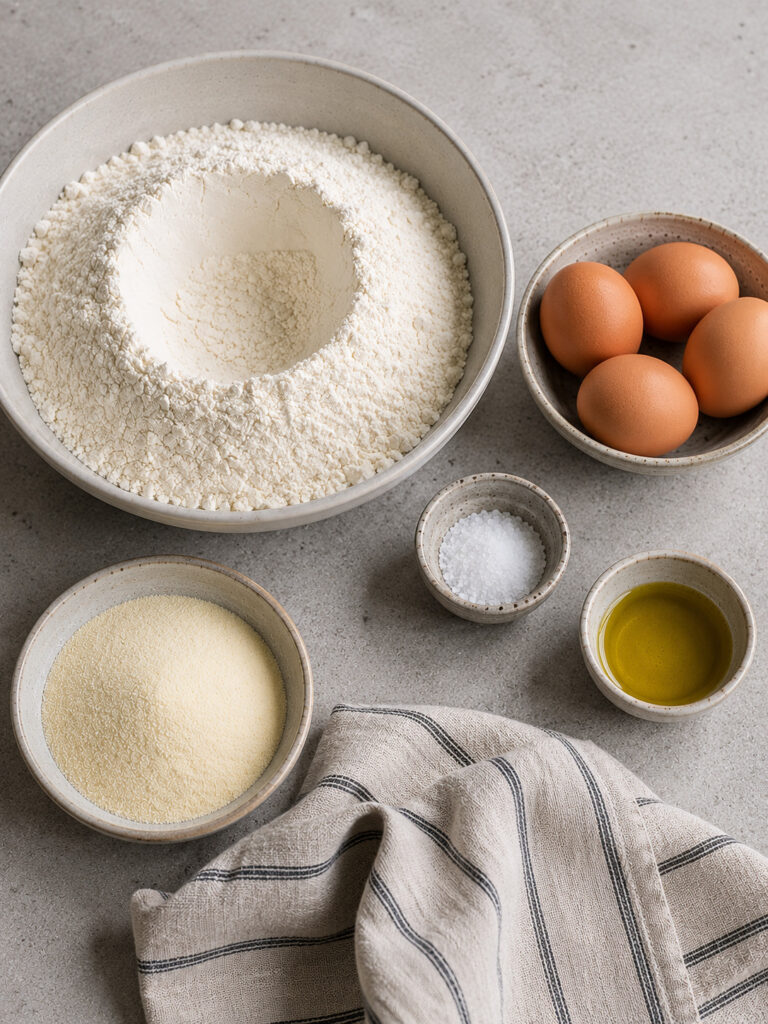
Flour – “00” flour makes a silkier, more delicate noodle; all-purpose works beautifully and is a little more forgiving. If your kitchen is humid, you may need a touch more flour; if it’s very dry, you may need a few drops of water.
Eggs – Large eggs vary in size, which is why dough sometimes feels dry one day and sticky the next. If it won’t come together, add water by teaspoons; if it feels tacky after kneading, dust with a little more flour and keep kneading.
Salt – Most of the seasoning belongs in the pasta water, not the dough. Adding a small amount of salt to the dough is fine, but keep it modest so the dough stays flexible for any sauce.
Dusting flour – Semolina is great for dusting because it’s a little gritty and helps prevent sticking; all-purpose flour works too, just use a light hand so you don’t flour the pasta into toughness.
Egg Pasta Dough Variations
- Semolina blend dough (slightly chewier bite)
- Change: Replace 1/2 cup / 60 g of the flour with 1/2 cup / 80 g fine semolina flour. If the dough feels dry during kneading, add up to 2 tsp / 10 ml water, 1 tsp / 5 ml at a time.
- Result: A sturdier noodle with a pleasantly chewy bite that holds up especially well to hearty sauces.
- Yolk rich dough (silkier, more golden)
- Change: Use 3 / 3 whole eggs plus 2 / 2 egg yolks, and reduce flour to 2 3/4 cups / 345 g. Keep kneading and resting the same.
- Result: A richer, more tender pasta with deeper yellow color and a softer, silkier finish.
- Overnight rest dough (easier rolling, deeper flavor)
- Change: After kneading, wrap tightly and refrigerate 12–24 hours. Before rolling, let the dough sit at room temperature 30–60 minutes.
- Result: A dough that rolls thinner with less spring-back, with slightly deeper wheaty flavor.
Storage
Fridge: Wrapped dough 24 hours; cut pasta up to 24 hours, lightly dusted and covered (it may darken slightly).
Freezer: Freeze cut pasta on a tray until firm, then bag for 1 month.
Reheat: Not applicable. Cook from fresh or frozen (add 30–60 seconds if frozen).
Allergens & Substitutions
Contains: eggs; wheat (gluten).
Substitutions: Egg-free pasta and gluten-free pasta both need dedicated formulas (hydration and structure change significantly), so they aren’t 1:1 swaps here, unfortunately.
Fresh Egg Pasta Dough
- Total Time: 1 hour 38 minutes
- Yield: 4 servings
- Diet: Dairy-Free, Pescatarian, Vegetarian
Description
A simple, versatile egg pasta dough that rolls smoothly and cooks up tender with a gentle bite. Keeping the dough slightly firm at first, then letting it rest, is what makes it easy to roll thin without snapping back.
Ingredients
- 3 cups / 375 g – “00” flour or all-purpose flour (spooned and leveled)
- 4 large eggs (room temperature if possible)
- 1/2 tsp / 3 g – fine sea salt (optional)
- 1 tsp / 5 ml – olive oil (optional)
- 1 tbsp / 15 ml – water (as needed, for adjustments)
- 1/4 cup / 40 g – semolina flour or all-purpose flour (for dusting)
- 1 tbsp / 18 g – kosher salt (for pasta water)
Instructions
Mix and knead
- Mound the flour on your work surface and make a wide well in the center (or use a bowl). Add the eggs, salt (if using), and olive oil (if using) into the well.
- Use a fork to beat the eggs, gradually pulling in flour from the edges until you have a thick, shaggy dough.
- Use a bench scraper to gather crumbs and press them into the dough. If it’s too dry to come together, add water 1 tsp / 5 ml at a time (you may not need it).
- Knead 8–10 minutes until smooth and elastic. The dough should feel firm and barely tacky, not sticky; if it’s sticking, dust lightly with flour and keep kneading.
Rest and roll
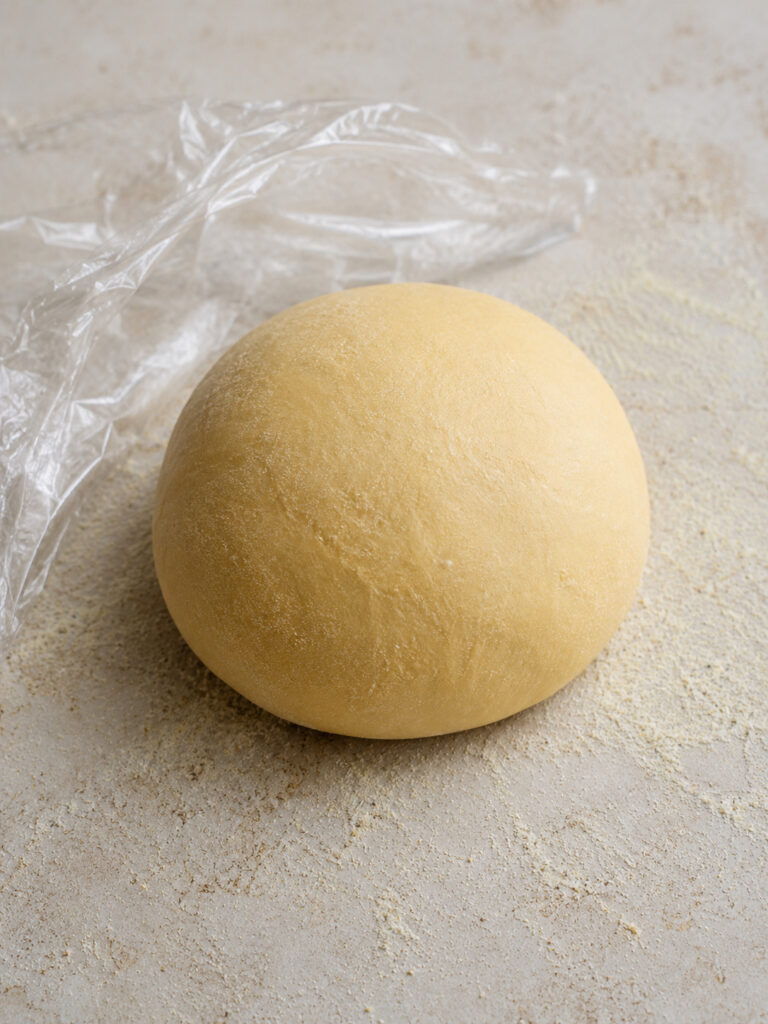
- Form the dough into a ball, wrap tightly, and rest at room temperature for 30 minutes.
- Unwrap and cut into 4 pieces. Keep the pieces you’re not using covered so they don’t dry out.
- Flatten one piece into a thick oval. Roll with a rolling pin (or pass through the widest pasta-machine setting). Fold into thirds like a letter, then roll/pass again 2–3 times until the sheet looks smooth and even.
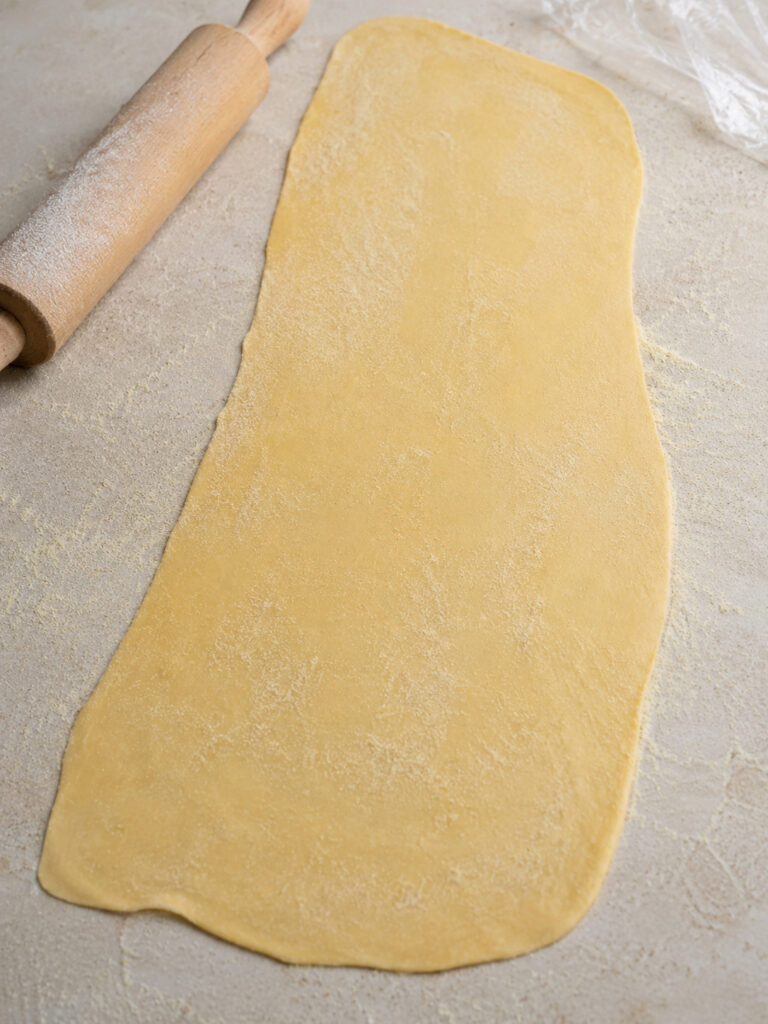
- Continue rolling thinner, one setting at a time (or with the rolling pin), until you reach your desired thickness: about 1/16 inch / 1.5 mm for noodles, or about 1/32 inch / 0.8 mm for filled pasta.
Cut and cook
- Dust the sheet lightly with semolina (or flour), then cut into your shape: fettuccine-style strips, wider ribbons, or lasagna sheets. Toss gently with a pinch of dusting flour to prevent sticking.
- Bring a large pot of water to a boil (this can take 15 minutes or so). Salt the water with the kosher salt.
- Add fresh pasta and stir for the first 10 seconds so it doesn’t clump. Boil 2–4 minutes, tasting early; it’s done when the center is no longer raw and the texture is tender with a slight bite.
- Reserve 1/2 cup / 120 ml pasta water, then drain. Toss immediately with sauce, adding a splash of pasta water as needed to help everything coat and cling.
Notes
- If your dough won’t come together, don’t panic: press and knead for a full minute first, then add water by teaspoons only if it’s still crumbly.
- If it feels sticky after kneading, dust lightly and keep kneading; adding lots of flour at once can make the dough tough.
- Shrinking sheets usually mean the dough needs more rest. Wrap it and give it another 10–15 minutes to relax.
- Don’t over-flour the sheets right before cooking; excess flour can make the pot gummy. Use semolina for dusting when you can.
- Roll a little thicker for hearty ragù, thinner for delicate butter sauces, and thinnest for ravioli so the filling stays the star.
- Fresh pasta cooks fast. Start tasting at 2 minutes so you don’t overshoot into mush.
- If you’re making long noodles, lay them in loose “nests” on a lightly dusted tray and cover with a towel while you finish rolling.
- Sauce loves pasta water. That starchy splash is what turns “noodles + sauce” into a silky, cohesive bowl.
- Prep Time: 50 minutes
- Cook Time: 3 minutes
- Category: Main, Side
- Cuisine: Italian
Baker’s Percentage
Flour: 100%
Whole eggs: 53%
Salt (optional): 0.8%
Olive oil (optional): 1.2%
Water (as needed): 0–4%
In baker’s percentage, flour is always 100%, and everything else is shown as a percentage of the flour weight. Higher egg/water percentage makes a softer dough that rolls more easily but can feel more delicate. Higher salt tightens dough slightly; lower salt keeps it a touch more relaxed and neutral for any sauce.
Nutrition & Dietary Information
Nutrition Facts
Low carb | ❌ |
Keto | ❌ |
High Protein | ❌ |
Gluten free | ❌ |
Low sugar | ✅ |
Dairy-free / Lactose free | ✅ |
Vegetarian | ✅ |
Vegan | ❌ |
Low sodium | ❌ |
Low Fat | ✅ |
Paleo | ❌ |
Pescatarian | ✅ |
Nut Free | ✅ |
Egg Free | ❌ |
Soy Free | ✅ |
Sesame free | ✅ |
Nutrition information is an estimate. For medical or dietary needs, calculate with your specific ingredients and consult a professional.
Common Problems & Fixes
Likely cause: Not wrapped tightly enough, or the room is warm/dry and the surface is exposed.
Fix: Trim off any hard bits, knead the remaining dough with slightly damp hands for 30–60 seconds, then re-wrap airtight (plastic + towel over it) before you continue.
Likely cause: Dough is under-kneaded (not elastic yet) or it’s a bit too dry for the thickness you’re trying to roll.
Fix: Run it again at a thicker setting after folding once, then let the dough rest 10 minutes; if it still tears, mist the surface lightly with water and re-pass at the thicker setting before thinning further.
Likely cause: Air got trapped during folding/laminating, or extra flour got folded inside and kept layers from bonding.
Fix: Dust off excess flour before each fold, then pass the sheet again at a thicker setting; you can also pop bubbles with a pin and re-roll once to smooth.
Likely cause: Humidity + warm dough + stacked strands with not enough airflow.
Fix: Work in small portions, spread the noodles out (or hang them) for 5–10 minutes before nesting, and keep nests loose and wide so air can circulate.
Likely cause: Too much bench flour worked in during kneading/rolling, or the noodles are rolled thicker than you think.
Fix: Use the lightest dusting possible during rolling, brush off loose flour before cooking, and roll one setting thinner next time; taste as you cook—tender-with-bite usually needs an extra 30–60 seconds beyond “no longer raw.”