
Crispy-edged, buttery garlic bread with a soft, steamy center and a bright pop of herbs. Grating the garlic (instead of chopping) helps it melt into the butter so every bite tastes evenly garlicky without harsh chunks.
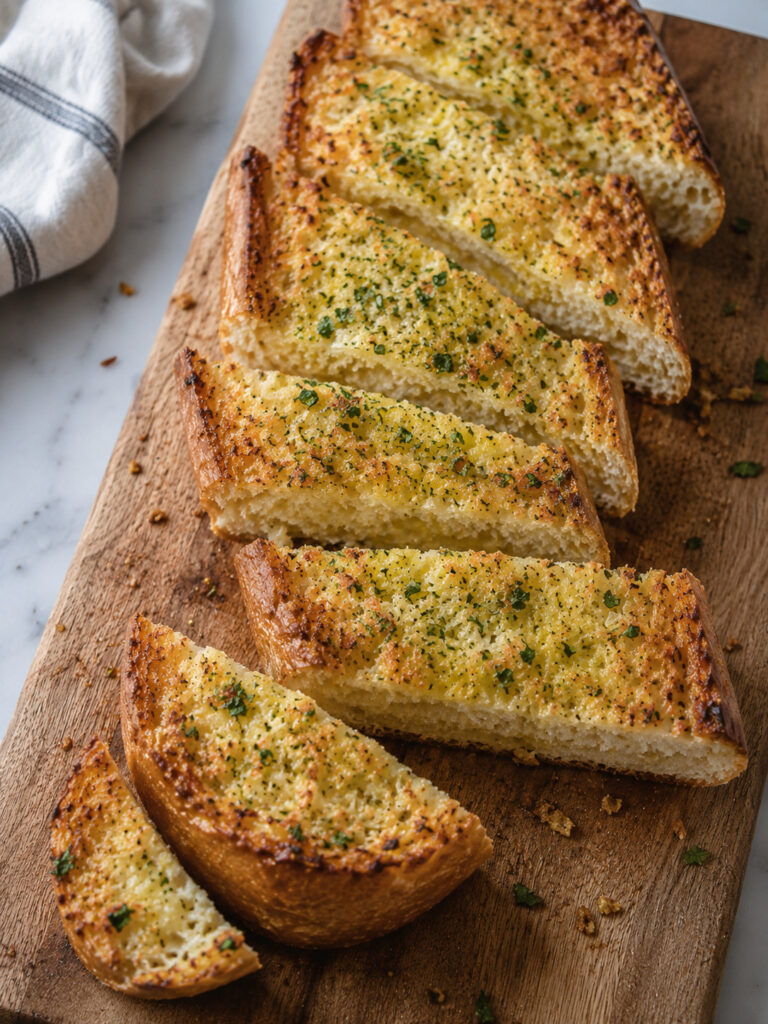
Garlic bread is all about contrast: a shattering, toasted surface against a tender interior that stays pillowy and warm. The flavor is bold but cozy—rich butter carrying sweet, pungent garlic, with herbs adding a fresh “green” lift and Parmesan lending a salty, nutty finish. It’s the kind of side that makes simple meals feel special, because it hits so many cravings at once: savory, aromatic, and deeply satisfying.
A great loaf matters here. A crusty baguette (or an Italian-style loaf) gives you that audible crunch on the outside while still keeping a soft middle that soaks up the garlic butter like a sponge. The garlic butter itself should taste rounded, not raw-hot: the butter softens the bite of the garlic and spreads it across the bread so you don’t get intense pockets. Parsley keeps things from feeling heavy, and Parmesan adds a toasty, aged-cheese depth that makes the whole thing taste more “restaurant” with almost no extra work.
This is perfect alongside tomato soups, pasta nights, big salads, or anything saucy that benefits from a swipe-and-scoop companion. It also shines on its own as an appetizer—warm, fragrant, and impossible to stop at just one piece.
What to Serve With: Pair it with tomato soup, marinara-heavy pasta, or a big Caesar-style salad for a classic combo. It’s also great alongside roasted vegetables or a creamy stew—anything with sauce or broth benefits from a garlicky swipe.
Table of contents
Garlic Bread Ingredients
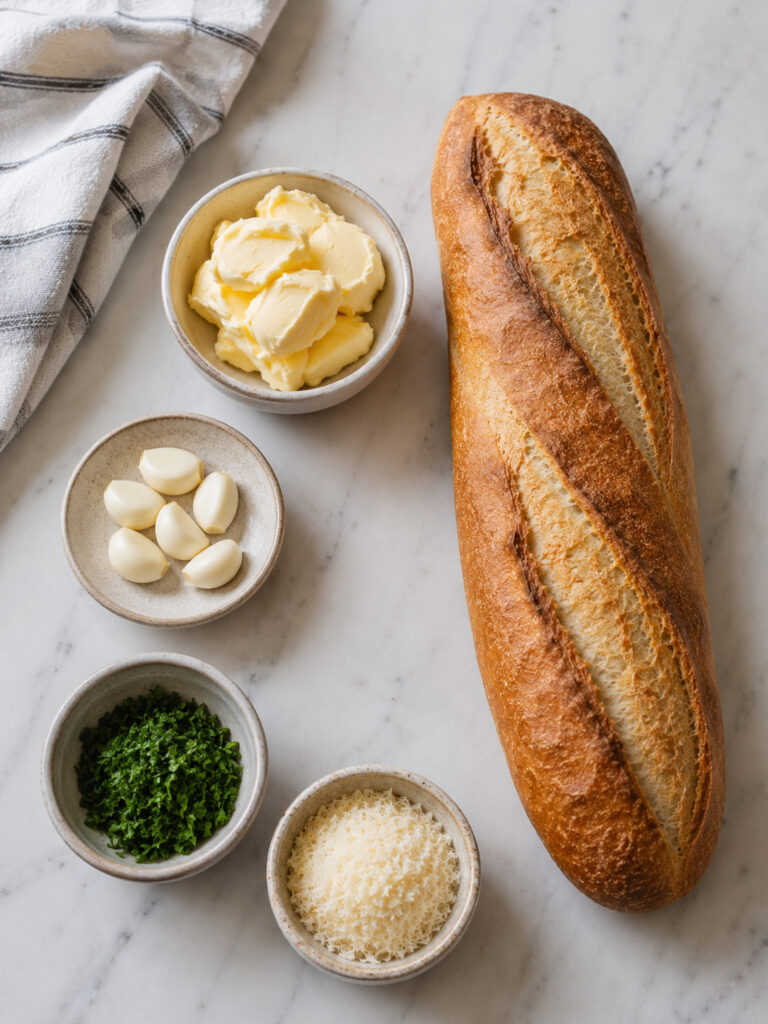
Baguette or Italian loaf – Choose a crusty loaf with a tight-ish crumb (not super airy), so it holds the butter without collapsing. A loaf that feels light-but-firm usually gives the best crunch-to-soft ratio. Softer sandwich bread will turn more tender than crisp.
Salted butter – Salted butter gives you built-in seasoning and helps the garlic taste rounder and less sharp. Higher-fat butter tastes richer and helps the surface brown more evenly. If your butter is very salty, the finished bread will taste more “snack-y” and less sweet.
Garlic – Fresh garlic brings the signature aroma and a sweet heat that’s unmistakable. Very fine grating distributes flavor smoothly, while chunky mince tastes more assertive. Older garlic with green sprouts can read bitter in the finished bread.
Parmesan – Finely grated Parmesan melts into the butter layer and adds a nutty, savory backbone. Pre-grated (shelf-stable) cheese tends to taste flatter and saltier. A sharper cheese will make the garlic bread feel more intense and “umami.”
Garlic Bread Variations
- Extra-cheesy top (gooey, pizza-vibes)
Change: Add 1 cup / 100 g shredded low-moisture mozzarella over the buttered bread before baking.
Result: Stretchy, melty pull with a softer top layer and a more indulgent bite. - Roasted garlic butter (sweeter, mellow garlic)
Change: Swap the raw garlic for 1 whole head / 1 whole head roasted garlic (squeezed to a paste). Keep butter the same.
Result: Less bite, more sweetness and depth; the garlic flavor tastes round and almost caramel-like. - Herb-forward (brighter, fresher)
Change: Replace parsley with 2 tbsp / 6 g chopped basil plus 1 tbsp / 3 g chopped chives.
Result: More aromatic “garden” flavor that feels lighter next to rich pasta and creamy soups.
Storage
Fridge: Wrap tightly and refrigerate up to 3–4 days. Quality will soften over time.
Freezer: Wrap airtight (plastic + foil) and freeze up to 3–4 months for best quality.
Reheat: Bake at 350°F / 175°C for 8–12 minutes (frozen: 12–18 minutes) until hot and re-crisped at the edges.
Allergens & Substitutions
Contains: wheat (gluten), dairy
Butter: Use a plant-based buttery stick (not tub-style) for similar richness; the flavor will be slightly less creamy.
Parmesan: Use a vegan Parmesan-style grate in the same amount; it will be less nutty and a bit tangier.
Bread: Use a gluten-free baguette-style loaf; expect a crisper, drier bite—serve right away for best texture.
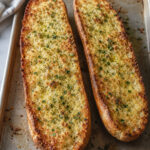
Homemade Garlic Bread
- Total Time: 22 minutes
- Diet: Pescatarian, Vegetarian
Description
Crispy-edged, buttery garlic bread with a soft, steamy center and a bright pop of herbs. Grating the garlic (instead of chopping) helps it melt into the butter so every bite tastes evenly garlicky without harsh chunks.
Ingredients
- 1 crusty baguette or Italian loaf (unsliced)
- 8 tbsp / 113 g – salted butter (softened)
- 6 cloves – garlic (finely grated or very finely minced)
- ¼ cup / 15 g – flat-leaf parsley (finely chopped)
- ½ cup / 50 g – Parmesan cheese (finely grated)
Instructions
Set up the loaf:
-
Set an oven rack in the middle. Heat the oven to 400°F / 200°C.
-
Split the loaf lengthwise. If you want bite-size pieces, cut into 1.5 in / 4 cm sections (keep the halves together so they handle easily).
Make the garlic butter:
-
In a small bowl, mash the softened butter, grated garlic, parsley, and Parmesan until evenly combined and spreadable.
-
Taste a tiny dab (it should taste garlicky and a touch salty). If it tastes aggressively sharp, let it sit 5 minutes to mellow.
Bake and finish:
-
Place the bread cut-side up on a rimmed baking sheet. For softer bread, line with foil and plan to tent later; for crispier edges, leave uncovered.
-
Spread the garlic butter all the way to the edges (that’s where the best crunch happens).
-
For softer centers: tent loosely with foil. For crispier results: bake uncovered.
-
Bake 10–12 minutes, until the butter is bubbling and the edges look deeply golden. Success looks like sizzling butter, a toasted rim, and a strong garlic aroma.
-
(Optional) For extra color: remove foil if used, then broil 30–90 seconds, watching constantly, until the top freckles brown.
-
Let stand 2 minutes, then slice and serve warm.
Notes
- Microplane garlic is your best friend here—it melts into the butter so every bite tastes evenly garlicky.
- For extra-crisp edges without drying the middle, cut into shorter sections before baking (more edges = more crunch).
- Parsley stays brightest if you add a pinch more right after baking (fresh “green” pop).
- If you love a toasty cheese note, sprinkle a little Parmesan in the last 2 minutes so it browns without drying out.
- Want a gentler garlic vibe? Mix in a teaspoon of olive oil with the butter—it softens the sharpness and spreads easier.
- Serve fast: garlic bread’s peak texture is the first 10 minutes, when the top is crisp and the center is steamy.
- Reheat leftovers uncovered so they re-crisp; foil traps steam and makes them soft.
- Prep Time: 10 min
- Cook Time: 12 min
- Category: Bread
- Cuisine: Italian
Nutrition & Dietary Information
Nutrition Facts
Low carb | ❌ |
Keto | ❌ |
High Protein | ❌ |
Gluten free | ❌ |
Low sugar | ✅ |
Dairy-free / Lactose free | ❌ |
Vegetarian | ✅ |
Vegan | ❌ |
Low sodium | ❌ |
Low Fat | ❌ |
Paleo | ❌ |
Pescatarian | ✅ |
Nut Free | ✅ |
Egg Free | ✅ |
Soy Free | ✅ |
Sesame free | ✅ |
Nutrition information is an estimate. For medical or dietary needs, calculate with your specific ingredients and consult a professional.
Common Problems & Fixes
Likely cause: Butter is piled on thick, or the loaf is very airy so it drinks butter and collapses.
Fix: Spread in a thin, even layer and choose a tighter-crumb loaf; if it’s super airy, bake uncovered so extra moisture can cook off.
Likely cause: Thin ends of the loaf toast faster, or your sheet pan sits in a hotter zone of the oven.
Fix: Push thinner end pieces toward the middle of the pan, and rotate halfway; if needed, tent loosely with foil for the first half.
Likely cause: Very fresh/strong garlic, or large bits that don’t mellow in the butter.
Fix: Microplane/grate very fine, then let the garlic butter sit 5–10 minutes before spreading so the sharp edge softens.
Likely cause: Older garlic with green sprouts, or the garlic got over-browned (especially during broil).
Fix: Use fresh cloves without sprouts; keep broil brief and stop at light freckles, not deep brown.
Likely cause: Foil tent stayed on too long, or the bread wasn’t close enough to top heat.
Fix: Bake covered just long enough to heat through, then uncover for the final minutes (or a quick broil) to toast the surface.
Likely cause: Overbaked or the loaf was already a day or two old.
Fix: Tent with foil for a softer center, and serve right away; for older bread, lean into “crisp mode” and bake uncovered, then rest 1–2 minutes.