
This is a classic, mellow meat ragù with a silky texture, gentle sweetness from soffritto, and just enough tomato to tint it brick-red. Milk gives the sauce its signature roundness, keeping the flavor rich without turning it into a tomato-heavy pasta sauce.
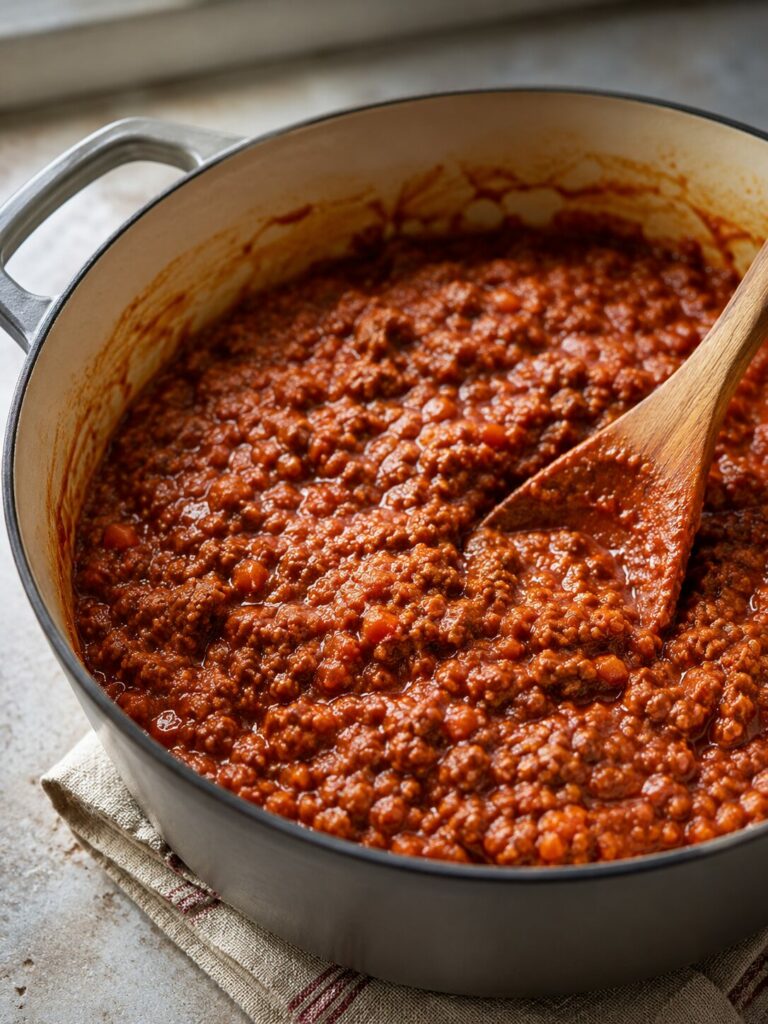
Ragù alla bolognese is the kind of sauce that feels luxurious without being flashy. It’s deeply savory, softly sweet, and pleasantly mellow, with a texture that’s more velvety than chunky. The flavor leans meat-forward—beef and pork providing a sturdy backbone—while pancetta adds a subtle cured richness that makes the whole pot taste fuller. The classic vegetable trio of onion, carrot, and celery brings sweetness and aroma, balancing the salt and fat so the sauce tastes rounded, not heavy.
Tomato plays a supporting role here. Instead of a bright, punchy red sauce, this ragù lands in the warm, brick-to-maroon zone, with a gentle tang that keeps bites lively. A small amount of tomato paste deepens the savoriness, while strained tomatoes contribute body and a smooth finish. The signature touch is milk: it softens sharp edges, adds a faint sweetness, and helps the sauce feel silky on the tongue.
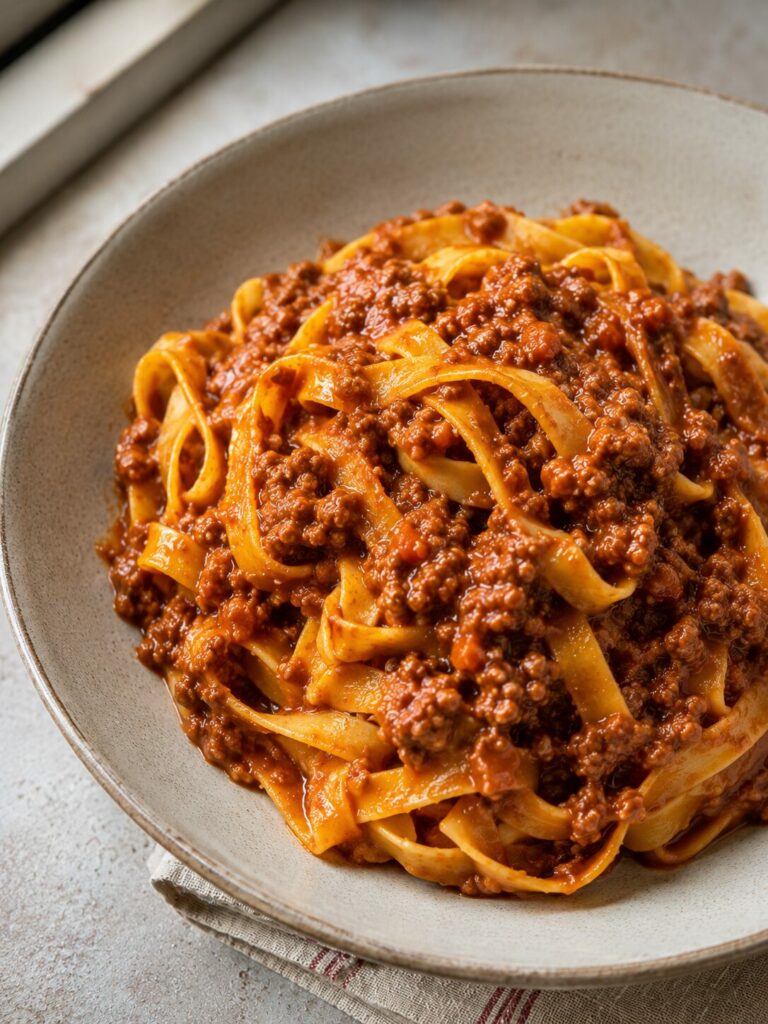
It’s beloved because it’s endlessly useful and incredibly satisfying. Spoon it over wide pasta like tagliatelle or pappardelle, layer it into lasagna, or tuck it alongside creamy polenta. The sauce clings rather than pools, so each forkful tastes cohesive—meat, aromatics, and a glossy richness all in one. When it’s right, it feels comforting, elegant, and quietly irresistible.
What to Serve With: This ragù loves wide pasta (tagliatelle, pappardelle) and layered bakes like lasagna, where it stays thick and clingy. It’s also fantastic over creamy polenta.
Table of contents
Ragù alla Bolognese Ingredients
Ground beef – Choose beef with a little fat (not ultra-lean) for a sauce that tastes rounder and less dry. A coarser grind gives a more traditional, plush texture, while very fine mince can feel pasty.
Ground pork – Pork adds sweetness and tenderness that helps the ragù feel silky rather than tight. If you skip it, the sauce reads more “beefy” and slightly firmer.
Pancetta – Look for unsmoked pancetta for a clean cured-meat richness. Smoked versions push the sauce toward a bacon-like profile that can overwhelm the gentle, classic flavor balance.
Passata– A smooth passata creates a glossy, cohesive sauce that clings to pasta. A chunkier purée makes a more rustic texture and a brighter tomato note.
Whole milk – Milk is the traditional rounding element, giving a mellow sweetness and softer finish. Using lower-fat milk makes the sauce taste a bit sharper and less plush.
Ragù alla Bolognese Variations
- All-beef ragù (cleaner, beefier):
Change: Replace the ground pork with 8 oz / 225 g ground beef (total beef: 20 oz / 565 g).
Result: More purely beef-forward and slightly firmer in texture. - Chicken liver enrichment (deeper savor):
Change: Add 2 oz / 56 g chicken livers, finely chopped, with the ground meat.
Result: Darker, more complex umami and a silkier mouthfeel (classic restaurant depth). - Porcini boost (woodsy depth):
Change: Add 1/2 oz / 14 g dried porcini, finely chopped, with the passata.
Result: A subtle earthy note that makes the sauce taste “older” and more layered.
Storage
Fridge: Cool quickly, cover, and refrigerate up to 3–4 days.
Freezer: Freeze airtight up to 3–4 months for best quality.
Reheat: Reheat on the stovetop until bubbling hot, or heat to 165°F / 74°C if you want a clear safety target.
Allergens & Substitutions
Contains: dairy
Whole milk: Lactose-free whole milk works 1:1 with the same flavor and texture.
Ground pork: Replace with 8 oz / 225 g ground beef; the sauce will be less sweet and slightly firmer.
Pancetta: Guanciale or regular bacon can replace it 1:1; the sauce will taste a bit richer and porkier.
Ragù alla Bolognese Meat Sauce
- Total Time: 3h 5 min
- Yield: 6 servings
Description
This is a classic, mellow meat ragù with a silky texture, gentle sweetness from soffritto, and just enough tomato to tint it brick-red. Milk gives the sauce its signature roundness, keeping the flavor rich without turning it into a tomato-heavy pasta sauce.
Ingredients
🥕 Soffritto
- 1 medium yellow onion
- 1–2 medium carrot
- 2–3 celery stalk
- 2 tbsp / 30 ml – extra-virgin olive oil
- 4 oz / 115 g – pancetta (unsmoked, finely chopped)
🥩 Meat
- 12 oz / 340 g – ground beef
- 8 oz / 225 g – ground pork
🍷 Liquid & tomato
- ½ cup / 120 ml – dry white wine (optional)
- 1 tbsp / 16 g – tomato paste
- 18 oz / 510 g – passata
- 1 ½ cups / 360 ml – light broth (meat or vegetable)
🥛 Finish
- ½ cup / 120 ml – whole milk
- Salt to taste
- ⅛ tsp / 0.3 g – ground nutmeg (optional)
Instructions
Soffrito base:
-
Finely chop the onion, carrot, and celery into very small pieces so they melt into the sauce.
-
Set a Dutch oven over medium-low heat. Add the olive oil and pancetta.
-
Cook 5–7 minutes, stirring often, until the pancetta looks glossy and some fat has rendered (it shouldn’t crisp hard).
-
Add the onion, carrot, and celery. Cook 10–12 minutes over low heat until very soft and pale-golden, stirring frequently.
Build the ragù:
-
Increase heat to medium. Add the ground beef and ground pork.
-
Cook 10–12 minutes, breaking up the meat and stirring often, until it’s no longer pink and has light browning in spots.
-
Pour in the wine and simmer 2–3 minutes until the alcohol smell fades and the pan looks nearly dry.
-
Stir in the tomato paste for 30 seconds.
-
Add the passata and broth. Bring to a gentle simmer.
Slow finish:
-
Reduce heat to low so the sauce barely bubbles. Cover with the lid slightly ajar.
-
Simmer 2–3 hours, stirring every 15–20 minutes. If the bottom starts to stick or the sauce looks dry, add a small splash of hot water or broth and scrape the pot clean.
-
After 1 hour of simmering, stir in the milk (and nutmeg, if using). Continue simmering until the milk fully blends in and the sauce looks glossy.
-
Stir in the salt, taste, and adjust if needed.
-
Success looks like: a thick, glossy sauce in the brick-to-maroon range that clings to a spoon, with tender meat and very little loose liquid pooling around the edges.
Notes
- Chop the soffritto very small so it “melts” into the sauce and you get silkiness instead of noticeable veggie chunks.
- After browning the meat, stop breaking it up so much—leaving a few tiny clumps gives a plusher, more traditional texture.
- Let the wine cook down until the pot smells mellow (not boozy) and looks nearly dry before adding the next liquids.
- If your sauce tastes a bit dull, a fresh drizzle of good olive oil right at the end can make it taste rounder and more aromatic.
- Rest the ragù off the heat for 10–15 minutes before serving so it thickens slightly and tastes more cohesive.
- For pasta night, loosen the ragù with a splash of hot pasta water so it clings and looks glossy instead of heavy.
- Cool the sauce uncovered until it stops steaming, then cover and chill—this helps prevent a watery layer from condensation.
- Prep Time: 20 min
- Cook Time: 2h 45 min
- Cuisine: Italian
Pressure Cooker / Instant Pot Option
Use Sauté to render the pancetta gently, then soften the soffritto until very tender. Brown the meats on Sauté in batches if needed (crowding makes steaming, not browning). Stir in wine and let it reduce a minute or two, then add tomato paste, passata, and broth. Pressure cook on High for about 25–30 minutes, then natural release for 10 minutes.
Switch back to Sauté to reduce to a thick, clingy consistency. Stir in the milk toward the end on low Sauté (to keep it from breaking), then adjust salt. The flavor will be rich and well-cooked, but you may need that final reduction to get the classic “clings to pasta” texture.
Nutrition & Dietary Information
Nutrition Facts
Low carb | ✅ |
Keto | ✅ |
High Protein | ✅ |
Gluten free | ✅ |
Low sugar | ✅ |
Dairy-free / Lactose free | ❌ |
Vegetarian | ❌ |
Vegan | ❌ |
Low sodium | ❌ |
Low Fat | ❌ |
Paleo | ❌ |
Pescatarian | ❌ |
Nut Free | ✅ |
Egg Free | ✅ |
Soy Free | ✅ |
Sesame free | ✅ |
Nutrition information is an estimate and may vary based on ingredients, brands, and portion sizes. This information is not intended as medical advice. For medical or dietary needs, calculate with your specific ingredients and consult a professional.
Diet-Friendly Swaps
- Gluten Free: Use a gluten-free verified broth and gluten-free pancetta (or swap pancetta for plain pork belly).
- Dairy/Lactose Free: Use lactose-free milk for lactose-free; for dairy-free, omit the milk or use an unsweetened plant milk (expect a less silky finish).
- Low Sodium: Use low-sodium broth, reduce added salt substantially, and swap pancetta for plain pork belly to control salt.
- Paleo: Omit milk (or use a paleo-friendly alternative) and swap pancetta for uncured pork belly; keep tomato moderate.
Common Problems & Fixes
Likely cause: Pancetta and broth are already salty, then the full measured salt gets added.
Fix: Add salt gradually near the end; if it’s already too salty, thin with unsalted broth/water and let it simmer a bit longer to re-balance.
Likely cause: The simmer was too short, too covered, or a little too hot (so you get liquid but not that glossy reduction).
Fix: Keep it at the gentlest simmer with the lid slightly ajar and cook until it clings to a spoon; if needed, simmer uncovered for the last stretch.
Likely cause: Fat has rendered and separated instead of staying emulsified in the sauce.
Fix: Let it simmer longer at a very low bubble and stir well; if it’s still overly greasy, skim off some surface fat and continue cooking.
Likely cause: The pot simmered too hot after the milk went in, or the sauce was quite acidic when dairy was added.
Fix: Keep the heat very low once milk is added; if you’re nervous, warm the milk first and stir it in slowly.
Likely cause: Heat is too high for a thick sauce, or stirring isn’t scraping the bottom corners.
Fix: Drop the heat to a bare simmer and stir from the bottom every 15–20 minutes; if scorching happens, transfer to a clean pot without scraping up the burnt bits.
Likely cause: The meat was browned too aggressively, or the simmer ran too hot and reduced too fast.
Fix: Brown until you get light browning (not hard crisp bits), then keep the rest of the cook at a “lazy bubble” and add a splash of hot broth if it ever looks dry.