
These corn tortillas are soft, fragrant, and flexible enough for tacos, quesadillas, or a warm stack at the table. The big key is the dough texture: soft and pliable rather than crumbly or sticky, plus a short covered rest so the masa harina fully hydrates before shaping.
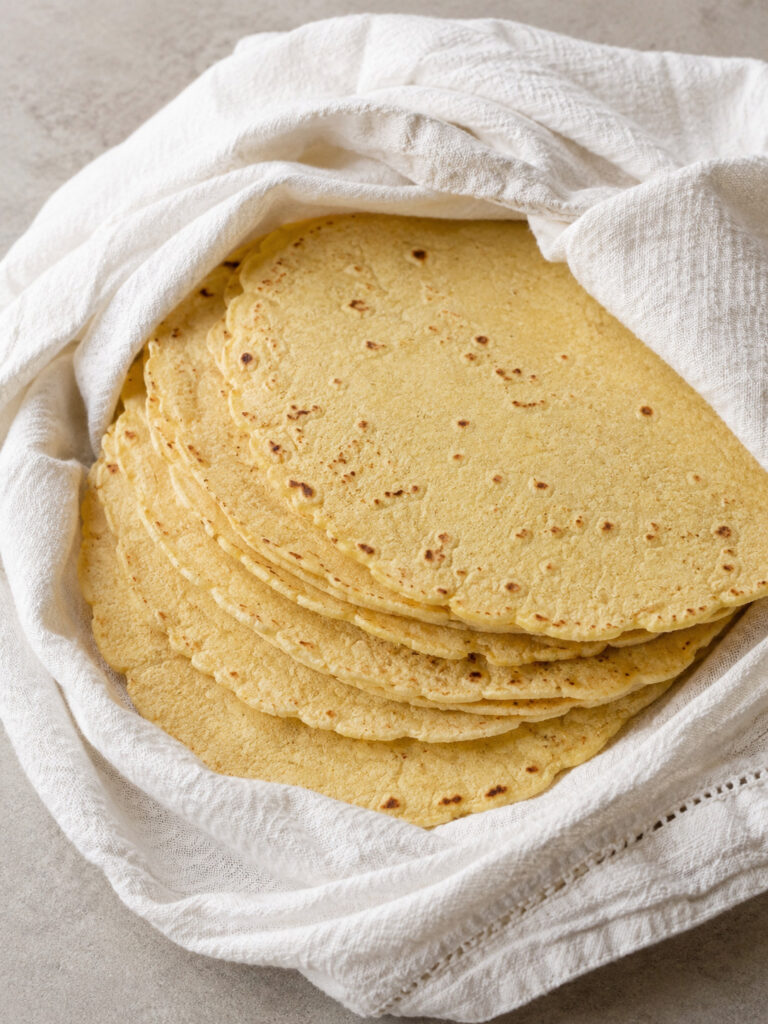
Fresh corn tortillas have a sweet, toasty corn aroma and a tender chew that store-bought versions rarely match. The best ones feel light in the hand but still substantial, with a thin, flexible center and edges that bend instead of snapping. Their flavor is simple in the best possible way: gently earthy, lightly nutty, and naturally rich from nixtamalized corn. That clear corn taste is exactly why they work with everything from smoky meats to simple beans and eggs.
At the table, they bring warmth and softness to a meal in a way that changes the whole plate. A stack of fresh tortillas turns weeknight tacos into something special, and they’re just as welcome next to braised dishes, breakfast spreads, or roasted vegetables. What people love most is the texture contrast: a delicate outer surface, a slightly steamy middle, and enough strength to fold around fillings without feeling tough.
This version keeps things classic and home-kitchen friendly with just masa harina and warm water, so the corn stays front and center. It’s the kind of staple that feels humble and comforting, but once you’ve had them fresh, they stop feeling ordinary altogether.
What to Serve With: These are perfect with carnitas, barbacoa, pollo asado, or simple black beans and avocado. They’re also excellent with scrambled eggs, refried beans, salsa, and crumbly cheese for breakfast tacos. For a small meal, serve them with charro beans, grilled vegetables, or a bowl of tortilla soup.
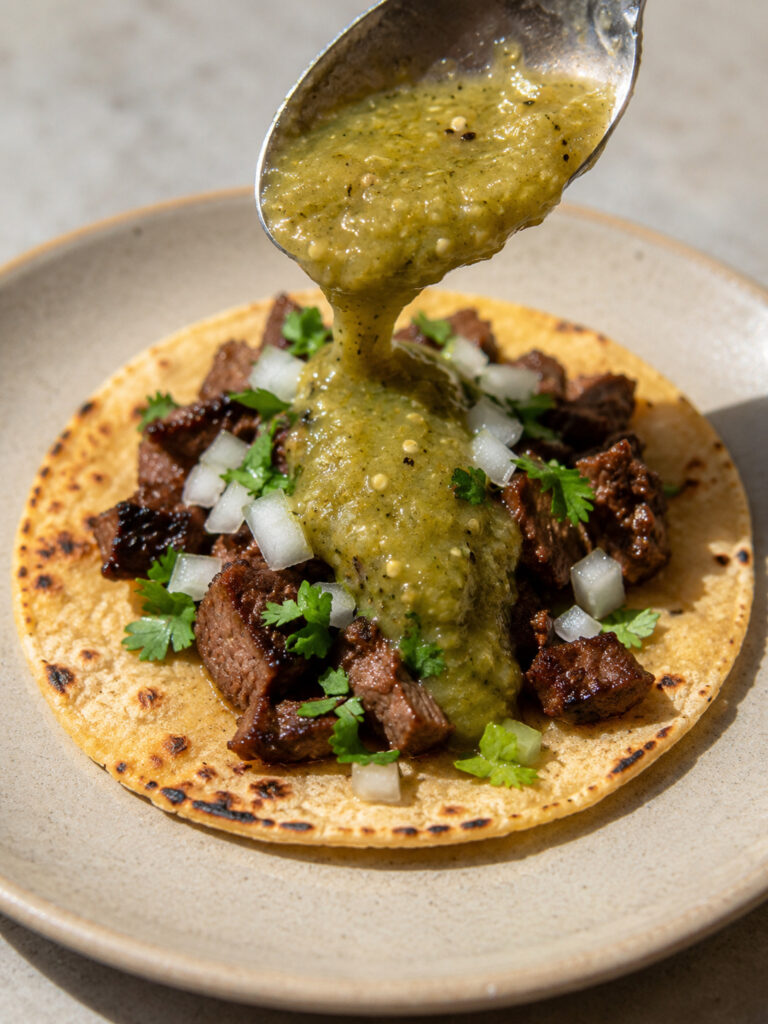
Table of contents
Corn Tortillas Ingredients
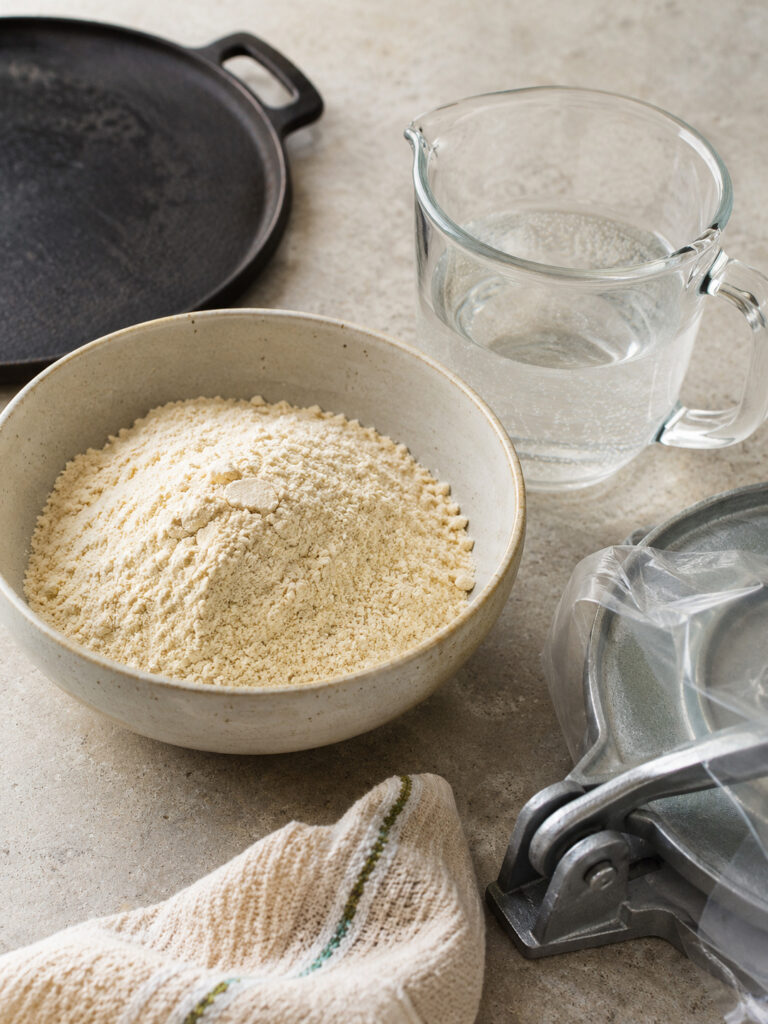
Masa harina – Look for nixtamalized corn flour labeled masa harina, not plain cornmeal or regular corn flour. That nixtamalized structure is what gives tortillas their flexible, cohesive texture; with other corn products, the dough tends to stay gritty and crack instead of bending cleanly.
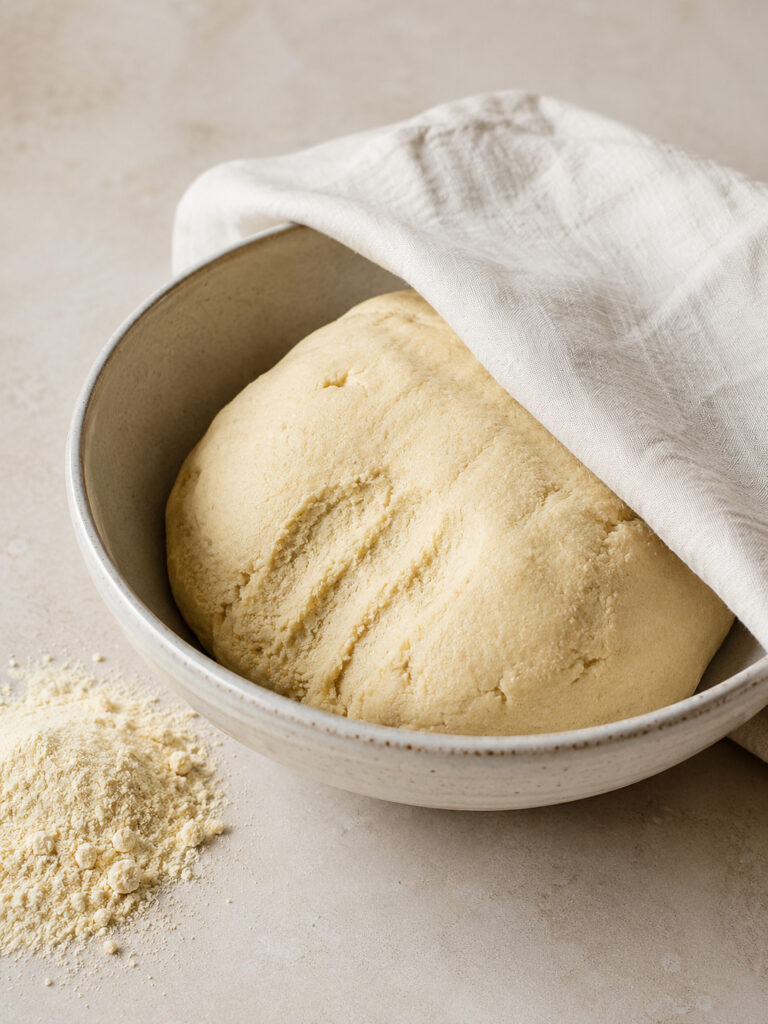
Warm water – Warm water, around hot-tap warmth, helps the flour hydrate more evenly. The dough should feel like soft Play-Doh when it’s right: moist and pliable, not sticky and not dry at the edges.
Storage
Fridge – Cool completely, wrap well, and refrigerate for up to 3 to 4 days.
Freezer – Freeze in a well-wrapped stack with parchment or plastic between layers for up to 3 to 4 months for best quality.
Reheat – Warm in a dry skillet or wrapped in a damp towel in the microwave until hot and flexible; for strict leftover safety guidance, reheated leftovers should reach 165°F / 74°C.
Allergens & Substitutions
Contains: Corn
Masa harina: Use only nixtamalized masa harina. Cornmeal, polenta, and regular corn flour do not bind the same way and need a different formula.
Warm water: Use warm, not boiling, water. Cool water can make the dough feel stiffer at first, while boiling water can make the texture harder to judge.
Corn Tortillas
- Total Time: 52 minutes
- Yield: 12 tortillas
Description
These corn tortillas are soft, fragrant, and flexible enough for tacos, quesadillas, or a warm stack at the table. The big key is the dough texture: soft and pliable rather than crumbly or sticky, plus a short covered rest so the masa harina fully hydrates before shaping.
Ingredients
- 2 cups / 240 g – masa harina
- 1½ to 1¾ cups / 360 to 420 ml – warm water
Instructions
Make the masa
- Add the masa harina to a medium bowl. Pour in 1½ cups / 360 ml of the warm water and mix with your hand until no dry patches remain.
- Knead in the bowl for 2 to 3 minutes, until the dough is smooth and cohesive. It should feel soft and springy. If it cracks when you squeeze a small piece, knead in a little more water. If it sticks heavily to your palm, knead in a little more masa harina.
- Cover with a towel and let the dough rest for 20 minutes so the masa harina can fully hydrate.
Portion and shape
- Set a dry cast-iron skillet or comal over medium-high heat so it gets fully hot while you shape the tortillas.
- Divide the dough into 12 equal pieces and roll them into smooth balls.
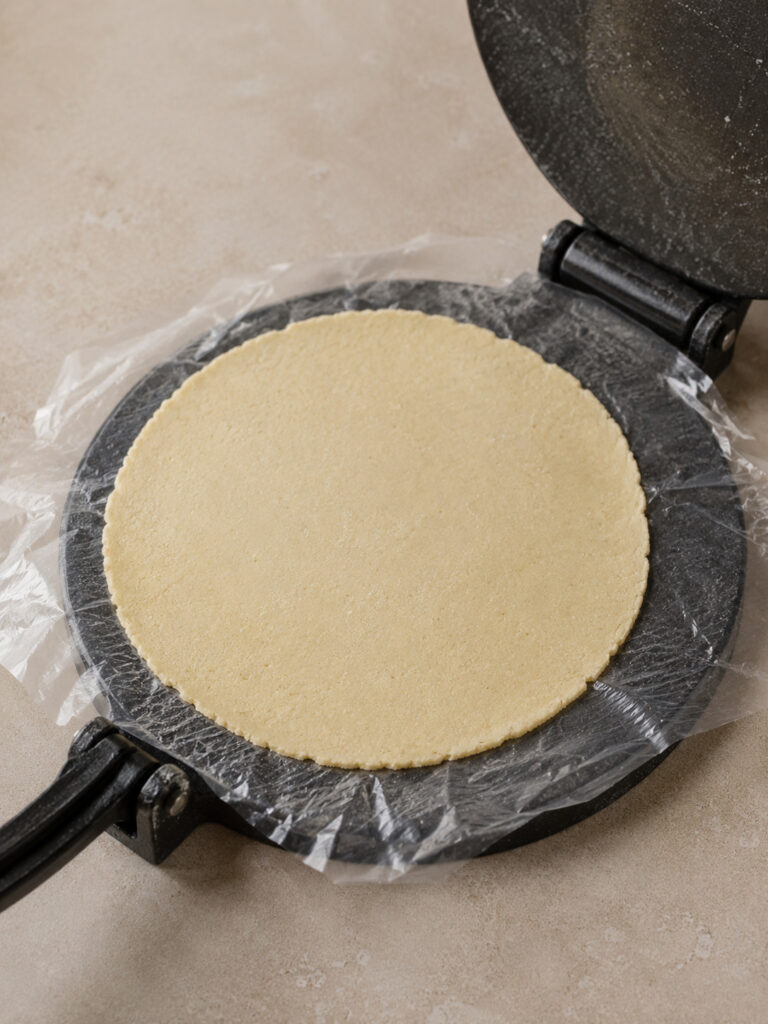
- Line the tortilla press with plastic. Press one ball into a round about 5 to 6 inches / 13 to 15 cm wide and about 1⁄16 inch / 2 mm thick. If the edges split a lot, the dough is still too dry.
Cook and keep warm
- Peel the tortilla from the plastic and place it on the hot dry skillet. Cook the first side for 30 seconds, or until the surface looks more matte and the tortilla releases easily.
- Flip and cook the second side for 30 to 45 seconds, until light brown freckles appear.
- Flip once more and cook 15 to 30 seconds longer, until the tortilla puffs in spots or fully balloons. Success looks like a warm corn aroma, a dry-looking surface instead of a wet sheen, and a center that bends easily with no raw or gummy feel.
- Transfer to a towel or tortilla warmer and keep covered while you cook the rest. The trapped steam keeps them soft and pliable for serving.
Notes
- If you are new to the dough, pinch off a small piece and squeeze it before pressing; if it cracks, it wants more water.
- A short rest really matters here, because masa harina keeps absorbing water even after the dough first comes together.
- If your plastic liners wrinkle deeply, smooth them out before pressing so the tortillas release more cleanly.
- Rotate the tortilla a little in the press if needed to help it stay evenly round.
- Keep the skillet dry, because even a little oil changes the surface and makes the tortillas fry instead of cook cleanly.
- Stack the cooked tortillas under a towel right away so they steam each other and stay soft.
- If a tortilla resists peeling from the liner, let it sit for a second longer before lifting; that little pause often helps it release.
- Prep Time: 20 min
- Rest: 20 min
- Cook Time: 12 min
- Cuisine: Mexican
Baker’s Percentage
- Masa harina: 100%
- Warm water: 150% to 175%
These percentages are based on the weight of the masa harina, which is always treated as 100%. Masa dough runs much wetter than wheat dough, because nixtamalized corn absorbs water differently and needs that extra moisture to stay flexible.
If you raise the hydration, the dough presses more easily and the tortillas tend to stay softer, but too much water can make them sticky and harder to peel. If you lower the hydration, the dough feels firmer and cleaner to handle, but the edges are more likely to split and the cooked tortillas can crack instead of bend.
Nutrition & Dietary Information
Nutrition Facts
Low carb | ❌ |
Keto | ❌ |
High Protein | ❌ |
Gluten free | ✅ |
Low sugar | ✅ |
Dairy-free / Lactose free | ✅ |
Vegetarian | ✅ |
Vegan | ✅ |
Low sodium | ✅ |
Low Fat | ✅ |
Paleo | ❌ |
Pescatarian | ✅ |
Nut Free | ✅ |
Egg Free | ✅ |
Soy Free | ✅ |
Sesame free | ✅ |
Nutrition information is an estimate and may vary based on ingredients, brands, and portion sizes. This information is not intended as medical advice. For medical or dietary needs, calculate with your specific ingredients and consult a professional.
Common Problems & Fixes
Likely cause: The masa is too dry or it has not rested long enough to finish hydrating.
Fix: Knead in a little more warm water and let the dough rest covered until it feels soft and pliable.
Likely cause: There is a little too much water in the dough.
Fix: Knead in a small amount of extra masa harina until the dough feels moist but releases cleanly.
Likely cause: The skillet is not hot enough, the dough was pressed unevenly, or the first two sides cooked too long.
Fix: Make sure the pan is fully hot, press to an even thin round, and keep the early cooks brief so steam can inflate the center on the last side.
Likely cause: They were cooked a little too long, the dough was slightly dry, or they were left uncovered.
Fix: Pull them as soon as they are cooked through and keep them wrapped in a towel or tortilla warmer so trapped steam keeps them flexible.
Likely cause: The heat was too low, so the tortilla dried slowly instead of cooking quickly.
Fix: Use medium-high heat and cook just until the surface turns matte, freckles appear, and the center loses that damp, tacky feel.
Likely cause: They were pressed too thick or the dough balls were too large for the size you wanted.
Fix: Press them a little thinner and check that the rounds are even from center to edge.