
These carnitas tacos are rich, savory, and deeply porky, with tender pieces of shoulder and those irresistible crisp brown edges. The trick is giving the meat two textures at once: soft, juicy interior pieces and a final blast of concentrated browning so every taco tastes full and lively.
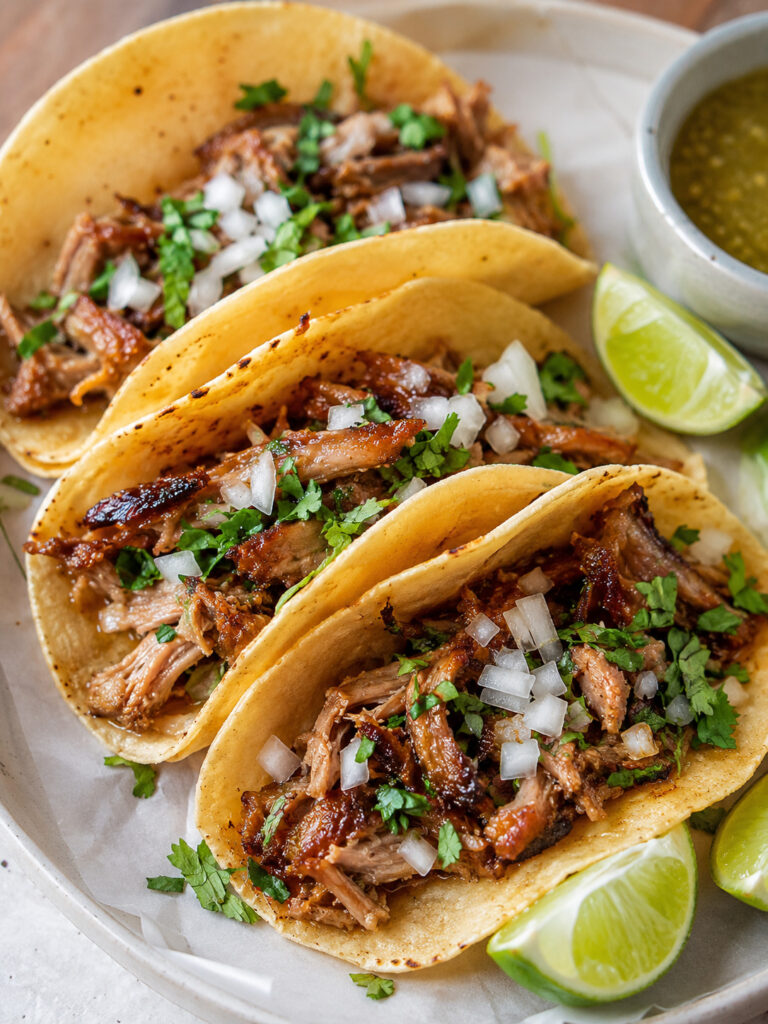
Carnitas tacos are all about contrast. The pork is lush and rich, with enough fat to keep each bite succulent, but the best version never feels heavy because the edges are browned and crisp, the onion is sharp, the cilantro is bright, and a squeeze of lime cuts right through the richness. Warm corn tortillas bring a gentle toasted corn flavor and just enough chew to hold everything together without getting in the way.
What makes carnitas so lovable is that the flavor is deep without being busy. You get pork first, then the gentle citrus note of orange, the soft savoriness of garlic and onion, and the herbal background of oregano and bay. Nothing sticks out in a harsh way. Instead, the flavors settle into the meat so the tacos taste rounded, balanced, and comforting, with a little sparkle from the fresh toppings.
These tacos fit almost any kind of meal. They’re casual enough for a weeknight dinner, generous enough for a family-style spread, and satisfying enough to anchor a party table with a bowl of salsa and a stack of warm tortillas. They’re also especially loved because they don’t need much else. A spoonful of chopped onion, cilantro, and lime is often all you want, since the pork already brings richness, salt, aroma, and that signature mix of tenderness and crispness that makes carnitas feel complete.
What to Serve With: Serve these with salsa verde, a roasted tomato salsa, or both. Mexican rice, charro beans, black beans, or esquites all pair well with the richness of the pork. For something fresh on the side, radishes, cucumber, or shredded cabbage with lime are especially nice.
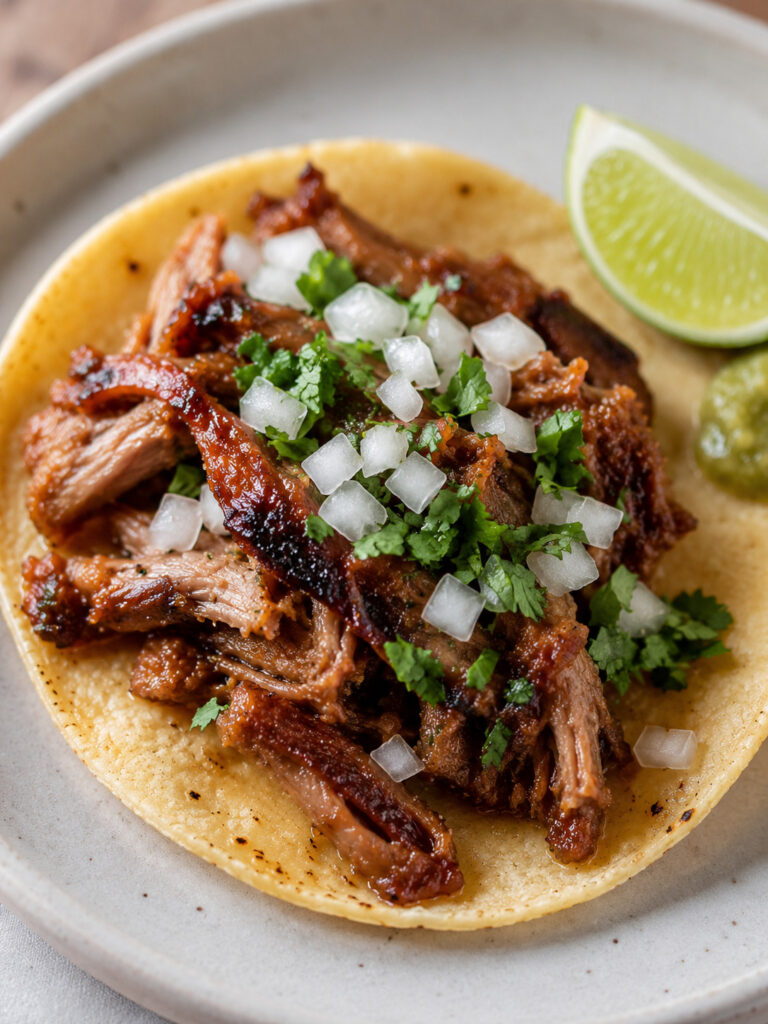
Table of contents
Carnitas Tacos Ingredients
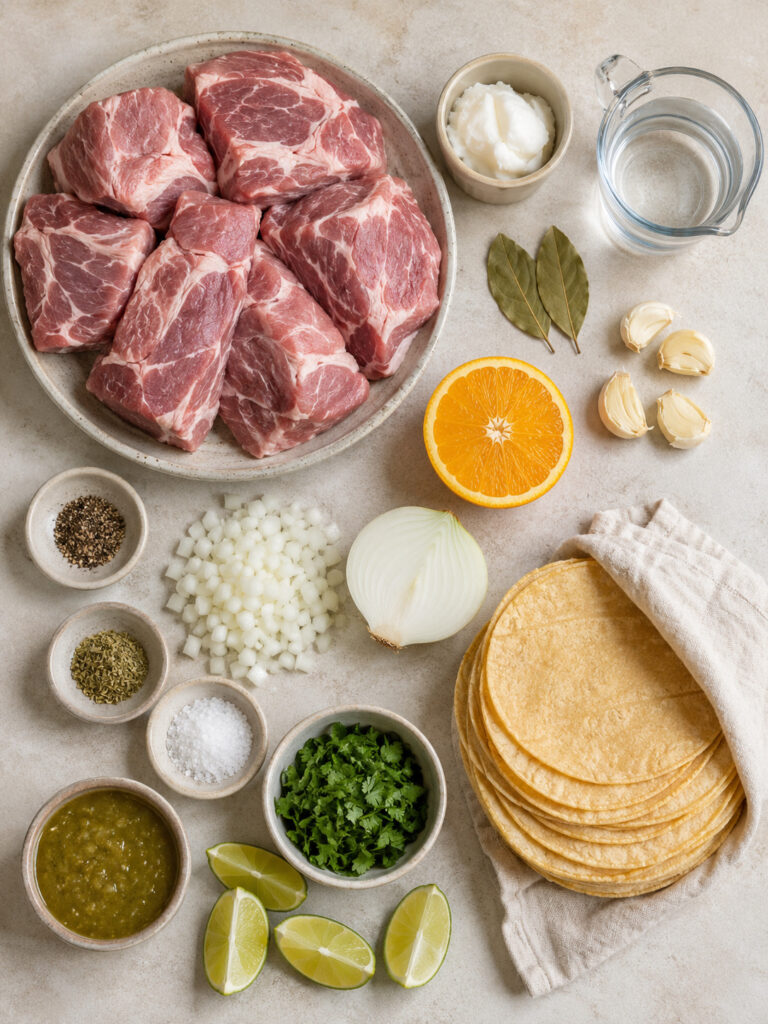
Pork shoulder – Choose a well-marbled boneless shoulder with some visible fat still attached. That fat is what gives carnitas their juicy interior and glossy, crisp-edged finish, while leaner cuts taste drier and less luxurious. Pork butt is the same general cut and works just as well.
Orange – Fresh orange brings a gentle sweet-citrus note that keeps the pork from tasting flat or purely heavy. It matters more as a balancing flavor than as a bold orange taste, so the finished meat feels brighter and rounder rather than fruity. Tangerine is a good swap if you want a slightly sweeter finish.
Lard – A small amount adds the rounded richness and silky mouthfeel people associate with classic carnitas. It also helps the final crisped bits taste fuller and more savory than they do with water alone. Neutral oil works if needed, but the result is a little less traditional and slightly less rich.
Corn tortillas – Look for tortillas that smell distinctly of corn and stay pliable once warm. Their toasted corn flavor and light chew make the tacos feel classic, while flour tortillas create a softer, richer bite that reads less traditional. Keeping them wrapped after warming helps them stay tender and flexible.
Storage
Fridge – Cool the pork promptly, then refrigerate in a shallow airtight container for up to 3 to 4 days. Keep the tortillas and toppings separate for the best texture.
Freezer – Freeze the cooked pork in an airtight container for up to 2 to 3 months for best quality. Thaw in the refrigerator before reheating.
Reheat – Reheat in a skillet over medium heat or on a sheet pan at 400°F / 205°C until hot, then crisp a little longer if needed. Leftover pork should be reheated to 165°F / 74°C before serving.
Allergens & Substitutions
Contains: None of the major common allergens.
Pork shoulder: Pork butt works the same and gives a similarly rich result. Pork loin is too lean for this exact formula and would need a different method to avoid drying out.
Lard: Neutral oil or duck fat can replace it in the same amount. Neutral oil is lighter and less rounded in flavor, while duck fat is rich and savory but less classic.
Orange: Tangerine works well in the same amount and gives a slightly sweeter finish. Bottled orange juice is acceptable, but the flavor is flatter and less fragrant.
Mexican oregano: Regular oregano works 1:1 with a slightly greener, less citrusy flavor.
Corn tortillas: Flour tortillas can replace them for a softer, richer bite, but the tacos will feel less classic.

Crispy Pork Carnitas Tacos
- Total Time: 3 hours 55 minutes
- Yield: 6 servings
Description
These carnitas tacos are rich, savory, and deeply porky, with tender pieces of shoulder and those irresistible crisp brown edges. The trick is giving the meat two textures at once: soft, juicy interior pieces and a final blast of concentrated browning so every taco tastes full and lively.
Ingredients
🐖 Pork base
- 3½ lb / 1.6 kg boneless pork shoulder
- 2 tsp / 12 g kosher salt
- 1 tsp / 2 g ground black pepper
- 1 tsp / 1 g dried Mexican oregano
- 2 bay leaves
- ¼ cup / 55 g lard
- 1 medium white onion, halved
- 4 garlic cloves, smashed
- 1 orange
- 1 cup / 240 ml water
🌮 For serving
- 12 corn tortillas
- ¾ cup / 120 g finely diced white onion
- ½ cup / 8 g chopped cilantro
- 2 limes, cut into wedges
- 1 cup / 240 ml salsa verde or red salsa (optional)
Instructions
Season the pork
- Set a rack in the center of the oven and preheat to 300°F / 150°C.
- Cut the pork into large chunks, about 2 inches across, and pat them dry. Season all over with the salt, black pepper, and oregano.
- Cut the orange in half. Squeeze the juice into a small bowl and keep the spent orange halves.
Braise until tender
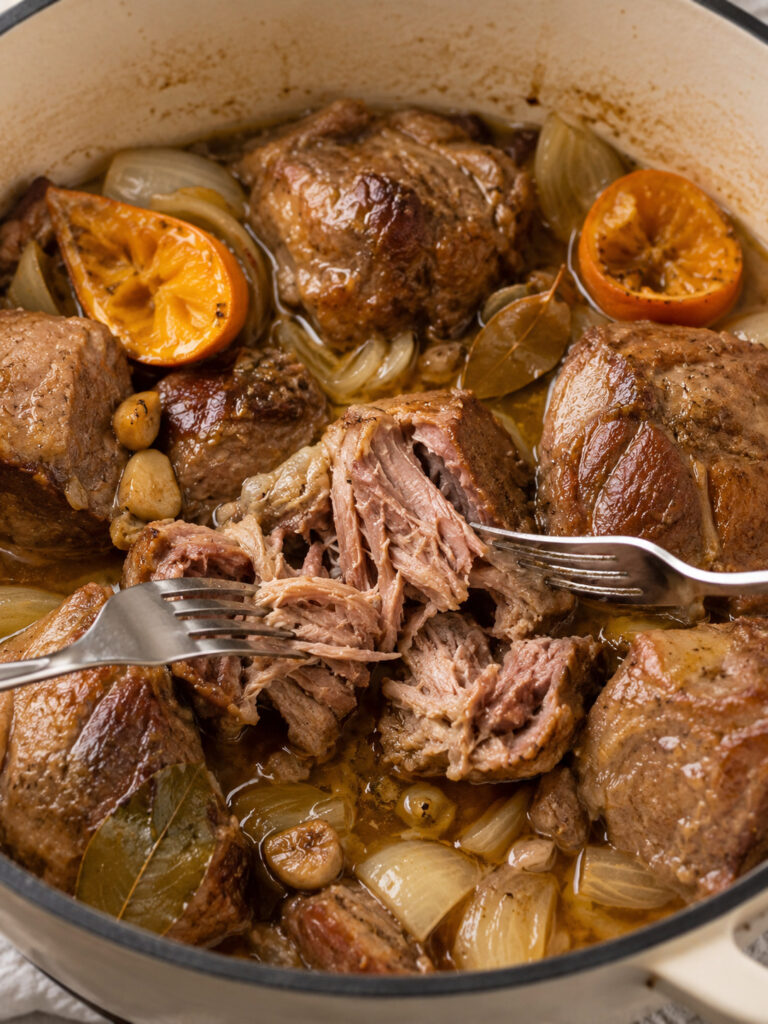
- Heat the Dutch oven over medium heat and melt the lard. Add the pork, onion, garlic, bay leaves, orange juice, the squeezed orange halves, and the water.
- Bring the liquid to a gentle simmer, cover, and transfer the pot to the oven.
- Cook for 2½ to 3 hours, turning the pork once about halfway through, until the meat is very tender and easily gives when pressed with a fork.
- Uncover and cook 20 to 30 minutes more if the pot still looks very watery. You want some rendered fat and a small amount of concentrated cooking liquid left in the bottom, not a full broth.
- If you don’t have a Dutch oven, use a deep oven-safe skillet, heavy stockpot, or a sturdy baking dish instead. Cover tightly with a lid or a double layer of foil before it goes into the oven so the pork braises gently and stays moist; check once during cooking that there’s still a shallow layer of liquid in the bottom, adding a small splash of hot water if the pot looks dry.
Crisp and serve
- Increase the oven to broil and move the rack to the upper third. Line a rimmed baking sheet with foil or parchment.
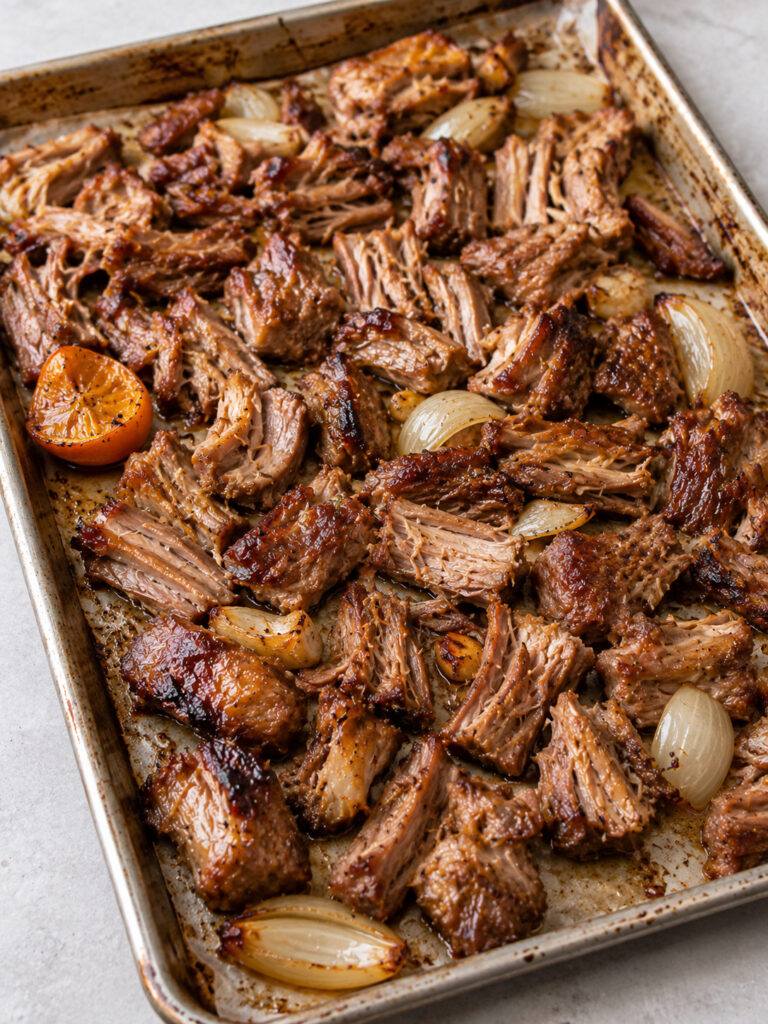
- Lift the pork out with a slotted spoon and pull it into large bite-size pieces. Discard the bay leaves and orange halves. Spoon ¼ cup / 60 ml of the cooking liquid and a little of the rendered fat over the pork, then spread it in a single layer on the baking sheet.
- Broil for 4 to 6 minutes, toss, then broil 3 to 5 minutes more until the edges are dark golden brown and crisp in spots. Broiling after braising is a reliable home method for getting the classic tender-and-crisp contrast.
- Warm the tortillas in a dry skillet or comal for about 20 seconds per side, then wrap them in a clean towel.
- (Optional) Upgrade: Reduce a small cup of the braising liquid until it turns glossy and a little sticky, then drizzle that over the pork after broiling. It gives you an even deeper pork flavor and makes the crisp bits taste richer without changing the whole recipe.
- Fill each tortilla with the meat and top with diced onion, cilantro, lime, and salsa if using. Success looks like pork that is juicy and tender in the middle, crisp and browned at the edges, and glossy rather than dry.
Notes
- Keep a few extra tortillas warm, because juicy carnitas can split a thin tortilla faster than you expect.
- Let the broiled pork sit for a minute before you build the tacos, so the edges stay crisp instead of steaming themselves soft right away.
- Leftovers re-crisp best in a skillet or hot oven, not the microwave, if you want that tender-crisp contrast back.
- A little salsa on the side helps the richness feel livelier, especially if your batch came out extra porky and rich.
- If your orange is especially sweet, an extra squeeze of lime at the table keeps the tacos tasting bright instead of soft.
- A dark sheet pan usually browns the edges a little faster than a pale one, so watch closely once the broiler goes on.
- Don’t overfill the tacos; a slightly lighter hand gives you a better balance of juicy pork, sharp onion, and fresh cilantro in every bite.
- Save a spoonful of the cooking juices with the leftovers, because that little bit makes reheated carnitas taste much less dry.
- Prep Time: 25 min
- Cook Time: 3h 10 min
- Cuisine: Mexican
Carnitas Tacos Variations
- Orange-forward carnitas (brighter, slightly sweeter)
Change: Increase the orange juice to ¾ cup / 180 ml and reduce the water to ¾ cup / 180 ml. Keep the rest of the recipe the same.
Result: The pork tastes a little brighter and more aromatic, with a clearer citrus note that lifts the richness. - Garlic-heavy carnitas (deeper savory flavor)
Change: Increase the garlic to 8 cloves and add ½ tsp / 1 g ground cumin with the oregano. Keep the rest of the recipe the same.
Result: More savory and slightly warmer in flavor, with a fuller, rounder background that still keeps the pork at the center. - Richer confit-style carnitas (more classic richness)
Change: Increase the lard to ½ cup / 110 g and reduce the water to ¾ cup / 180 ml. Keep the rest of the recipe the same.
Result: The meat tastes richer and silkier, with more luxurious crisped edges and a more old-school carnitas feel.
Instant Pot Option
Keep the pork in large chunks, use the same aromatics, but reduce the added water a bit since pressure cookers trap moisture so well. Cook on High Pressure for about 35 minutes, then let the pressure release naturally for 15 minutes before opening. After that, lift the pork out, reduce the cooking liquid on Sauté if it looks thin, and finish the meat under the broiler just like the main version. The texture will be a little softer and less concentrated straight from the pot than the oven-braised version, so that final crisping step matters even more here. Expect the flavor to be very good, just a touch less roasted and a little more stewed until the broiler brings it back into focus.
Nutrition & Dietary Information
Nutrition Facts
Low carb | ❌ |
Keto | ❌ |
High Protein | ✅ |
Gluten free | ✅ |
Low sugar | ✅ |
Dairy-free / Lactose free | ✅ |
Vegetarian | ❌ |
Vegan | ❌ |
Low sodium | ❌ |
Low Fat | ❌ |
Paleo | ❌ |
Pescatarian | ❌ |
Nut Free | ✅ |
Egg Free | ✅ |
Soy Free | ✅ |
Sesame free | ✅ |
Diet-Friendly Swaps
Low Carb: Serve the carnitas in lettuce cups or over shredded cabbage instead of corn tortillas.
Keto: Skip the tortillas and serve the crisped pork with avocado, onion, cilantro, and lime.
Vegetarian & Vegan: Swap the pork for meaty mushrooms or young jackfruit, then roast and crisp until the edges brown well.
Low Sodium: Cut back the salt in the braise and lean harder on lime, onion, and salsa at the table for brightness.
Paleo: Skip the tortillas and serve the carnitas with lettuce wraps, cabbage, or roasted vegetables instead.
Common Problems & Fixes
Likely cause: The braising liquid stayed too loose, or the meat was crowded on the pan so it steamed under the broiler.
Fix: Let the pot cook down until you have rendered fat and just a little concentrated liquid left, then spread the pork out loosely so the broiler can actually brown it.
Likely cause: The meat was pulled too finely, or it went under the broiler without enough of the cooking juices on it.
Fix: Keep the pork in larger bite-size pieces and toss it with a small spoonful of concentrated juices before crisping so you keep tender centers and glossy edges.
Likely cause: The orange halves had a lot of pith, and that bitterness cooked into the pot.
Fix: Next time, use the juice plus a strip of peel or remove the spent halves earlier if the citrus note starts tasting sharp rather than bright.
Likely cause: It needs more time, or the pot was not tightly covered enough to braise gently.
Fix: Keep going until the chunks give very easily when pressed, and make sure the lid or foil seal is snug so the meat softens instead of slowly drying.
Likely cause: The liquid in the pot never concentrated enough, so the pork didn’t get that deeper, porkier finish.
Fix: Uncover near the end if the pot still looks brothy, then use the reduced juices for the broiler step so the flavor lands richer and more focused.
Likely cause: Too much rendered fat was spooned back over the pork before crisping.
Fix: Use mostly the concentrated cooking liquid and only a little fat, just enough to gloss the meat without weighing it down.