Description
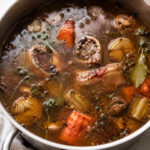
A rich, unsalted beef stock that’s designed for cooking, not sipping. Roasting the bones and vegetables builds deep flavor and color, while a gentle simmer keeps it clean and balanced.
Ingredients
- 5 lb / 2.3 kg – beef bones ((mix of knuckle/joint and marrow bones))
- 1 lb / 450 g – meaty beef shank bones ((optional, for extra flavor))
- 2 large – yellow onions (quartered (some clean papery skin optional))
- 2 medium – carrots (cut into 2-inch / 5 cm chunks)
- 2 stalks – celery (cut into 2-inch / 5 cm chunks)
- 8 oz / 225 g – mushrooms (halved (optional))
- 3 tbsp / 45 g – tomato paste
- 2 bay leaves
- 1 tsp / 3 g – black peppercorns
- 6 sprigs – fresh thyme (optional)
- 1 cup / 20 g – parsley stems (optional)
- 1/2 cup / 120 ml – dry red wine (optional, for deglazing)
- 2 tsp / 10 ml – apple cider vinegar (optional)
- 16 cups / 3800 ml – cold water (plus more as needed)
Instructions
Roast for depth
- Preheat the oven to 450°F / 230°C (rack in the middle).
- Spread the beef bones (and shank bones, if using) in a roasting pan. Roast 45–60 minutes, turning once halfway, until deeply browned (not just “tan”).
- Scatter in the onions, carrots, celery, and mushrooms (if using). Dot the tomato paste over everything. Roast 20–25 minutes more, until the vegetables have browned edges and the pan has lots of dark bits.
- Move the bones and vegetables to a stockpot. If using wine, pour it into the hot roasting pan and scrape up the browned bits; add that liquid to the pot.
Simmer gently (don’t boil)
- Add bay leaves, peppercorns, thyme and parsley stems (if using), vinegar (if using), and the cold water.
- Bring just to the edge of a boil over medium-high heat, then immediately reduce to a bare simmer (a few lazy bubbles). Avoid a rolling boil, which can emulsify fat and proteins and make stock cloudy.
- Skim any foam and excess fat that rises during the first 30–45 minutes (especially important if you want a clean-tasting stock).
- Simmer, partially covered, for 6 hours. Check every hour and add a splash of hot water if bones start peeking above the surface.
Strain, chill, and portion
- Turn off the heat. Your stock is done when it tastes deeply beefy (not watery) and has reduced a bit; the bones will look pale and “spent.”
- Let the pot sit 10 minutes so solids settle. Then carefully ladle and pour through a fine-mesh strainer into a heatproof bowl or pot. Don’t press hard on the solids (it can add harshness and cloudiness).
- Cool quickly in shallow containers or an ice-water bath. Aim to cool from hot to warm fast, then down to fridge-cold promptly for safety.
- Refrigerate overnight. Lift off the solid fat cap (save it for roasting potatoes, if you like), then portion the stock for the fridge or freezer.
Notes
- Roast until truly browned. Pale bones make a pale, timid stock.
- Keep the simmer gentle; boiling can whip fat and proteins into the liquid and leave you with a greasy, cloudy stock.
- Skim early, then relax. Most of the “scum” shows up in the first hour; that’s your best window for a cleaner finish.
- Don’t overdo the vegetables. Too much carrot can turn things sweet, and too much celery can take over.
- Keep it unsalted. You’ll season the final dish better, especially if you reduce the stock.
- Cool it fast and portion it small. Big deep containers stay warm too long in the fridge.
- If your stock tastes flat, it usually needs reduction or salt later in the final dish, not more simmer time with vegetables.
- Want “stock gel”? Add more knuckle/joint bones next time (that’s where the collagen lives).
- Prep Time: 25 minutes
- Cook Time: 7 hours
- Category: Basics, Soups, Stocks and Broths
- Cuisine: French