
Red pozole is a deeply comforting pork and hominy stew with a brick-red chile broth and a bright pile of crunchy garnishes on top. The dish gets its signature color and round, earthy depth from dried red chiles, while the hominy gives it the soft, satisfying chew that makes pozole feel unmistakable.
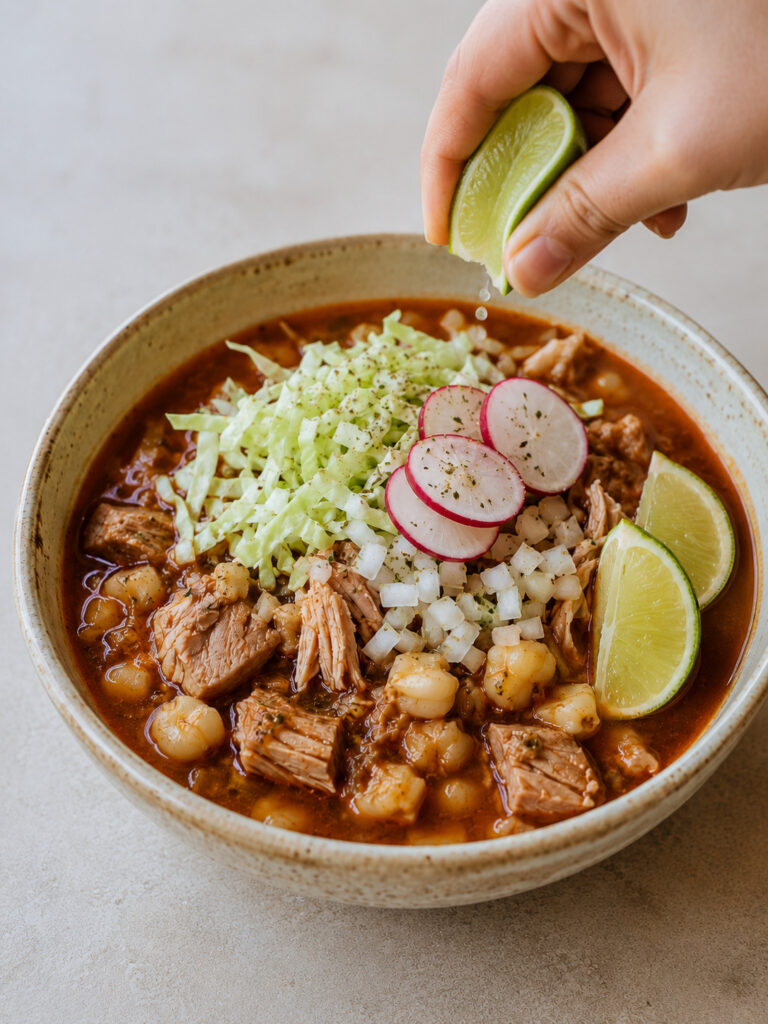
This is the kind of stew that feels generous before you even take a bite. The broth is savory and full-bodied, with a warm red color that promises depth without looking heavy. Pork brings richness and tenderness, hominy adds its signature bounce and chew, and the final toppings keep the bowl lively instead of dense. You get warmth, freshness, and real contrast in every spoonful, which is a big part of why pozole rojo stays so beloved.
The flavor lands in a wonderful middle ground. Guajillo chiles bring brightness and a slightly fruity note, while ancho chiles add a darker, rounder sweetness. The broth feels meaty and soothing, but the shredded cabbage, radishes, onion, lime, and oregano keep it from drifting into heaviness. That mix of tender, crisp, earthy, and sharp is what makes the bowl feel complete. It is hearty enough for dinner, but the toppings make it feel fresh and awake right to the last spoonful.
Pozole rojo fits beautifully at a relaxed weekend table, a family gathering, or any night when you want something cozy that still feels festive. It has that special quality of being humble and dramatic at the same time. The pot looks simple, but the bowl feels abundant once the garnishes go on. That is part of the dish’s magic: a comforting stew base with just enough table-side brightness and texture to make it feel celebratory.
What to Serve With: Serve it with crisp tostadas or warm corn tortillas for scooping and dipping. A simple side of sliced avocado or crema is welcome, but the classic cabbage, radish, onion, oregano, and lime garnish set already gives the bowl a lot of contrast.
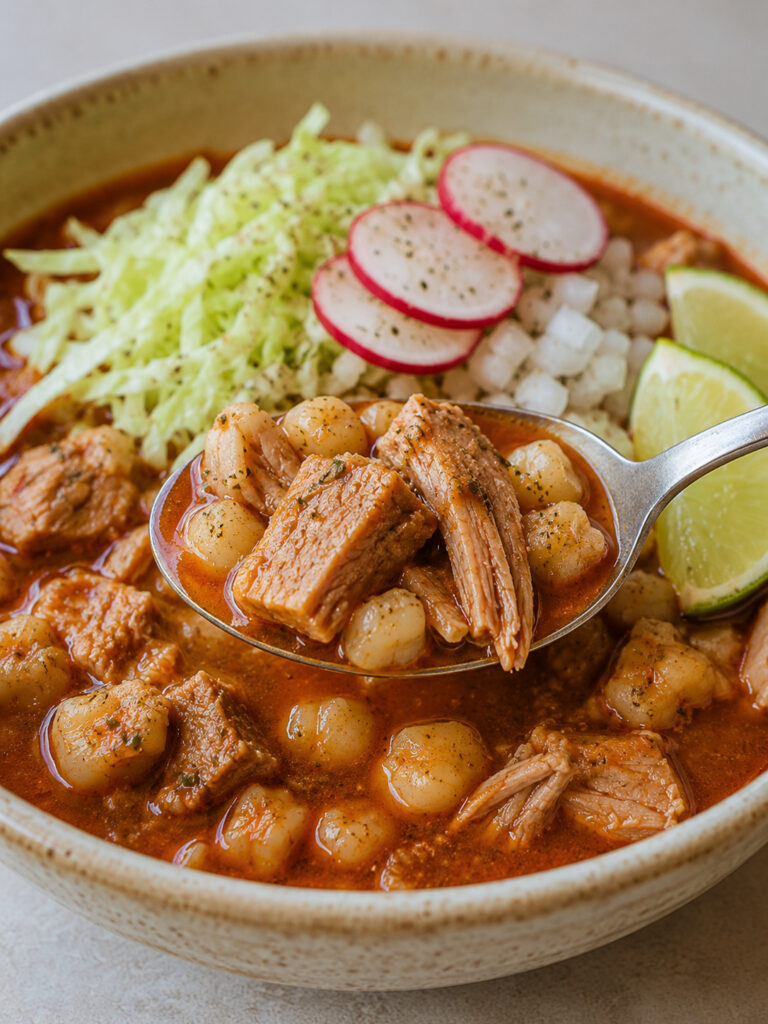
Table of contents
Red Pork and Hominy Stew (Pozole Rojo) Ingredients
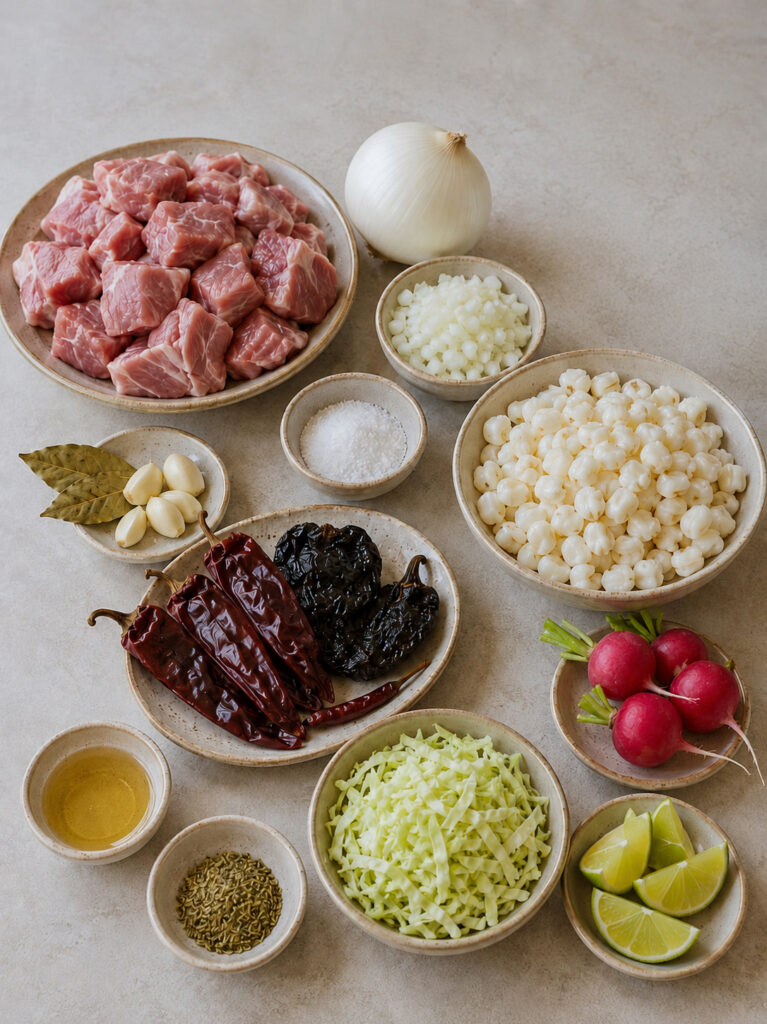
Pork shoulder – Look for a piece with visible marbling and enough fat to keep the broth rich without turning greasy. That extra collagen helps the meat become spoon-tender and gives the soup a fuller body. Boneless country-style pork ribs work well too and bring a similarly succulent finish.
White hominy – This is dried corn that has been treated with an alkaline solution, which removes the hull and gives the kernels their distinctive plump shape, soft chew, and lightly nutty flavor. It matters because pozole does not taste or feel quite right with regular corn. Hominy gives the broth its classic texture and makes the bowl more substantial. Canned white hominy is the easiest option for most home cooks, while yellow hominy works too and tastes slightly nuttier with a less traditional color.
Guajillo and ancho chiles – Choose pods that feel flexible instead of brittle and dusty. Guajillo gives the broth its brighter red tone and gentle fruitiness, while ancho brings a darker, raisin-like depth. New Mexico red chiles can replace the guajillos for a slightly earthier bowl.
Mexican oregano – It has a slightly citrusy, woodsy character that lifts a rich broth more clearly than Mediterranean oregano. That matters most at the finish, where the herb lands right on top of the steam and garnish. Regular oregano works if needed, but the flavor is a little flatter.
Storage
Fridge: Cool and refrigerate within 2 hours. Store for up to 4 days.
Freezer: Freeze for up to 3 months for best quality.
Reheat: Reheat to 165°F / 74°C, or bring the soup to a full boil on the stovetop before serving.
Allergens & Substitutions
Contains: none of the major food allergens
Pork shoulder: Country-style pork ribs work 1:1 by weight and turn similarly tender, but the broth tastes a little richer.
White hominy: Frozen or jarred hominy works similarly once thawed or drained. Dried posole needs a different soaking and simmering schedule, so it is not a direct same-day swap.
Guajillo chiles: New Mexico red chiles work by similar weight and give a slightly earthier, less fruity broth.
Ancho chiles: Mulato chiles work by similar weight and bring a darker, sweeter finish.
Mexican oregano: Regular oregano works 1:1, but the top note is less citrusy and a little less vivid.

Red Pozole
- Total Time: 3 hours 30 minutes
- Yield: 6 servings
Description
Red pozole is a deeply comforting pork and hominy stew with a brick-red chile broth and a bright pile of crunchy garnishes on top. The dish gets its signature color and round, earthy depth from dried red chiles, while the hominy gives it the soft, satisfying chew that makes pozole feel unmistakable.
Ingredients
🐖 Broth
- 2½ lb / 1.1 kg boneless pork shoulder, cut into 2-inch / 5-cm chunks
- 1 large white onion, divided
- 6 garlic cloves, divided
- 2 bay leaves
- 2 tsp / 12 g kosher salt, divided, plus more to taste
- 10 cups / 2400 ml water
🌶️ Chile Base
- 5 dried guajillo chiles, stemmed and seeded
- 2 dried ancho chiles, stemmed and seeded
- 1 dried chile de árbol (optional)
- 1 tbsp / 15 ml neutral oil
- 1 tsp / 1 g dried Mexican oregano
🥬 Finish and Serve
- 50 oz / 1.4 kg white hominy, drained and rinsed
- 2 cups / 140 g finely shredded green cabbage
- 6 radishes, thinly sliced
- ½ medium white onion, finely diced
- 1 lime, cut into wedges
- 1 tsp / 1 g dried Mexican oregano (or regular oregano)
Instructions
Build the broth
- Put the pork shoulder, ½ of the large onion, 4 garlic cloves, bay leaves, 1½ tsp / 9 g kosher salt, and the water in a large Dutch oven or soup pot.
- Bring the pot to a gentle boil over medium-high heat, then lower it to a steady simmer. Skim off any foam from the top, partially cover, and cook for 1¾ to 2¼ hours, until the pork is fully cooked, very tender, and easy to pull apart with a fork. The pork should reach at least 145°F / 63°C, though for pozole you want it more tender than that safe minimum.
- Transfer the pork to a bowl. Discard the bay leaves, onion, and garlic from the broth.
- Taste the broth and skim off some fat if you want a lighter finish, leaving a thin layer for flavor.
Make the chile base
- While the pork cooks, heat a large dry skillet over medium heat. Toast the guajillo chiles, ancho chiles, and chile de árbol for about 5 seconds per side, just until fragrant and slightly darkened.
- Put the toasted chiles in a bowl and cover them with very hot water. Let them soak for 15 minutes, until fully softened.
- Drain the chiles, then blend them with the remaining 2 garlic cloves, the neutral oil, the 1 tsp / 1 g Mexican oregano, and 1½ cups / 360 ml of the hot broth until very smooth.
- Strain the chile mixture through a fine-mesh strainer into the skillet or a saucepan. Simmer over medium heat for 5 to 7 minutes, until the color deepens and the puree looks glossy.
Finish the pozole
- Shred or chop the pork into bite-size pieces, then return it to the broth along with the chile base, the hominy, and the remaining ½ tsp / 3 g kosher salt.
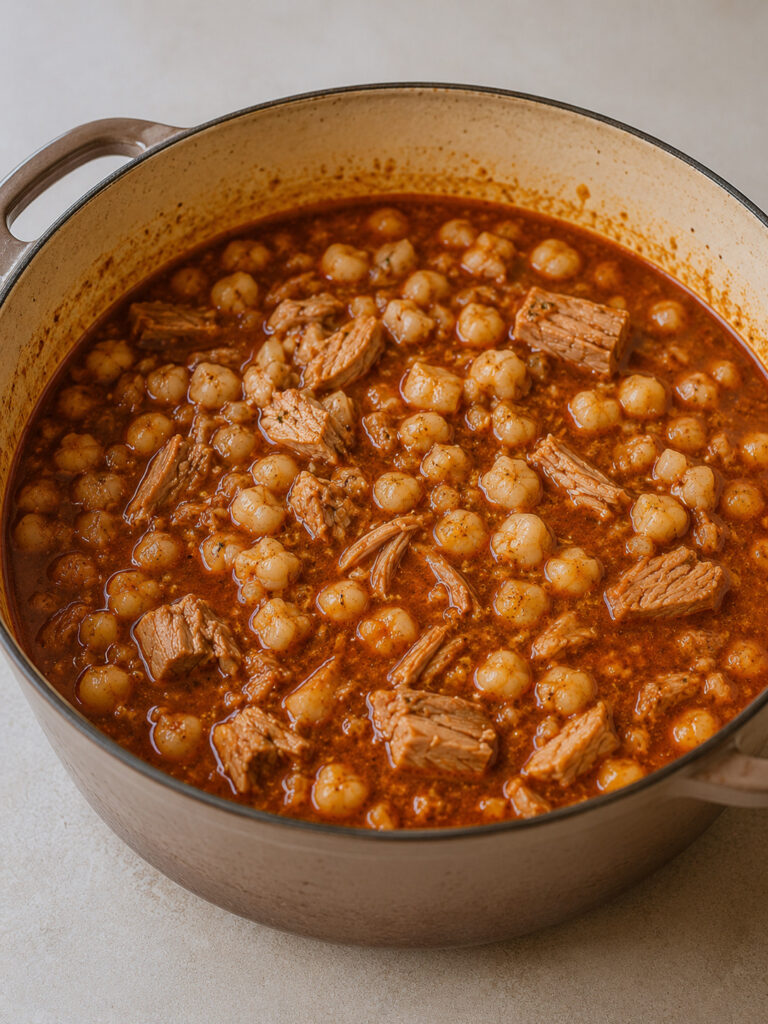
- Simmer uncovered for 30 to 40 minutes, stirring now and then, until the broth is a rich brick red, the hominy looks plump, and the pork is tender enough to break apart with a spoon.
- Taste and add more salt if needed. Serve in deep bowls topped with cabbage, radishes, diced onion, Mexican oregano, and a squeeze of lime. Success looks like a broth that feels lightly silky instead of watery, pork that is fully tender all the way through, and hominy with a soft chew that still holds its shape.
Notes
- Rinse canned hominy well, because the packing liquid can dull the broth and push the bowl saltier than you expect.
- Cut the pork into fairly even chunks so it finishes tender at about the same time instead of giving you a mix of dry and underdone pieces.
- Keep the simmer gentle rather than aggressive, which helps the pork stay tender and keeps the broth clearer.
- Set the garnishes out in separate little piles, because pozole really comes alive when each bowl gets a fresh, crunchy finish.
- If you make it ahead, chill it overnight and skim the fat the next day for an even cleaner, deeper-tasting broth.
- Warm the serving bowls if you can, because pozole is especially comforting when the broth stays hot under the cool toppings.
- Crush the dried oregano between your fingers right before serving so its aroma hits the steam more clearly.
- Serve lime on the side instead of stirring it into the whole pot, which keeps the broth balanced and lets each bowl stay bright to taste.
- Prep Time: 30 minutes
- Cook Time: 2 hours 55 minutes
- Cuisine: Mexican
Pozole Variations
- Chicken Pozole
Change: Replace the pork shoulder with 2 lb / 900 g bone-in, skin-on chicken thighs. Reduce the water to 8 cups / 1920 ml, simmer the chicken for 40 to 50 minutes, then remove the skin and bones before the final 20-minute simmer with the hominy.
Result: Lighter and cleaner, with a less rich broth and a softer, more delicate meat texture. - Richer Pork Version
Change: Replace 1 lb / 450 g of the pork shoulder with 1 lb / 450 g pork country-style ribs. Keep the water the same, and extend the first simmer to 2¼ to 2¾ hours.
Result: Fuller-bodied and more gelatinous, with deeper pork flavor and a broth that feels a little silkier. - Darker Chile Broth
Change: Replace 2 of the guajillo chiles with 2 dried pasilla chiles, and add 1 extra ancho chile.
Result: Darker, earthier, and slightly less bright, with a more brooding chile flavor.
Instant Pot / Pressure Cooker Option
This recipe adapts well to the Instant Pot for the pork and broth, then a short stovetop-style finish for the chile base and hominy. Pressure-cook the pork, onion, garlic, bay, salt, and water on High for about 35 minutes, then let the pressure release naturally for 15 to 20 minutes before shredding or chopping the meat.
Make the chile puree separately, then stir it into the broth with the hominy and use Sauté mode for about 10 to 15 minutes so the flavors come together. The pork still turns very tender, but the broth usually tastes a little less reduced than the stovetop version unless you let it simmer down at the end. It’s a very good shortcut when you want the same cozy feel with less active pot-watching.
Nutrition & Dietary Information
Nutrition Facts
Low carb | ❌ |
Keto | ❌ |
High Protein | ✅ |
Gluten free | ✅ |
Low sugar | ✅ |
Dairy-free / Lactose free | ✅ |
Vegetarian | ❌ |
Vegan | ❌ |
Low sodium | ❌ |
Low Fat | ❌ |
Paleo | ❌ |
Pescatarian | ❌ |
Nut Free | ✅ |
Egg Free | ✅ |
Soy Free | ✅ |
Sesame free | ✅ |
Nutrition information is an estimate and may vary based on ingredients, brands, and portion sizes. This information is not intended as medical advice. For medical or dietary needs, calculate with your specific ingredients and consult a professional.
Diet-Friendly Swaps
Vegetarian: Replace the pork with a mix of mushrooms and extra hominy, and build the broth with a rich vegetable stock plus the same red chile base.
Vegan: Use the vegetarian version, and double-check that your broth and garnishes stay fully plant-based.
Low Sodium: Use unsalted or very low-sodium hominy if you can find it, salt the broth more lightly, and let lime, radish, onion, and oregano do more of the finishing work.
Low Carb: Replace some or all of the hominy with chopped zucchini, cabbage, or cauliflower for a bowl that still feels hearty but lands much lighter in carbs.
Keto: Skip the hominy and use a lower-carb vegetable like zucchini or cauliflower, then keep the pork and chile broth as the main focus.
Paleo: Replace the hominy with cauliflower or zucchini and keep the rest of the broth and garnish set simple and fresh.
Pesceterian: Swap the pork for a firm fish or shrimp, use a lighter broth base, and shorten the final simmer so the seafood stays tender.
Common Problems & Fixes
Likely cause: The dried chiles were toasted too hard, or the chile soaking liquid tasted bitter and carried that into the pot.
Fix: Toast the chiles only until fragrant, not dark or blackened, and if the soaking liquid tastes harsh, blend with hot broth instead of using the soak water.
Likely cause: The pork released a lot of fat, and too much of it stayed in the pot.
Fix: Skim off the excess after the first simmer, but leave a thin layer behind so the broth still tastes rich instead of flat.
Likely cause: It hit a safe temperature, but it did not simmer long enough to turn fully tender.
Fix: Keep going until the meat pulls apart easily with a fork, because pozole wants tenderness more than a bare-minimum doneness target.
Likely cause: The puree was not blended long enough, or it skipped the strainer.
Fix: Blend until very smooth and strain the puree before simmering so the broth stays silky instead of flecked and gritty.
Likely cause: The hominy and pork diluted the seasoning, or the garnish was too light.
Fix: Taste again after the final simmer, then finish generously with onion, radish, cabbage, oregano, and lime so the bowl wakes up at the table.
Likely cause: The pot did not simmer uncovered long enough after the chile base and hominy went in.
Fix: Let the pozole gently reduce until the broth looks lightly silky and clings to the spoon a bit instead of reading thin.