
This salsa verde is bright, tangy, and just smoky enough to taste layered instead of harsh. Roasting the tomatillos softens their sharp edge and gives the finished salsa a fuller, rounder flavor while keeping that classic green freshness.
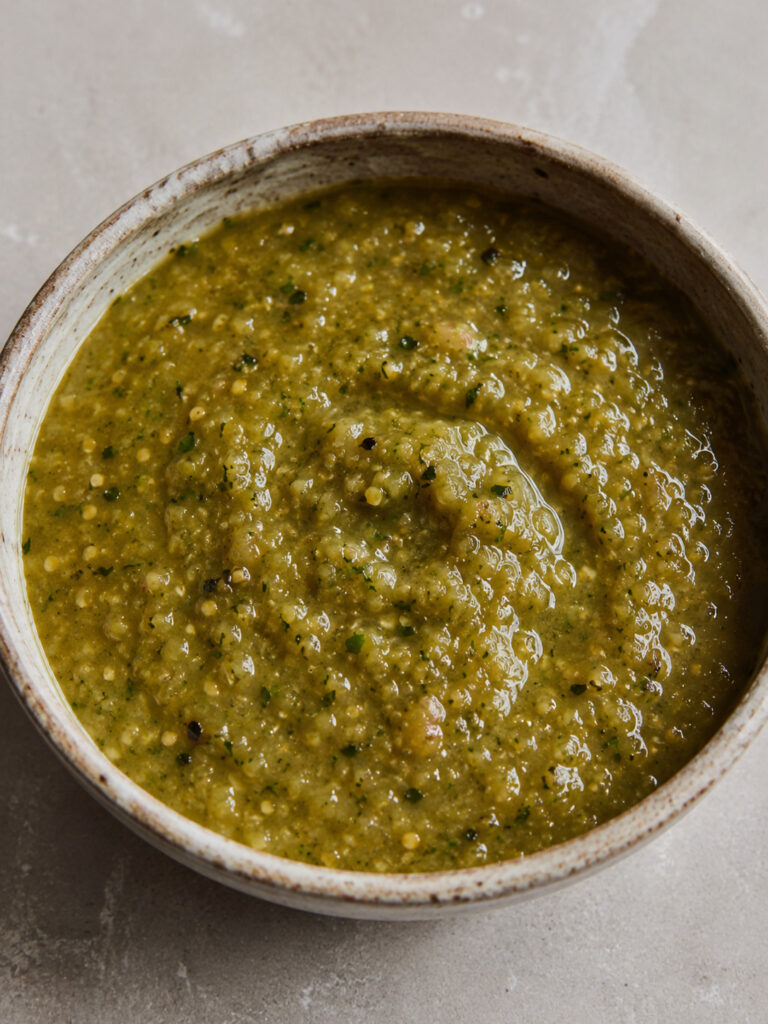
Salsa verde has that rare mix of flavors that feels lively and comforting at the same time. The body is soft and spoonable, with enough texture to cling to chips, tacos, and roasted meats without feeling heavy. Tomatillos give it its signature tart snap, but the overall flavor is gentler than raw green salsa because the heat draws out a little sweetness and rounds the edges. Serrano chiles bring clean, direct warmth, while white onion and garlic add depth that keeps the salsa from tasting one-note. Cilantro and lime lift everything back up so the finish stays fresh, green, and bright.
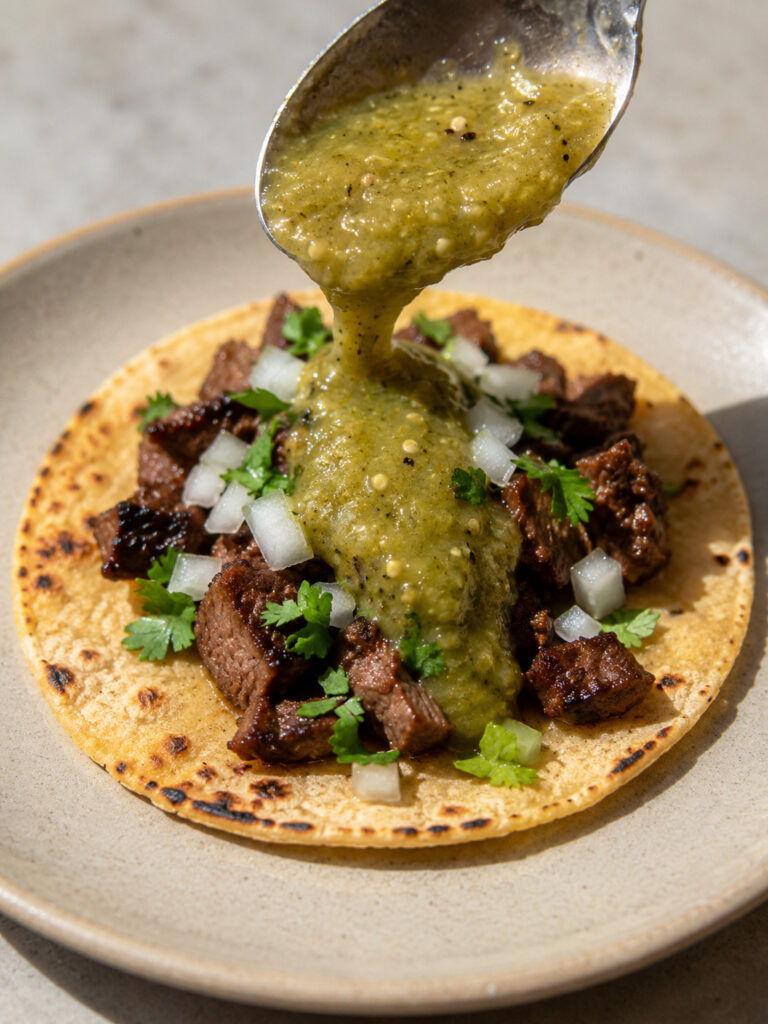
This version lands somewhere between smooth and chunky, which makes it especially useful at the table. It works as a dip, a taco topping, a spooning sauce for eggs, or a punchy accent for grilled chicken, pork, or beans. It’s the kind of condiment that wakes up plain food fast, which is part of why it’s so loved. A bowl of it can turn a simple meal into something that tastes finished.
The balance matters here. Too raw, and the salsa can taste sharp and thin. Too dark, and it loses its clean green character. This style keeps the tomatillo flavor front and center, with a little char, a little heat, and enough acidity to make each bite feel crisp and lively rather than heavy.
What to Serve With: Serve it with tortilla chips, carnitas tacos, chicken enchiladas, or breakfast eggs with warm tortillas. It’s also excellent with grilled shrimp, black beans, or a simple rice bowl where you want one bright, punchy element to carry the plate.
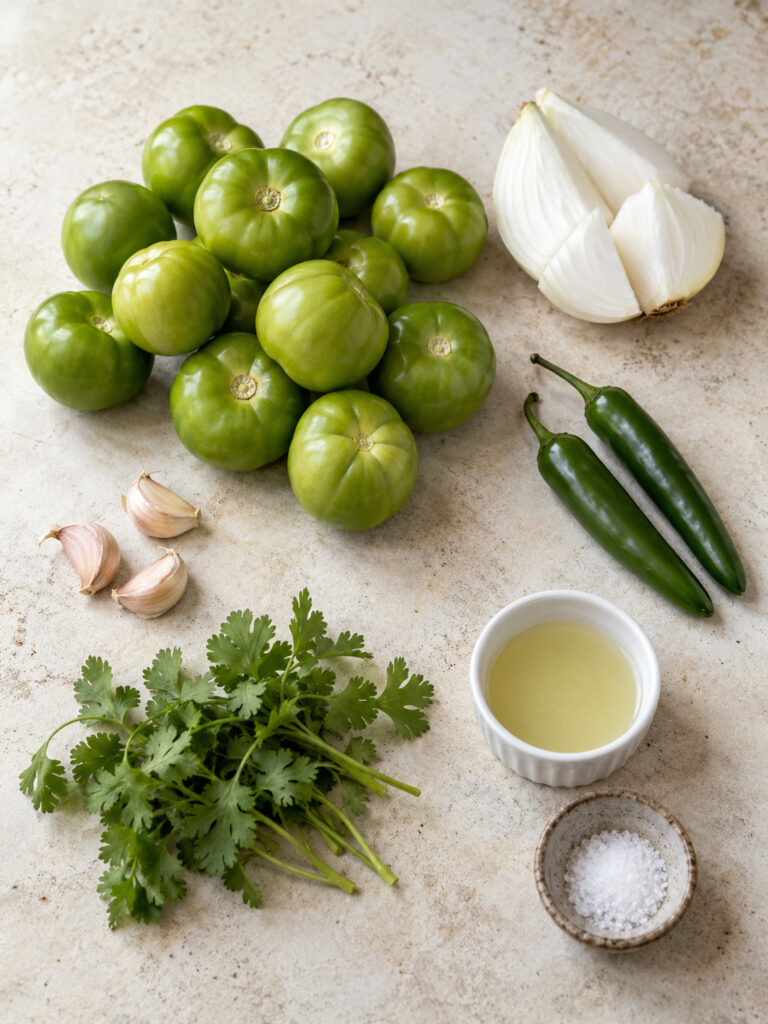
Salsa Verde Ingredients
Tomatillos – Look for firm, bright green tomatillos with dry, snug husks and fruit that fills the wrapper well. Their tart, citrusy flavor is the backbone of salsa verde, and their natural pectin gives the salsa a lightly thick, clingy texture. Overripe or yellowing tomatillos taste flatter and make the finished salsa less vivid.
Serrano chiles – Serranos give this salsa a clean, pointed heat that stays bright against the tangy tomatillos. That sharper heat matters because it lifts the salsa instead of making it taste muddy or dull. Jalapeños work as a milder option, but the final flavor is softer and a little sweeter.
White onion – White onion has a crisp, direct bite that keeps the salsa tasting fresh and lively. It balances the rounded, roasted notes without adding extra sweetness. Yellow onion is usable, though the salsa will taste a touch softer and less sharp.
Cilantro – Fresh cilantro brings the herbal top note that makes salsa verde taste unmistakably green and fresh. It keeps the roasted base from feeling too deep or earthy. Flat-leaf parsley can stand in, but the salsa loses some of its classic citrusy lift.
Salsa Verde Variations
- Milder green salsa (Softer heat, same bright tang)
Change: Replace the 2 / 2 serrano chiles with 1 / 1 jalapeño. Keep the rest of the recipe the same.
Result: The salsa stays fresh and lively, but the heat lands gentler and a little sweeter. It’s a great choice for chips, eggs, and family-style taco nights. - Extra-roasty salsa (Deeper flavor, less sharpness)
Change: Add 2 / 2 extra garlic cloves and roast the tray 3 to 5 minutes longer, just until the tomatillos show deeper blistering.
Result: The salsa tastes smokier, rounder, and a little less sharp. It pairs especially well with grilled meats and beans. - Creamy avocado salsa (Silky, mellow finish)
Change: Blend in 1 ripe avocado / 1 ripe avocado and 1 extra tbsp / 15 ml lime juice after the vegetables cool slightly.
Result: The salsa turns creamier and more mellow, with a richer texture that clings beautifully to tacos and bowls. This version is best the day it’s made.
Storage
Fridge – Store in an airtight container and use within 5 to 7 days for the best flavor and texture. Stir before serving, and discard it sooner if it smells sour, bubbles, or shows mold.
Freezer – Freeze in a freezer-safe container for up to 2 months, leaving a little space for expansion. Thaw in the refrigerator before serving.
Reheat – No reheating is needed. For warm dishes, spoon it over hot food straight from the fridge or warm it gently over low heat just until loose; a hard boil dulls the fresh flavor.
Allergens & Substitutions
Contains: No major common allergens.
Tomatillos: Green tomatoes are not a good 1:1 swap here. They need a dedicated salsa formula because the acidity, texture, and flavor are different.
Serrano chiles: Substitute 1 / 1 jalapeño for milder heat. The salsa stays bright and fresh, but the heat lands softer.
Cilantro: Substitute ¼ cup / 15 g flat-leaf parsley if needed. The salsa will taste less citrusy and more grassy.
Lime juice: Bottled lime juice or lemon juice works at the same amount in a pinch. The flavor is a little flatter than fresh juice, but the salsa still tastes balanced.
Roasted Tomatillo Salsa Verde
- Total Time: 30 minutes
- Yield: 8 servings
Description
This salsa verde is bright, tangy, and just smoky enough to taste layered instead of harsh. Roasting the tomatillos softens their sharp edge and gives the finished salsa a fuller, rounder flavor while keeping that classic green freshness.
Ingredients
🌿 Green Base
- 1½ lb / 680 g – tomatillos, husked and rinsed
- ½ medium – white onion, cut into thick wedges
- 2 serrano chiles, stemmed
- 3 garlic cloves, unpeeled
✨ Fresh Finish
- ½ cup / 15 g – cilantro leaves and tender stems
- 2 tbsp / 30 ml – fresh lime juice
- ¾ tsp / 4 g – kosher salt
Instructions
Set Up
- Heat the oven to 450°F / 230°C and set a rack in the upper third.
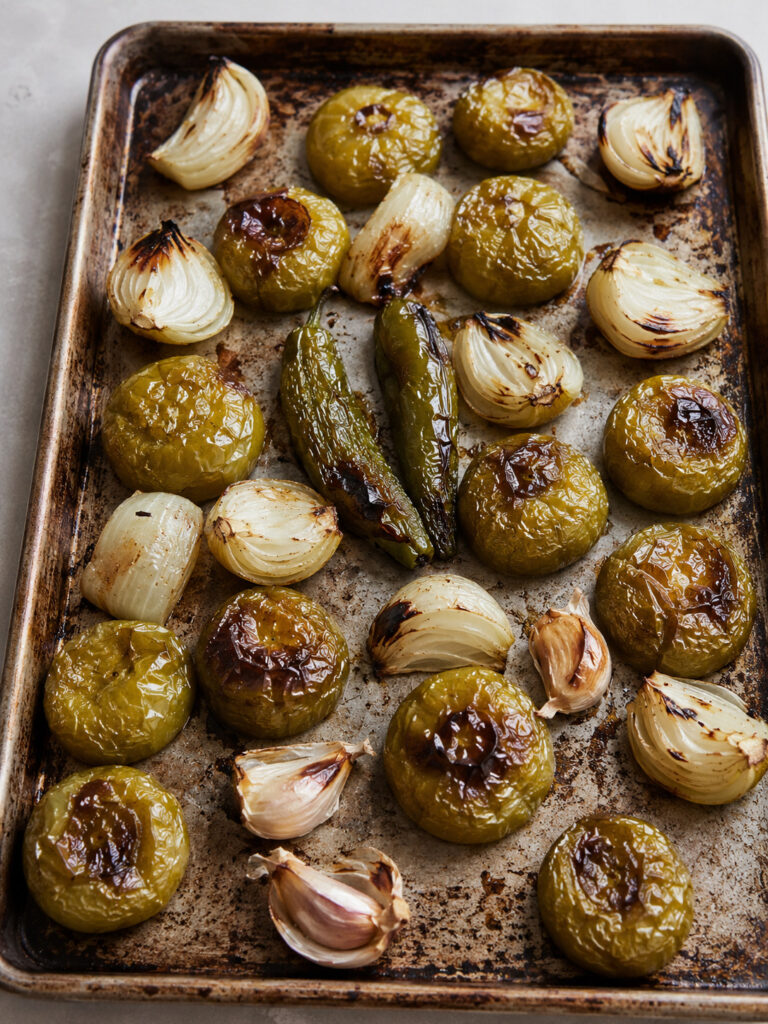
- Pat the tomatillos dry. Scatter the tomatillos, onion wedges, serrano chiles, and unpeeled garlic cloves on a rimmed baking sheet in a single layer.
- Roast until the tomatillos look blistered and softened and the onion has browned at the edges, 18 to 22 minutes, turning the vegetables once halfway through. The tomatillos should look olive green, lightly collapsed, and juicy rather than raw and bright.
-
(Optional) Upgrade: Roast one extra serrano until just a little darker than the others, then blend it in. That gives the salsa a slightly smokier edge without pushing it into bitter territory.
- Let everything cool for 5 minutes. Peel the garlic, and leave the charred bits on the vegetables for flavor.
Blend and Finish
- Transfer the roasted tomatillos, onion, chiles, and peeled garlic to a blender or food processor.
- Add the cilantro, lime juice, and salt. Pulse until the salsa is mostly smooth but still has a little texture.
- If it looks thicker than you like, blend in 1 to 2 tbsp / 15 to 30 ml water until it loosens slightly. If you want a milder salsa, remove some or all of the chile seeds before blending.
- Taste and adjust with a little more salt or lime juice if needed.
- Let the salsa sit for 10 minutes before serving so the flavors settle. Serve warm, room temperature, or chilled.
Notes
- Rinse the tomatillos well after removing the husks, because that sticky coating can make the flavor feel harsher if it stays on.
- Leave a little texture in the blend so the salsa clings better to tacos, eggs, and chips.
- If your tomatillos are especially tart, let the salsa sit for 10 minutes before adjusting again, because the sharpness softens a bit as it rests.
- A blender gives a smoother, more restaurant-style texture, while a food processor keeps it a little more rustic.
- Taste with food, not just off a spoon, because the salt and heat usually feel softer once the salsa is on tacos or chips.
- This salsa often tastes brightest at room temperature rather than fully chilled.
- If you want a milder batch without losing too much green flavor, swap one serrano for a jalapeño.
- Prep Time: 10 min
- Cook Time: 20 min
- Cuisine: Mexican
Nutrition & Dietary Information
Nutrition Facts
Low carb | ✅ |
Keto | ✅ |
High Protein | ❌ |
Gluten free | ✅ |
Low sugar | ✅ |
Dairy-free / Lactose free | ✅ |
Vegetarian | ✅ |
Vegan | ✅ |
Low sodium | ❌ |
Low Fat | ✅ |
Paleo | ✅ |
Pescatarian | ✅ |
Nut Free | ✅ |
Egg Free | ✅ |
Soy Free | ✅ |
Sesame free | ✅ |
Nutrition information is an estimate and may vary based on ingredients, brands, and portion sizes. This information is not intended as medical advice. For medical or dietary needs, calculate with your specific ingredients and consult a professional.
Common Problems & Fixes
Likely cause: The tomatillos did not roast long enough to soften their raw edge.
Fix: Roast until they look lightly collapsed and olive green, not firm and bright raw-green, then let the salsa rest a few minutes before serving.
Likely cause: The tomatillos released a lot of juice, or too much water was added at the end.
Fix: Blend first without extra water, then loosen only a tablespoon at a time until it reaches a spoonable texture.
Likely cause: The garlic, onion, or chiles scorched too hard instead of just charring.
Fix: Aim for blistered and browned rather than deeply blackened, and pull small pieces early if they color faster than the tomatillos.
Likely cause: It needs a little more salt or lime to wake up the roasted flavors.
Fix: Adjust only after blending and resting briefly, because the balance changes once everything settles together.
Likely cause: The vegetables roasted too dark, or the salsa sat too long before the cilantro and lime went in.
Fix: Keep the roast deep enough for flavor but not so dark that everything turns muddy, and add the fresh ingredients at the end.