
Spaghetti Amatriciana is a bold, glossy pasta built around tomato, guanciale, chile, and Pecorino Romano, with spaghetti giving it a slightly lighter feel than chunkier shapes. The magic is in the balance: cured pork fat softens the tomato’s sharpness while the cheese tightens everything into a sauce that clings instead of sitting heavy.
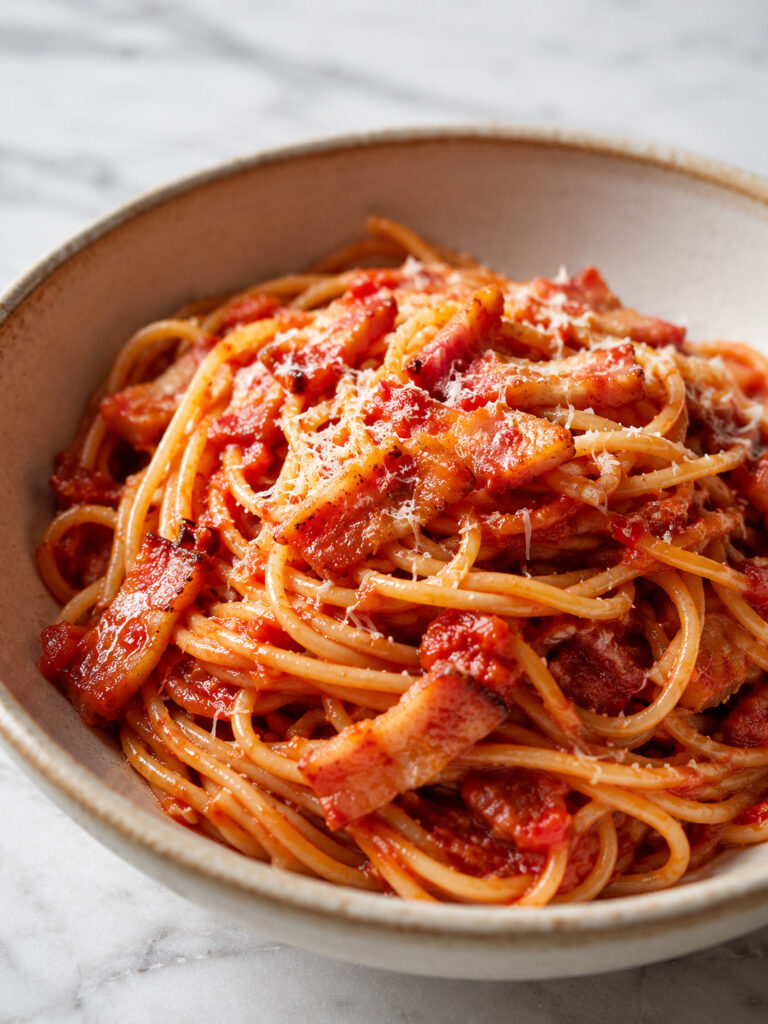
Spaghetti Amatriciana sits in that beautiful space between rustic and elegant. Its flavor is immediate and clear: sweet-tart tomato, salty sheep’s-milk cheese, rich cured pork, and a little flicker of chile that keeps the whole bowl lively rather than aggressively hot. The guanciale is a huge part of the appeal. It brings rendered fat that gives the sauce its silky orange-red sheen, and it also gives you those little browned bites that feel both crisp and chewy. Pecorino Romano sharpens the sauce and adds a dry, savory edge that keeps the tomato from tasting flat or sugary. In a dish with so few ingredients, each one matters, and each one stays noticeable.
Spaghetti makes this version especially easy to love. The strands feel nimble and familiar, and they carry the sauce in a clean, twirlable way that makes the dish feel just a touch lighter than heavier Roman pasta shapes. That’s part of why it works so well for both a weeknight dinner and a more relaxed weekend table. It tastes comforting, but it still has a certain edge to it: bright, salty, meaty, a little hot, and deeply satisfying without turning stodgy. A bowl of this with extra Pecorino at the table and something green on the side feels complete in the best way.
What to Serve With: A simple green salad with olive oil and lemon works well here, because it keeps the meal fresh without adding extra richness. Sautéed zucchini, roasted broccoli, or warm crusty bread are also easy home-cook pairings that make sense with the spicy tomato sauce. For drinks, sparkling water or a light red wine both fit nicely.
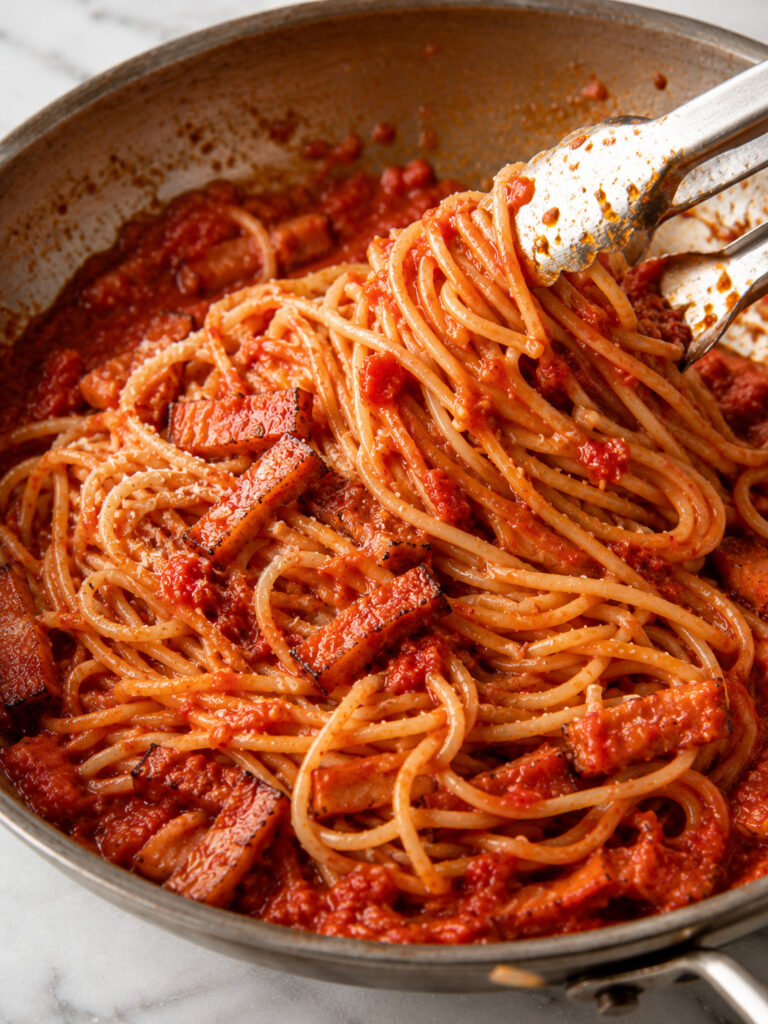
Table of contents
Spaghetti Amatriciana Ingredients
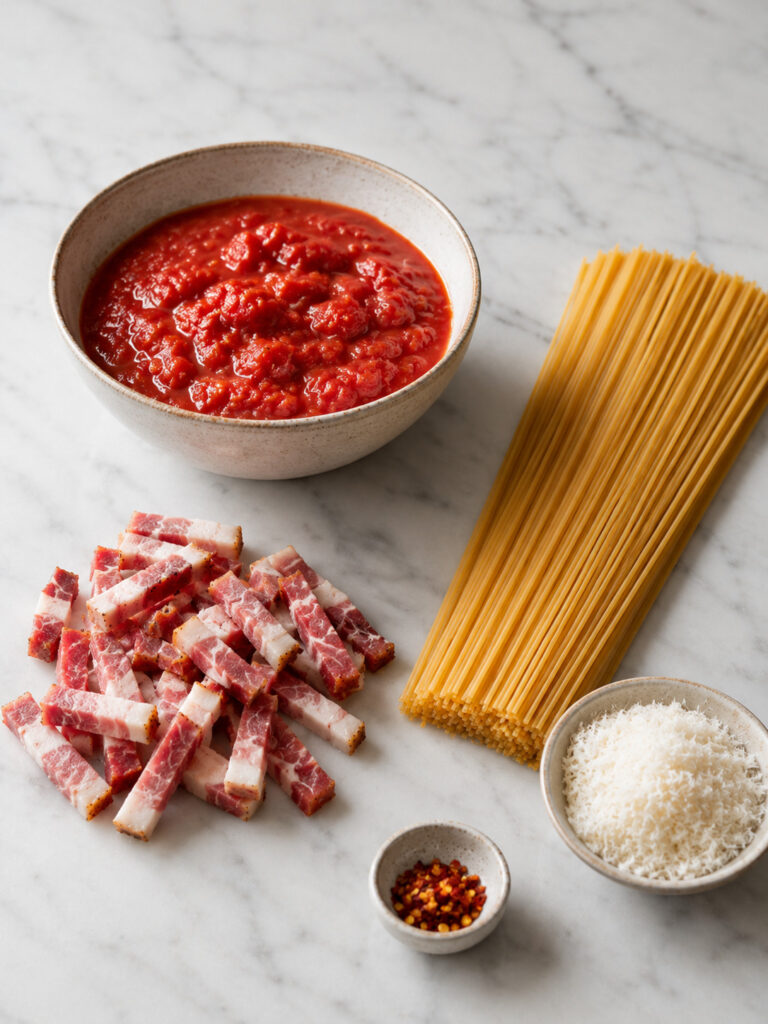
Guanciale – Look for cured pork jowl with a good ratio of creamy fat to meat, not just lean slices. That balance matters because the rendered fat becomes part of the sauce’s body, while the browned pieces stay pleasantly chewy-crisp. Pancetta works, but the final dish tastes a little cleaner and less lush.
Tomatoes – Whole peeled tomatoes give you a brighter, fresher tomato flavor and a looser, more textured sauce than thick jarred pasta sauce. That matters because Amatriciana should feel glossy and vivid, not heavy and jammy. Passata is a workable alternative if you want a smoother finish.
Pecorino Romano – Choose a wedge and grate it finely yourself if you can. Its salty, tangy sheep’s-milk flavor is one of the main pillars of the dish, and a fine grate helps it melt into the sauce more smoothly. Parmigiano Reggiano is milder and rounder, so the result loses some of Amatriciana’s sharp edge.
Spaghetti Amatriciana Variations
- Bucatini swap for extra sauce grip
C̲h̲a̲n̲g̲e̲: Replace the spaghetti with 12 oz / 340 g bucatini. Cook it 1 minute less than the package directions, usually 9 to 11 minutes, then finish the same way.
R̲e̲s̲u̲l̲t̲: The bowl feels a little more dramatic and a little more classic in texture, with sauce tucked inside the hollow strands for a richer bite. - Pancetta fallback version
C̲h̲a̲n̲g̲e̲: Replace the guanciale with 6 oz / 170 g unsmoked pancetta. Keep the rest of the recipe the same.
R̲e̲s̲u̲l̲t̲: You still get a deeply savory pasta, but the flavor is less peppery and less plush because pancetta has a cleaner, leaner cured-pork profile.
Storage
Fridge – Cool and refrigerate within 2 hours, then eat within 3 to 4 days.
Freezer – Freeze for up to 3 to 4 months. The sauce stays safe in that range, though the pasta texture is best before the far end of it.
Reheat – Warm gently in a skillet with a small splash of water until hot all the way through; leftovers should reach 165°F / 74°C.
Allergens & Substitutions
Contains: Dairy, wheat(gluten), pork
Guanciale: Unsmoked pancetta is the best substitute 1:1. Bacon works in a pinch, but it tastes smokier and saltier, so the sauce feels less classic.
Pecorino Romano: Parmigiano Reggiano works, but the pasta tastes rounder and less sharp. For the closest balance, use the same amount and add extra at the table to brighten it.
Spaghetti: Bucatini or rigatoni work 1:1 by weight. Bucatini gives a springier twirl, while rigatoni makes the dish feel a little heartier.
Spaghetti Amatriciana
- Total Time: 30 min
- Yield: 4 servings
Description
Spaghetti amatriciana is a bright, savory pasta with tomato, guanciale, Pecorino Romano, and a gentle chile kick. The magic is in the contrast: rich cured pork and sharp cheese against a fresh-tasting red sauce that coats the pasta without feeling heavy.
Ingredients
🐖 Pork & Heat
- 6 oz / 170 g guanciale (cut into short batons or thick lardons)
- ¼ tsp / 0.5 g crushed chili flakes (or chili powder)
🍅🍝 Tomatoes, Cheese & Pasta
- 1 can (14 oz) / 400 g whole peeled tomatoes (crushed by hand with their juices)
- 1 cup / 80 g finely grated Pecorino Romano, plus more for serving
- 12 oz / 340 g spaghetti
Instructions
Render the base
- Set a large skillet over medium heat. Add the guanciale and let it render slowly for 6 to 8 minutes, stirring now and then, until the fat is glossy and the edges are browned; the pieces should look crisp outside but still slightly chewy in the center.
- Transfer about one-third of the guanciale to a plate for finishing. Add the chili flakes to the skillet and stir for 15 to 30 seconds, just until fragrant.
- Add the crushed tomatoes and their juices carefully; the pan may sputter. Stir well, scraping up any flavorful bits on the bottom.
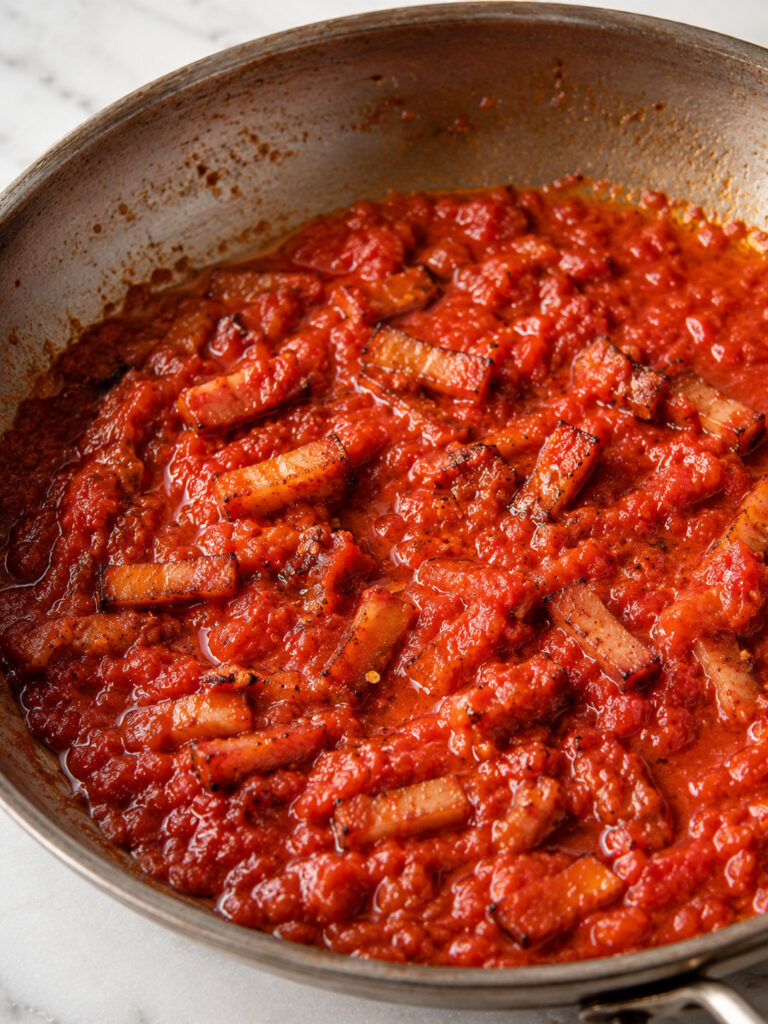
- Bring the sauce to a lively simmer, then lower the heat to medium-low and let it reduce for 8 to 12 minutes, stirring once or twice, until it looks brick red and lightly glossy rather than watery.
Boil the pasta
- Meanwhile, bring a large pot of water to a boil and salt it generously. Add the spaghetti and cook 1 minute less than the package directions, usually 8 to 10 minutes, stirring early so the strands do not stick.
- Scoop out 1½ cups / 360 ml pasta water, then drain the spaghetti.
Finish the Amatriciana
- Set the skillet over medium heat again if needed. Add the spaghetti and about ½ cup / 120 ml pasta water, then toss for 1 to 2 minutes until the strands look evenly coated.
- Take the skillet off the heat. Add the Pecorino Romano in 3 additions, tossing between each addition and loosening with small splashes of pasta water as needed until the sauce turns glossy and clings to the spaghetti instead of pooling at the bottom.
- Taste and adjust with a little more cheese or chile if needed. Twirl into warm bowls and top with the reserved guanciale and extra Pecorino; success looks like shiny red strands with crisp-chewy bits throughout, not a dry pile and not a soupy puddle.
Notes
- Use whole peeled tomatoes packed in juice rather than a thick prepared pasta sauce, because the flavor stays brighter and more Roman in style.
- Pre-grated cheese often melts less cleanly, so a fine hand-grated Pecorino gives you a smoother finish.
- Reserve a little more pasta water than the recipe asks for if your spaghetti brand tends to drink up sauce quickly.
- Warm the serving bowls so the sauce stays glossy a little longer instead of tightening on contact.
- Save some of the crisp guanciale for the very end so the bowl keeps that chewy-crisp contrast.
- Crush the tomatoes by hand and leave a few small uneven pieces, because that rustic texture catches nicely on the strands.
- Serve right away, because Amatriciana always tastes liveliest when the sauce has just finished clinging to the pasta.
- Prep Time: 10 min
- Cook Time: 20 min
- Cuisine: Italian
Nutrition & Dietary Information
Nutrition Facts
Low carb | ❌ |
Keto | ❌ |
High Protein | ✅ |
Gluten free | ❌ |
Low sugar | ✅ |
Dairy-free / Lactose free | ❌ |
Vegetarian | ❌ |
Vegan | ❌ |
Low sodium | ❌ |
Low Fat | ❌ |
Paleo | ❌ |
Pescatarian | ❌ |
Nut Free | ✅ |
Egg Free | ✅ |
Soy Free | ✅ |
Sesame free | ✅ |
Nutrition information is an estimate and may vary based on ingredients, brands, and portion sizes. This information is not intended as medical advice. For medical or dietary needs, calculate with your specific ingredients and consult a professional.
Diet-Friendly Swaps
Gluten Free: Use a certified gluten-free spaghetti and keep the sauce a touch looser, since gluten-free pasta can tighten the bowl faster.
Vegetarian: Replace the guanciale with deeply browned mushrooms cooked until concentrated and a little chewy at the edges.
Vegan: Use the mushroom swap for the pork and a sharp vegan grating cheese in place of the Pecorino.
Dairy/Lactose Free: Use a dairy-free hard cheese alternative or a lactose-free aged grating cheese, knowing the flavor will shift a bit.
Low Carb: Swap the spaghetti for a low-carb noodle or a vegetable noodle base, then keep the sauce concentrated so it still feels generous.
Keto: Use a keto-friendly noodle replacement and keep the tomato portion modest, since the pasta is the biggest carb driver here.
Pesceterian: Replace the guanciale with a savory seafood-based accent, such as bottarga or a small amount of crisped anchovy, for a different but still punchy finish.
Low Sodium: Use a lower-sodium cured pork option, choose no-salt-added tomatoes, salt the pasta water lightly, and go easier on the finishing cheese.
Common Problems & Fixes
Likely cause: Too much guanciale fat stayed in the pan, or the pasta wasn’t tossed long enough with starchy water to pull the sauce together.
Fix: Spoon off a little rendered fat if the guanciale was especially rich, then toss hard with small splashes of pasta water until the sauce turns glossy instead of oily.
Likely cause: The skillet was still too hot, or the Pecorino went in too fast.
Fix: Take the pan fully off the heat and add the cheese in small additions, tossing between each one with a little pasta water as needed.
Likely cause: The tomatoes didn’t reduce long enough, or the canned tomatoes were especially bright and tart.
Fix: Let the sauce cook down to a brick-red gloss before the pasta goes in, and give the Pecorino time to round the edges once everything is tossed together.
Likely cause: The tomatoes were still too wet, or too much pasta water went in too early.
Fix: Reduce the tomato base a little further before adding the spaghetti, then loosen in smaller splashes so the sauce coats instead of puddles.
Likely cause: It cooked too fast over heat that was too high.
Fix: Start over medium heat and let the fat render gradually so the pieces brown without scorching.
Likely cause: The guanciale and Pecorino were both assertive, and the pasta water may have been salted heavily.
Fix: Hold back on any extra salt, taste only after the final toss, and use the finishing cheese with a light hand.