
This focaccia is plush and airy inside with a crisp, olive-oil-fried edge and a rosemary-salty top. A higher-hydration dough makes bigger bubbles and a lighter crumb, while generous oil keeps everything tender and flavorful.
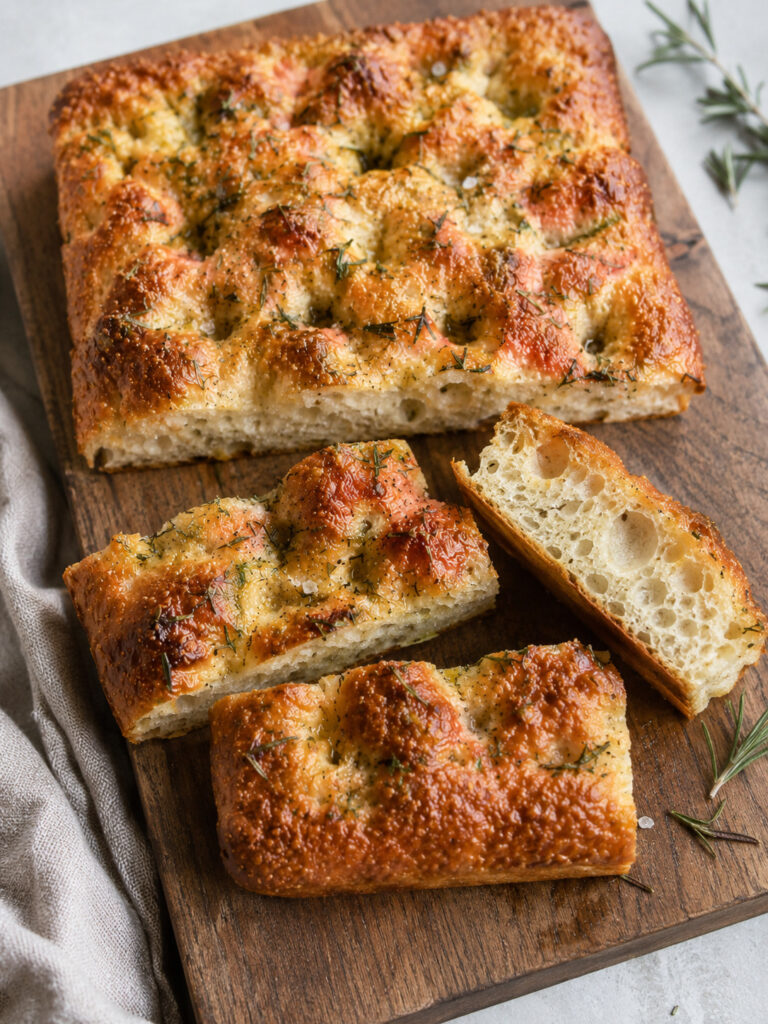
Focaccia is a soft, dimpled pan bread with a tender, open crumb and a savory crust that turns deeply golden at the edges. The surface is glossy with olive oil and scattered with herbs, and those little dimples cradle tiny puddles of flavor. Flaky salt on top adds a bright crunch that makes each bite feel lively. The flavor is simple and satisfying: warm wheatiness, a gentle yeast aroma, and the fruity richness of good olive oil, with rosemary bringing a piney, almost lemony lift.
What people love most is the contrast in textures. The interior feels pillow-soft and springy, with irregular air pockets that keep it light, while the bottom and corners turn crisp where the oil meets the hot pan. That edge is the treat—shattering slightly, then giving way to a plush center that stays pleasantly chewy. It’s comforting enough to nibble plain, yet interesting enough to serve with a meal.
On the table, focaccia is a natural companion to soups, brothy beans, and saucy pastas, and it shines next to bright salads and roasted vegetables. It also belongs on a snack board with olives, cured meats, and soft cheeses, because it holds its own without overpowering everything else. Sliced horizontally, it becomes an excellent sandwich base: sturdy, flavorful, and tender to bite through.
The key components are humble—flour, water, yeast, salt, olive oil, and herbs—but the final effect feels generous and celebratory. You get the aroma of rosemary and olive oil, the sparkle of salt, and that unmistakable focaccia chew that makes people reach for “just one more” piece.
What to Serve With: Focaccia is perfect with tomato soup,minestrone, or any brothy bean stew. It’s also great on a snack board with marinated olives, sliced tomatoes, and a swipe of soft cheese. For sandwiches, split a piece and fill it with roasted vegetables or simple deli meats.
Table of contents
Focaccia Bread Ingredients
Bread flour – Higher protein flour gives you a chewier bite and sturdier bubbles. All-purpose flour works too, but the crumb will be a bit softer and less lofty. Unbleached flour tends to taste a little fuller and looks more golden.
Extra-virgin olive oil – Use one you genuinely like the flavor of, because it shows up in the crust and on the top. Peppery oils taste bolder and more savory; mild oils keep things buttery and gentle. If your oil is very bitter, the finish can read slightly sharp.
Instant yeast – Instant yeast is convenient and reliable, and it performs well in wetter doughs. Active dry yeast can work, but it’s often a touch slower and may taste slightly more “yeasty” if overused. Fresher yeast gives you a cleaner rise and lighter aroma.
Fine sea salt – Fine salt dissolves evenly, so the bread tastes seasoned throughout. If you use coarse kosher salt, the dough can taste under-salted unless you measure by weight. Proper salt makes the wheat taste sweeter and the olive oil taste fruitier.
Focaccia Bread Variations
1. Garlic-Parmesan top (savory, extra crisp)
Change: After dimpling, sprinkle on 2 cloves / 2 – garlic, finely grated, and 1/3 cup / 30 g – finely grated Parmesan; keep the rosemary or skip it.
Result: Sharper, toastier aroma and a lacy, browned top from the cheese.
2. Olive & lemon (bright, briny)
Change: Press 3/4 cup / 100 g – pitted olives into the dimples before baking; add 1 tsp / 2 g – finely grated lemon zest with the flaky salt.
Result: Salty pops of olive and a fresh citrus lift that makes the olive oil taste even fruitier.
3. Overnight dough (deeper flavor)
Change: Reduce the instant yeast to 1 tsp / 3 g (about half). After ‘Group ‘Mix & first rise), Step 2, cover and refrigerate 12–18 hours. Bring to room temperature 45–60 minutes before panning, then continue as written.
Result: More complex, wheaty flavor and a slightly more open crumb.
Storage
Fridge: Up to 7 days (it will stale faster; freezing is usually better for texture).
Freezer: Up to 2 months, wrapped airtight.
Reheat: At room temp.
Allergens & Substitutions
Contains: wheat (gluten)
Bread flour: Use all-purpose flour 1:1. The focaccia will be a bit softer and less chewy.
Instant yeast: Use active dry yeast 1:1. Dissolve it in 1/4 cup / 60 ml of the recipe water first, then add that mixture with the remaining water; expect the rises to run a little longer.
Gluten-free flour: Not a 1:1 swap for this style of dough; it needs a dedicated formula for structure and hydration.
Focaccia
- Total Time: 3h 45 min
- Yield: 8 servings
Description
This focaccia is plush and airy inside with a crisp, olive-oil-fried edge and a rosemary-salty top. A higher-hydration dough makes bigger bubbles and a lighter crumb, while generous oil keeps everything tender and flavorful.
Ingredients
Dough
- 3 ½ cups / 420 g – bread flour (or all-purpose flour)
- 1 ⅓ cups / 315 ml – lukewarm water (about 95°F / 35°C)
- 2 tsp / 6 g – instant yeast
- 2 tsp / 12 g – fine sea salt
- ⅓ cup / 80 ml – extra-virgin olive oil (divided)
Topping
- 2 tbsp / 6 g – fresh rosemary, finely chopped
- 1 tsp / 3 g – flaky sea salt
Instructions
Mix & first rise
- In a large bowl, whisk the flour and instant yeast together.
- Add the water and 2 tbsp / 30 ml of the olive oil. Stir with a sturdy spoon until no dry flour remains and you have a sticky, shaggy dough.
- Sprinkle in the fine sea salt and stir again until it’s evenly distributed (the dough will look rough but cohesive).
- Cover tightly and let rise at room temperature until very puffy and bubbly, 1.5–2.5 hours. It’s ready when the surface looks airy and it jiggles when you nudge the bowl.
Pan, rest, and dimple
- Pour 2 tbsp / 30 ml olive oil into a 9×13-inch / 23×33 cm pan and spread it to coat the bottom and corners well.
- Scrape the dough into the pan. Turn it once to lightly coat both sides in oil.
- Let the dough rest 15 minutes, uncovered. If it tightens and resists stretching, that’s normal.
- With oiled fingertips, gently stretch the dough toward the corners. If it springs back, rest 10 minutes, then stretch again until it mostly fills the pan.
- Cover and let proof until thick, marshmallowy, and visibly expanded, 45–90 minutes. A gentle poke should leave an indentation that slowly springs back.
- Heat the oven to 450°F / 230°C with a rack in the middle position.
- Drizzle the remaining olive oil (about 2–4 tbsp / 30–60 ml) over the dough. Press your fingertips straight down to the pan to make deep dimples all over.
- Sprinkle evenly with chopped rosemary and flaky salt.
Bake & finish
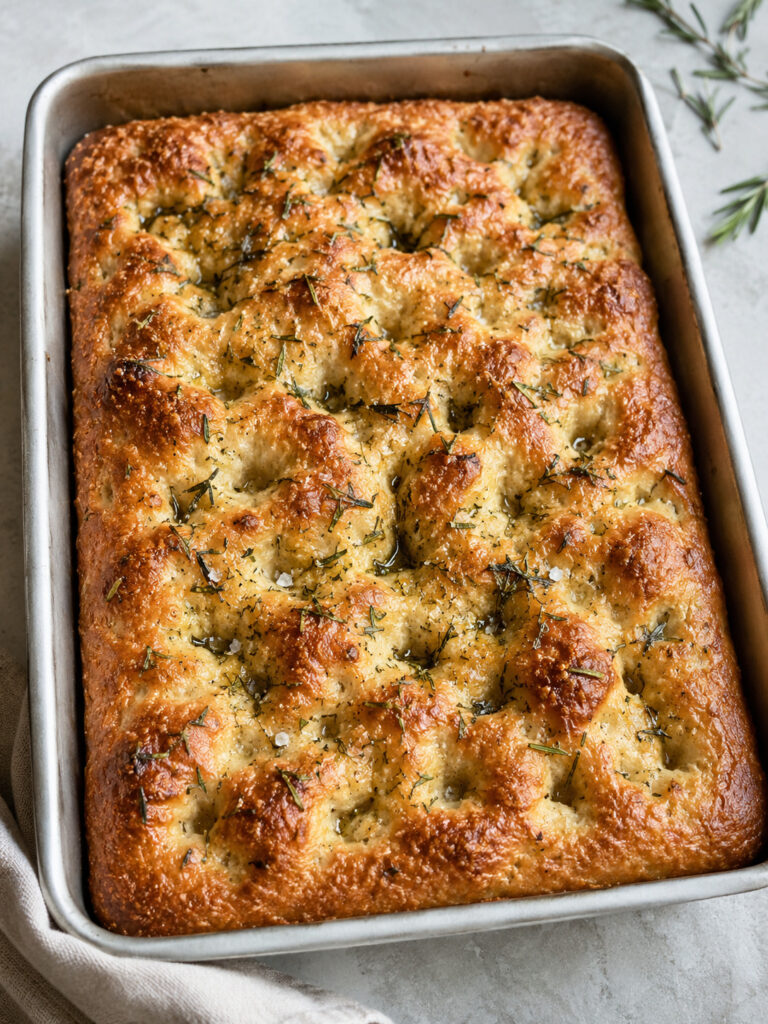
- Bake at 450°F / 230°C for 20–25 minutes, rotating the pan once halfway through, until the top is deep golden brown and the edges look crisp and “fried” in oil.
- Doneness cue: the focaccia should feel light for its size, the dimples should be bronzed, and the bottom should be well-browned when you lift a corner with a spatula.
- Cool in the pan 10 minutes, then transfer to a rack. Slice warm or at room temperature.
Notes
- Wet or oil your fingertips before dimpling so you make deep pockets without tearing the dough.
- For extra dramatic bubbles, let the dough get very airy before dimpling—if it looks “marshmallowy,” you’re in the sweet spot.
- If your kitchen is cool, rise the dough in the oven with just the light on (a gentle, steady warmth).
- Cut with a serrated knife once it’s barely warm; cutting piping-hot can compress the crumb.
- Want cleaner rosemary flavor? Rub the chopped rosemary between your fingers before sprinkling (it releases aroma fast).
- For sandwiches, cool fully before slicing horizontally—warm focaccia can tear instead of cutting cleanly.
- Freezing works best sliced: freeze pieces flat, then re-crisp straight from frozen in a hot oven.
- Prep Time: 25 min
- Rise Time: 3 hour
- Cook Time: 20 min
- Category: Bread
- Cuisine: Italian
Baker’s Percentage
- Flour: 100%
- Water: 75%
- Salt: 2.9%
- Instant yeast: 1.4%
- Olive oil (total listed): ~17%
These percentages scale everything relative to flour (flour is always 100%), so you can resize the dough without guesswork. Raising hydration (more water) makes a lighter, bubblier crumb but also a stickier dough; lowering it makes handling easier but reduces that plush, open look. Salt around 2–3% boosts flavor and structure—lower tastes bland, higher can feel aggressively salty.
Nutrition & Dietary Information
Nutrition Facts
Low carb | ❌ |
Keto | ❌ |
High Protein | ❌ |
Gluten free | ❌ |
Low sugar | ✅ |
Dairy-free / Lactose free | ✅ |
Vegetarian | ✅ |
Vegan | ✅ |
Low sodium | ❌ |
Low Fat | ❌ |
Paleo | ❌ |
Pescatarian | ✅ |
Nut Free | ✅ |
Egg Free | ✅ |
Soy Free | ✅ |
Sesame free | ✅ |
Nutrition information is an estimate. For medical or dietary needs, calculate with your specific ingredients and consult a professional.
Common problems & fixes
Likely cause: Dough didn’t rise enough (cool room, tired yeast), or you pressed out too much gas while stretching.
Fix: Wait for truly puffy, jiggly dough before panning, and stretch gently in stages with rests so you keep the bubbles.
Likely cause: Gluten is tight and needs time to relax.
Fix: Rest 10 minutes between stretches, then continue—time is what makes high-hydration dough behave.
Likely cause: Pan didn’t conduct heat well (glass/light pan), not enough oil under the dough, or underbaked.
Fix: Use a metal pan, make sure the bottom is well-oiled, and bake until the underside is deeply browned (lift a corner to check).
Likely cause: Pan is too close to the bottom element, or your pan is very dark/heavy and runs hot.
Fix: Move the rack one level higher and/or drop the oven 10–15°C (25°F) next time; if the top needs more color, finish with a short broil.
Likely cause: Needs aroma/contrast—focaccia is simple, so it benefits from a finishing note.
Fix: Add a tiny extra drizzle of fruity oil after baking and/or a quick squeeze of lemon at serving for lift (especially if you’re eating it plain).