
This is a classic, bubbly pepperoni pizza with a crisp-edged crust, tangy tomato base, and those salty little cups of pepperoni on top. A hot preheated surface (stone/steel or an upside-down sheet pan) helps you get strong bottom browning in a home oven.
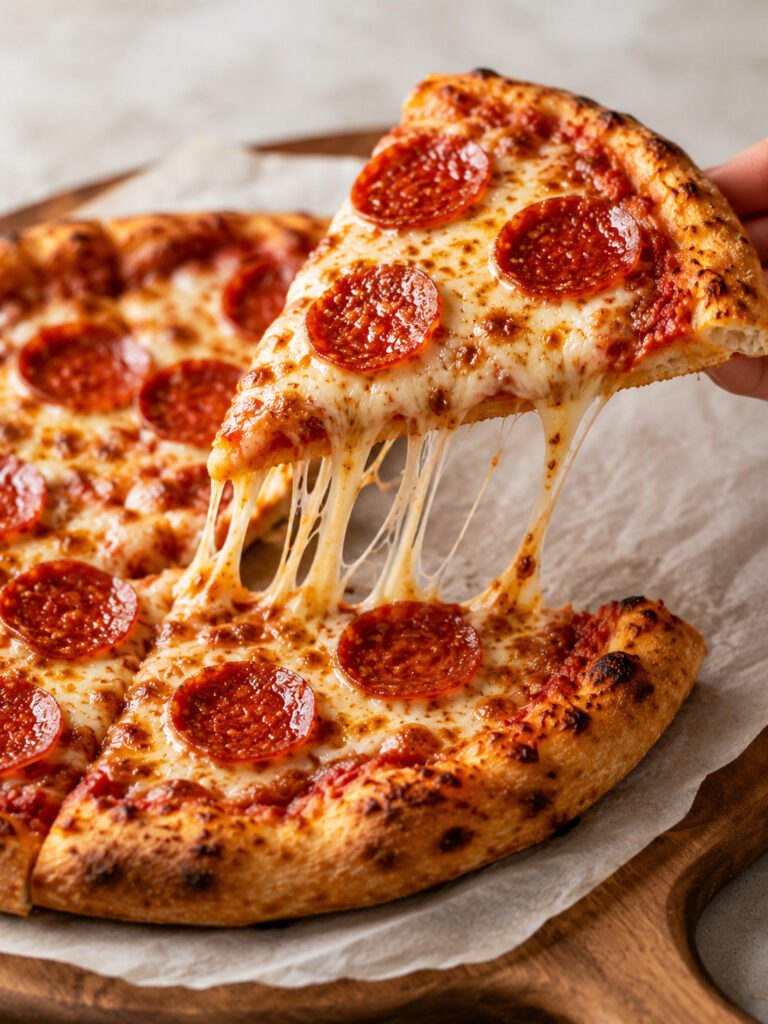
Pepperoni pizza is comfort food at its most dependable: a chewy-yet-crisp crust, a bright tomato layer, stretchy mozzarella, and spicy-salty pepperoni that turns glossy and irresistible in the heat. The best versions hit a balance of textures—crackly edges, a sturdy but tender center, and a top that’s browned in spots without drying out. The sauce should taste like tomatoes first (not sugary), with enough richness to stand up to the cheese and cured meat. Mozzarella brings the melt and the pull, while a small amount of firmer cheese adds a savory, toasted finish.
What makes pepperoni pizza so loved is how every bite is built from simple building blocks that “stack” flavor: acidity from tomatoes, fat from cheese and pepperoni, and gentle char from a very hot bake. Pepperoni’s paprika-and-garlic notes bloom as it heats, and the rendered oil lightly seasons the cheese layer. Meanwhile, a properly heated baking surface gives you that bakery-style contrast—an underside that browns quickly while the top blisters and bubbles.
Serve it hot and sliceable for movie night, game day, or an easy weekend dinner. It pairs perfectly with a crunchy salad or pickly sides, and leftovers reheat beautifully when you focus on re-crisping the crust.
What to Serve With: A crisp green salad with a tangy vinaigrette cuts the richness nicely. Garlic knots or a simple bowl of marinated olives keep the pizzeria vibe going. If you want something fresh and crunchy, add pickled peppers on the side.
Table of contents
Pepperoni Pizza Ingredients
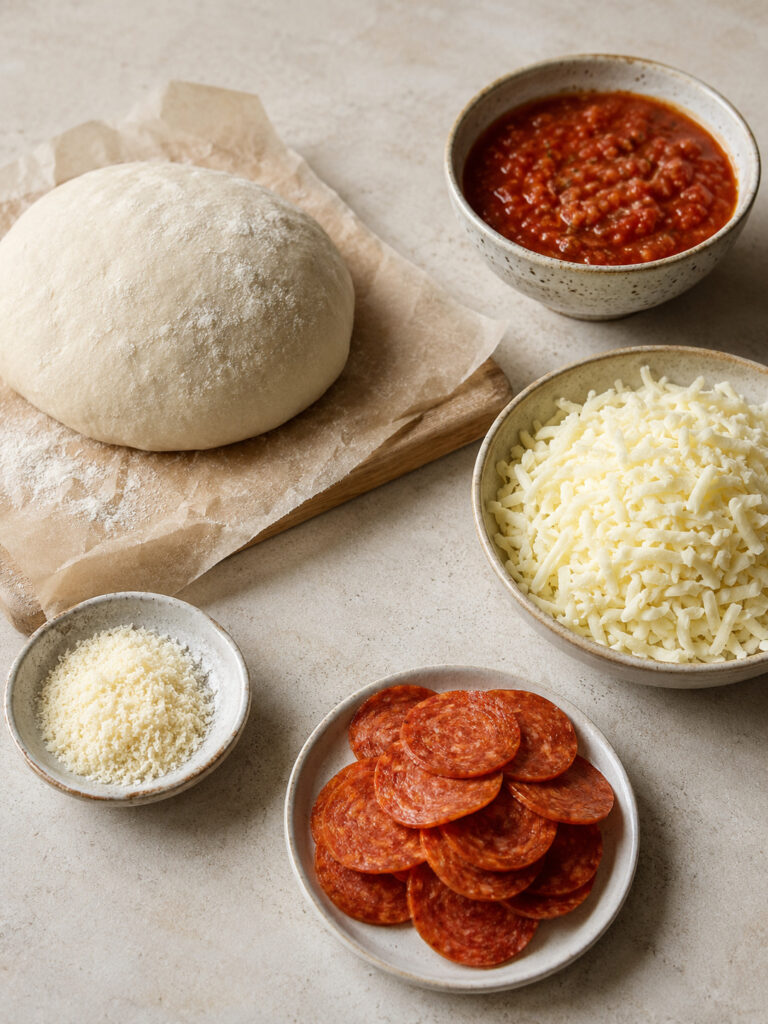
Pizza dough – Use our recipe! A well-fermented dough browns faster and tastes more complex, even in a home oven. A medium-hydration dough tends to stretch easily and bakes up crisp-tender without feeling bready. If your dough is cold, it can spring back and resist stretching.
Crushed tomatoes/passata – Look for crushed tomatoes labeled “no added sugar” for a clean, bright sauce flavor. Thicker crushed tomatoes make a less watery pizza that stays sliceable, while very thin ones can soften the center.
Mozzarella – Low-moisture mozzarella melts evenly and helps prevent puddles of water on top. Fresh mozzarella tastes milky and delicate, but it can release more moisture and may bake up softer.
Pepperoni – “Cup-and-char” styles curl into little cups and crisp at the edges, while standard slices lie flatter and give a more even salty bite. Either works; the main difference is texture.
Pepperoni Pizza Variations
- Spicy honey drizzle
Change: Mix 1 tbsp of honey with chili powder and drizzle over the pizza right after baking.
Result: Sweet-heat contrast that makes the pepperoni taste even more savory. - Extra-crispy pepperoni edges
Change: Use 2 oz / 56 g pepperoni and place a few slices near the rim.
Result: More crisped, rendered bits and a stronger pepperoni aroma. - Cheese blend boost
Change: Replace 2 oz / 56 g of mozzarella with 2 oz / 56 g provolone, shredded.
Result: Slightly sharper, toastier melt with a more deli-style savory note.
Storage
Fridge: Cool leftovers quickly; refrigerate in a covered container and eat within 3–4 days.
Freezer: Wrap slices airtight and freeze up to 3–4 months for best quality.
Reheat: Skillet method for best crust—warm a slice in a covered skillet over medium until the bottom is crisp and the cheese is melted, 4–7 minutes (add a few drops of water to the pan before covering if the cheese needs help melting).
Allergens & Substitutions
Contains: wheat(gluten) and dairy
Pizza dough: Gluten-free dough works, but it won’t stretch the same and usually bakes up a bit drier; follow the dough brand’s shaping tips.
Mozzarella: Dairy-free mozzarella-style shreds can melt differently (often less stretchy); use a slightly lighter layer and expect a softer top.
Pepperoni Pizza
- Total Time: 2 hours
- Yield: 4 servings
Description
This is a classic, bubbly pepperoni pizza with a crisp-edged crust, tangy tomato base, and those salty little cups of pepperoni on top. A hot preheated surface (stone/steel or an upside-down sheet pan) helps you get strong bottom browning in a home oven.
Ingredients
🥖 Dough & base
- 8 oz / 225 g – pizza dough (room temperature, use our recipe!)
🍅 Sauce
- 0.5 cup / 120 ml – crushed tomatoes
- 2 tsp / 10 ml – olive oil
- 0.5 tsp / 1 g – dried oregano
- 0.5 tsp / 1 g – garlic powder
🧀 Cheese & topping
- 4 oz / 115 g – mozzarella, shredded (or your favorite cheese, I won’t tell anyone!)
- 1 oz / 28 g – grated Parmesan (optional but nice)
- 1.5 oz / 43 g – pepperoni slices
Instructions
Heat & prep
-
Put a pizza stone / baking steel on the middle rack (or place a rimmed sheet pan upside-down on the middle rack). Preheat the oven to 500°F / 260°C for 45–60 minutes so the surface gets truly hot.
-
In a bowl, stir together the crushed tomatoes, olive oil, oregano, and garlic powder. Keep it simple; pepperoni and cheese bring plenty of seasoning.
-
Shred the mozzarella if needed. If it seems very wet, loosely pile it on a plate for a few minutes so it can air-dry a bit.
Shape & top
-
Lightly flour your hands and counter. Gently press the dough into a disk, then stretch it into a 12-inch / 30 cm round, leaving a slightly thicker rim.
-
Set the dough on a piece of parchment (optional for easy launching) on a peel or flat sheet pan.
-
Spoon the sauce on and spread it thinly, leaving a 3/4-inch / 2 cm border.
-
Add the mozzarella evenly, then the Parmesan (if using).
-
Scatter the pepperoni across the top (overlap slightly for a fuller pepperoni bite).
Bake & finish
-
Slide the pizza onto the hot stone/steel (parchment and all, if using). Bake 8–12 minutes at 500°F / 260°C.
-
Success looks like: deeply golden spots on the crust edge, bubbling cheese with light brown freckles, and pepperoni edges that are crisp and slightly cupped. If the top needs more color but the bottom is already browned, switch to broil for 30–60 seconds, watching nonstop.
-
Cool 2 minutes, slice, and serve while the cheese is still stretchy but the slices hold together.
Notes
- Do a quick “jiggle test” on your peel before launching—if the pizza doesn’t slide, lift an edge and toss a pinch of flour/semolina underneath.
- If using parchment at high heat, trim it close to the dough so the edges don’t scorch and smoke; you can tug it out once the crust sets.
- Rotate the pizza once halfway through if your oven has hot spots—those freckles will even out fast.
- Brush the exposed crust edge with a whisper of olive oil right before baking for a shinier, crispier rim.
- Want extra savory crunch? Sprinkle a light ring of finely grated hard cheese right at the edge where crust meets sauce.
- Blot pepperoni briefly with paper towel if you want less grease pooling on top (especially with thicker stacks).
- Finish with a tiny pinch of dried oregano or chili flakes after baking for that “pizzeria aroma” pop.
- Prep Time: 30 min
- Rise & Rest: 1h 20 min
- Cook Time: 10 min
- Category: Pizza
- Cuisine: Italian
Nutrition & Dietary Information
Nutrition Facts
Low carb | ❌ |
Keto | ❌ |
High Protein | ✅ |
Gluten free | ❌ |
Low sugar | ✅ |
Dairy-free / Lactose free | ❌ |
Vegetarian | ❌ |
Vegan | ❌ |
Low sodium | ❌ |
Low Fat | ❌ |
Paleo | ❌ |
Pescatarian | ❌ |
Nut Free | ✅ |
Egg Free | ✅ |
Soy Free | ✅ |
Sesame free | ✅ |
Nutrition information is an estimate and may vary based on ingredients, brands, and portion sizes. This information is not intended as medical advice. For medical or dietary needs, calculate with your specific ingredients and consult a professional.
Diet-Friendly Swaps
- Gluten Free: Use certified gluten-free pizza dough and a gluten-free dusting flour/semolina substitute.
- Dairy/Lactose Free: Use dairy-free mozzarella-style shreds and omit Parmesan (or use a dairy-free hard-style alternative).
- Vegetarian: Swap pepperoni for vegetarian pepperoni or sliced roasted peppers/olives.
- Vegan: Use vegan cheese + vegan pepperoni, and make sure your dough ingredients are vegan.
Common Problems & Fixes
Likely cause: The dough is cold or the gluten is tight from not enough resting.
Fix: Let the dough sit covered at room temp until puffy and relaxed; if it fights you mid-stretch, pause 10 minutes, then continue.
Likely cause: The dough is overstretched in one area, or it’s over-fermented and fragile.
Fix: Stretch a little at a time while rotating; if you see a thin spot, stop pulling there and thicken it by nudging dough from a thicker area (a small pinch-seal patch is totally fine).
Likely cause: Too much sauce/topping moisture, or the baking surface wasn’t fully heated.
Fix: Use a thinner sauce layer, keep toppings light, and make sure your stone/steel/sheet is ripping hot before you launch.
Likely cause: High-moisture cheese (or very wet shreds) releasing water fast.
Fix: Use low-moisture mozzarella for the main melt; if your cheese feels damp, spread it out for a few minutes to air-dry (or blot gently) before topping.
Likely cause: Baking surface is too intense for your oven’s top heat, or the rack position favors the underside.
Fix: Move the rack one notch higher and finish with a short broil burst for color (watch nonstop).
Likely cause: Pepperoni is very thin, very sugary, or placed in the hottest “broiler zone” too early.
Fix: Use slightly thicker slices, keep pepperoni more toward the center, and save any broil finishing for the very last moments.