
This marinara is bright, garlicky, and balanced—tomato-forward with a silky finish from olive oil. A short, gentle simmer takes the raw edge off canned tomatoes while keeping the sauce fresh-tasting and lively.
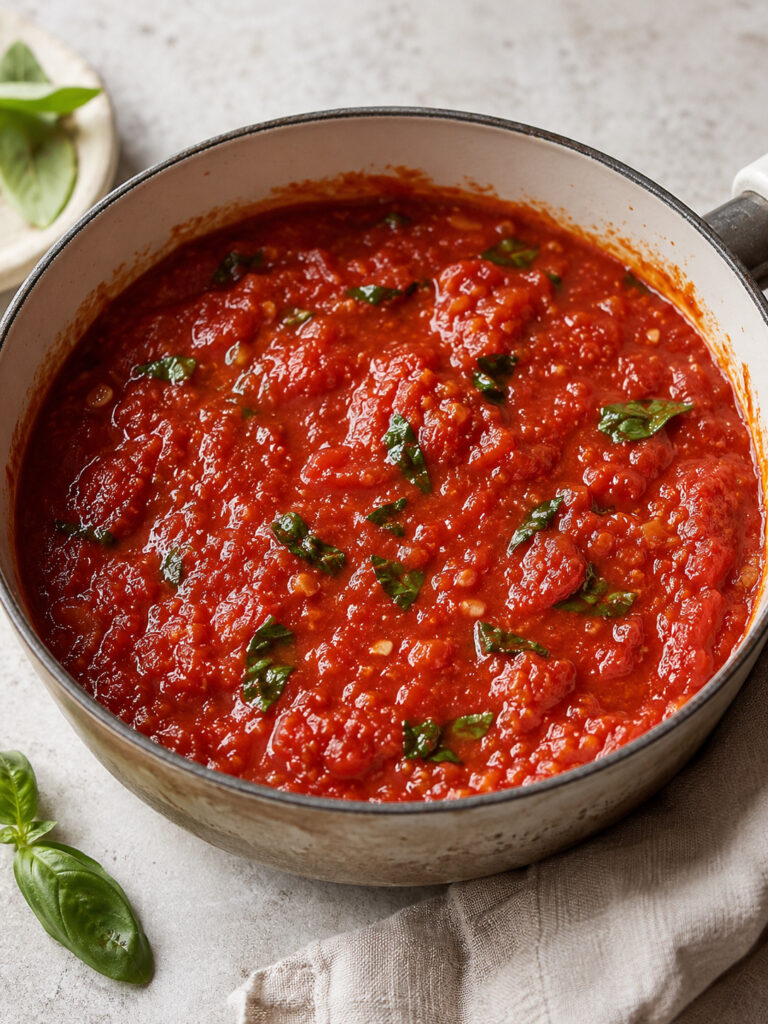
Marinara sauce is the weeknight hero you reach for when you want something simple that still tastes deeply satisfying. It’s clean and tomato-forward, with a gentle savory backbone from onion and garlic and a soft herbal lift from oregano and basil. The texture can be chunky and rustic or smoother and spoon-coating, but it should always feel light on its feet—rich enough to cling to pasta, not so heavy that it tastes jammy or dull.
What people love about marinara is how versatile it is. It’s equally at home under melted mozzarella, tossed with noodles, tucked into baked dishes, or used as a dip. The best versions taste like tomatoes first: naturally sweet, pleasantly tangy, and rounded out by olive oil. Garlic gives that familiar pizzeria aroma, while a bay leaf adds subtle depth without shouting “spice rack.” Fresh basil at the end makes the whole pot smell like summer, even in the middle of winter.
Because marinara relies on so few ingredients, each one matters. Good canned tomatoes make the sauce taste bright instead of flat. Extra-virgin olive oil gives a soft, fruity finish. And keeping the seasoning simple helps the sauce stay flexible—ready for meatballs one night, eggplant another, and pizza whenever the craving hits.
What to Serve With: Toss with spaghetti, rigatoni, or gnocchi, then finish with grated cheese. Spoon over chicken parmesan or eggplant dishes for a classic pairing. It’s also perfect as a pizza base—spread a thin layer over pizza dough before topping
Table of contents
Marinara Ingredients
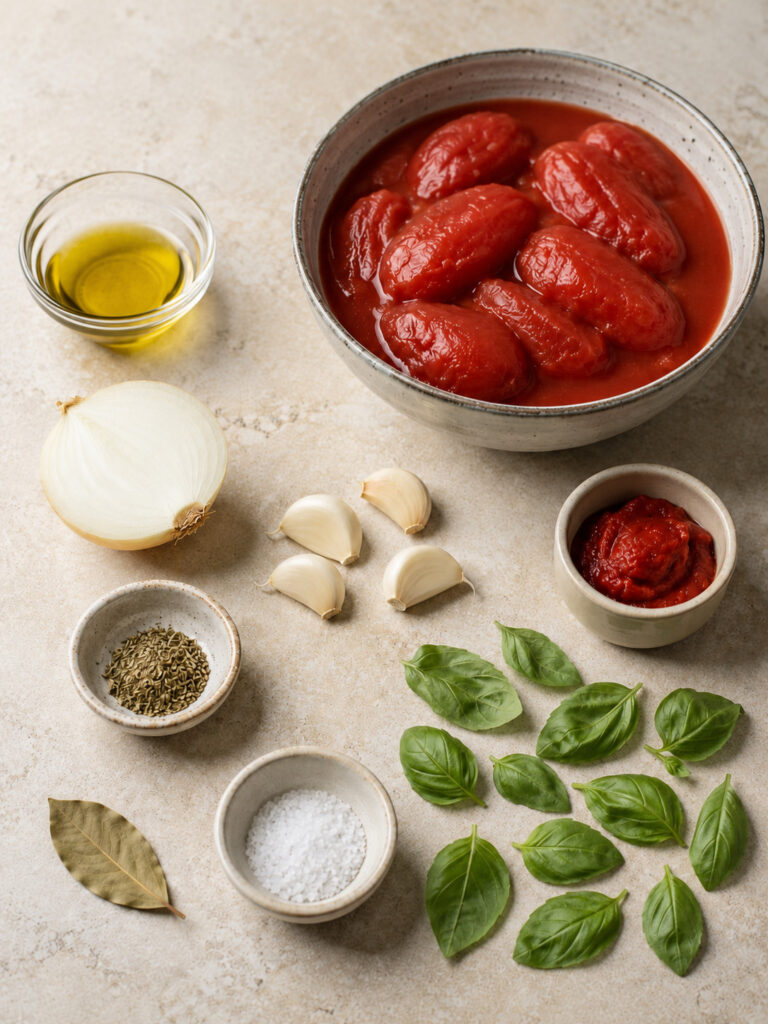
Canned tomatoes – Whole peeled tomatoes tend to taste rounder and less “tinny” than many pre-crushed options, and they let you control the final texture. Crushed tomatoes make a smoother sauce faster, but the flavor varies a lot by brand, so choose one you already like.
Extra-virgin olive oil – A fresh, peppery oil adds a silky finish and a gentle fruitiness that softens tomato sharpness. A more neutral oil works, but the sauce will taste a bit flatter and less aromatic.
Garlic – Fresh garlic gives the signature marinara aroma and a warm bite that lingers. Pre-minced jarred garlic can taste harsh or dull; the sauce may come off more “generic.”
Basil – Fresh basil gives a sweet, floral lift that makes the sauce taste brighter. Dried basil is more muted and slightly minty, so the sauce reads more “herby” than fresh.
Marinara Variations
- Spicy marinara (peppery heat)
Change: Add 1/2 tsp / 1 g chili flakes with the garlic.
Result: A warm, building heat that plays especially well with sausage, meatballs, and cheesy bakes. - Chunky vegetable marinara (heartier texture)
Change: Add 1 cup / 140 g finely diced bell pepper with the onion.
Result: Sweeter, thicker sauce with more body and little pops of vegetable texture. - Richer marinara (silkier finish)
Change: Add 1 tbsp / 14 g butter off the heat, right before the basil.
Result: A softer, rounder sauce with a more velvety mouthfeel.
Storage
Fridge: Cool quickly, cover, and refrigerate up to 3–4 days.
Freezer: Freeze in portions up to 3–4 months for best quality.
Reheat: Reheat to a full simmer, stirring often, or heat until 165°F / 74°C if you want a clear safety target.
Allergens & Substitutions
Contains: none
Canned tomatoes: Crushed tomatoes can replace whole peeled tomatoes at the same amount; the sauce will be smoother with less rustic texture.
Fresh basil: Use 1 tsp / 1 g dried basil if needed; the sauce will taste more earthy and less bright.
Marinara Sauce
- Total Time: 40 minutes
- Yield: 6 servings
Description
This marinara is bright, garlicky, and balanced—tomato-forward with a silky finish from olive oil. A short, gentle simmer takes the raw edge off canned tomatoes while keeping the sauce fresh-tasting and lively.
Ingredients
🧅 Aromatics
- 2 tbsp / 30 ml – extra-virgin olive oil
- 0.5 medium yellow onion
- 4 cloves – garlic (finely chopped)
🍅 Tomatoes & seasoning
- 28 oz / 800 g – whole peeled tomatoes (with juices)
- 1 tbsp / 16 g – tomato paste
- 1 tsp / 1 g – dried oregano
- 1 – bay leaf
- 1 tsp / 6 g – fine sea salt
🌿 Finish
- 10 basil leaves
Instructions
Build the base:
-
Set a medium saucepan over medium heat. Add the olive oil.
-
Add the onion and cook 6–8 minutes, stirring now and then, until soft and translucent (no browning).
-
Add the garlic and cook 30–60 seconds until fragrant.
-
Stir in the tomato paste for 30 seconds to deepen the tomato flavor.
Simmer:
-
Add the whole peeled tomatoes and their juices. Crush the tomatoes with a spoon as you stir.
-
Stir in the oregano, bay leaf, and salt.
-
Bring to a gentle simmer over medium-high heat, then reduce to low so you see steady, lazy bubbles.
-
Simmer uncovered or partially covered for 20–25 minutes, stirring every few minutes to prevent sticking. If it thickens too fast, stir in 2–4 tbsp / 30–60 ml water.
-
Success looks like: the sauce turns a deeper red, the surface looks glossy, and it tastes mellow (not sharp or “raw tomato”).
Finish:
-
Turn off the heat. Remove the bay leaf.
-
Tear in the basil leaves. Taste and adjust salt if needed.
-
For a smoother sauce, blend briefly with an immersion blender (or carefully blend in a countertop blender and return to the pot).
Notes
- Crush the whole tomatoes with your hands (in the pot) if you want a more natural, rustic texture with fewer “perfectly round” chunks.
- If you prefer a smoother marinara, blend briefly and stop while it’s still a little textured—over-blending can make it taste oddly foamy.
- Add the basil off the heat so it stays bright and sweet instead of drifting into “cooked herb” territory.
- A final drizzle of extra-virgin olive oil right before serving makes the sauce taste silkier and more tomato-forward.
- For freezer portions, cool fast and freeze flat in bags—thin slabs thaw quickly and evenly.
- If you’re using the sauce for pizza, keep it on the chunkier side and don’t over-reduce (thick sauce can bake up dry).
- Want a deeper savory note without making it “meaty”? Simmer with a Parmesan rind, then remove before serving.
- Prep Time: 10 min
- Cook Time: 30 min
- Cuisine: Italian
Pressure Cooker / Instant Pot Option
You can make this in an Instant Pot, but you’ll still want a quick simmer at the end to thicken. Use Sauté to soften the onion in oil, then add the garlic briefly and stir in the tomato paste. Deglaze with a splash of water so nothing sticks, then add the tomatoes (and a little extra water) and do not scrape up any browned bits.
Pressure cook on High for about 5 minutes, then quick release. Switch back to Sauté to reduce to your preferred thickness, then turn off the heat and add basil. Texture will be slightly “more cooked” and smooth from the pressure, but still bright if you keep the post-cook reduction short.
Nutrition & Dietary Information
Nutrition Facts
Low carb | ✅ |
Keto | ✅ |
High Protein | ❌ |
Gluten free | ✅ |
Low sugar | ✅ |
Dairy-free / Lactose free | ✅ |
Vegetarian | ✅ |
Vegan | ✅ |
Low sodium | ❌ |
Low Fat | ❌ |
Paleo | ✅ |
Pescatarian | ✅ |
Nut Free | ✅ |
Egg Free | ✅ |
Soy Free | ✅ |
Sesame free | ✅ |
Nutrition information is an estimate and may vary based on ingredients, brands, and portion sizes. This information is not intended as medical advice. For medical or dietary needs, calculate with your specific ingredients and consult a professional.
Diet-Friendly Swaps
Low Sodium: Cut the salt significantly and choose no-salt-added tomatoes; add more basil/garlic and a drizzle of olive oil to make up flavor.
Low Fat: Reduce the olive oil and finish with a splash of starchy pasta water (or vegetable stock) for body instead of extra oil.
Common Problems & Fixes
Likely cause: The tomatoes are naturally high-acid (brand/variety varies), or the sauce didn’t get enough gentle simmer time to mellow.
Fix: Keep the simmer low and steady a bit longer; if it’s still sharp, add a small grated carrot or a tiny pinch of baking soda (go slow—too much can make the sauce taste flat and soapy).
Likely cause: Garlic browned/burned, or dried herbs simmered too aggressively for too long.
Fix: Keep garlic on gentle heat and pull it as soon as it’s fragrant; add basil at the end, and keep oregano modest (you can also stir in a little olive oil at the finish to soften bitter edges).
Likely cause: Tomatoes were thin/juicy, or the pot was covered too much so water couldn’t evaporate.
Fix: Simmer uncovered (or partially covered) with lazy bubbles until it thickens; if you need a faster assist, add a small spoonful of tomato paste and simmer 2–3 minutes.
Likely cause: Heat is too high for a thick tomato base, or the pot wasn’t stirred enough.
Fix: Lower the heat to a gentle simmer and stir from the bottom every few minutes; if it starts to stick, transfer to a clean pot without scraping the burnt bits.
Likely cause: Not enough reduction (tomato flavor hasn’t concentrated), or the olive oil finish is too small/was cooked off.
Fix: Simmer a little longer to concentrate; finish with a fresh drizzle of good olive oil for a rounder, more “restaurant” flavor.
Likely cause: Some canned tomatoes/paste can taste metallic, and very reactive cookware can amplify it.
Fix: Simmer gently to mellow it, avoid reactive pans for long tomato simmers, and add basil at the end for a fresher top note.