
Spaghetti carbonara is a Roman pasta classic with a glossy egg-and-cheese sauce, crisp bites of cured pork, and plenty of black pepper. The silky texture comes from residual heat and starchy pasta water rather than cream, which keeps the sauce rich but still elegant.
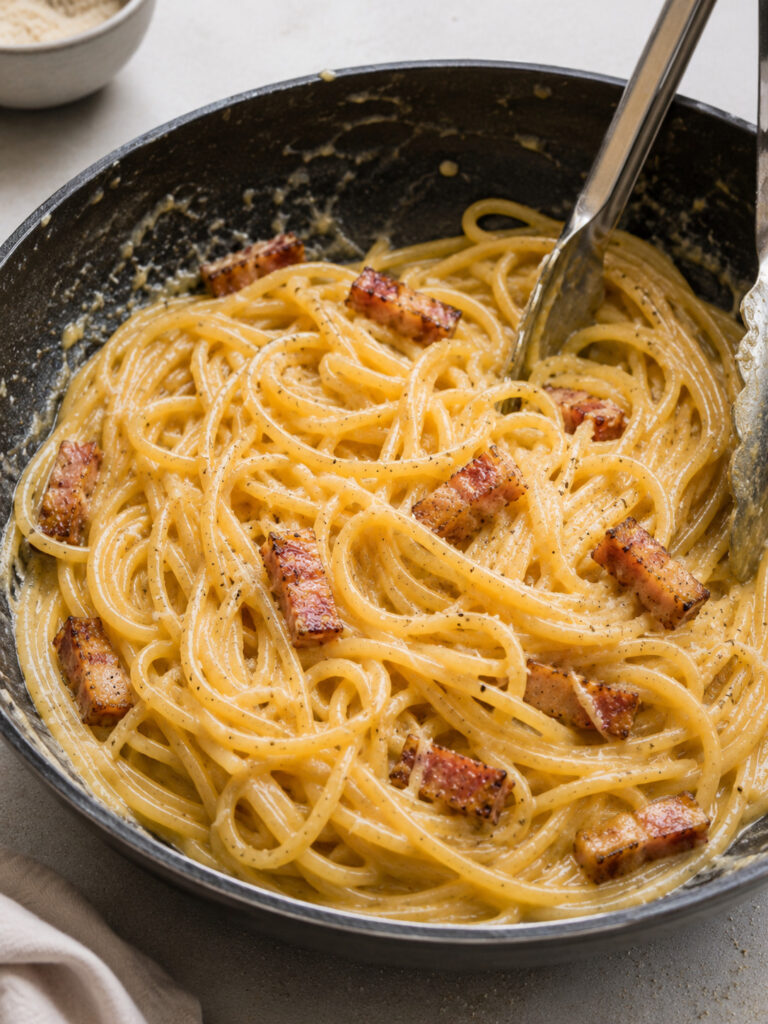
Spaghetti carbonara is one of those dishes that feels luxurious while staying beautifully minimal. The flavor is deep and savory, with salty cured pork, sharp Pecorino Romano, and a warm hit of black pepper that lifts every bite. The sauce has a soft, glossy cling rather than a heavy blanket, so the pasta still feels lively and springy. That contrast is a big part of the appeal: silky strands, crisp-edged pork, and a finish that’s rich without turning stodgy.
It’s a perfect dinner for nights when you want something impressive from a short ingredient list. The ingredient lineup is famously spare: spaghetti, eggs, hard sheep’s-milk cheese, cured pork, black pepper, and pasta water. In the classic Roman style, guanciale brings the deepest pork flavor, though pancetta is the easiest everyday substitute.
Pecorino Romano adds the salty, tangy backbone, while egg yolks give the sauce its lush body. No cream belongs here; the creaminess comes from the emulsion of egg, cheese, rendered pork fat, and starchy water. That’s why carbonara feels both comforting and surprisingly precise. It’s beloved because every element pulls hard in the same direction: salty, peppery, glossy, and deeply satisfying, with just enough bite and brightness to keep you reaching for another forkful.
What to Serve With: A bitter green salad with lemony dressing is a great match because it cuts through the richness without fighting the peppery finish. Roasted asparagus, simple sautéed greens, or warm crusty bread also work well. For drinks, crisp sparkling water or a dry white wine keeps the meal balanced.
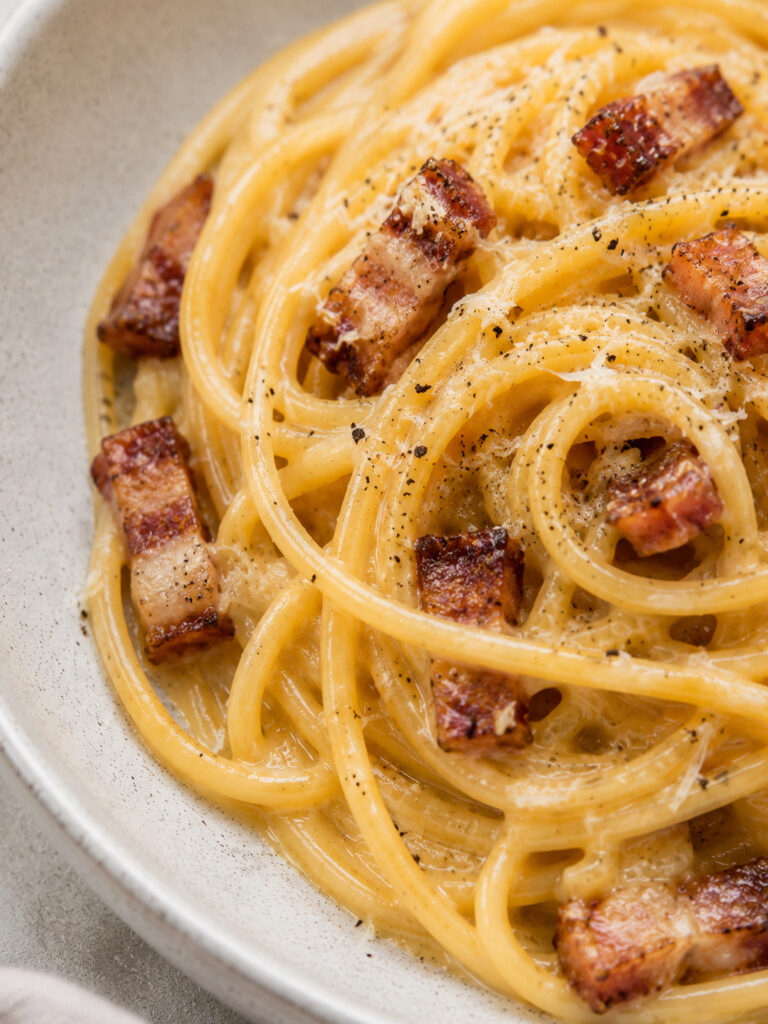
Table of contents
Spaghetti Carbonara Ingredients
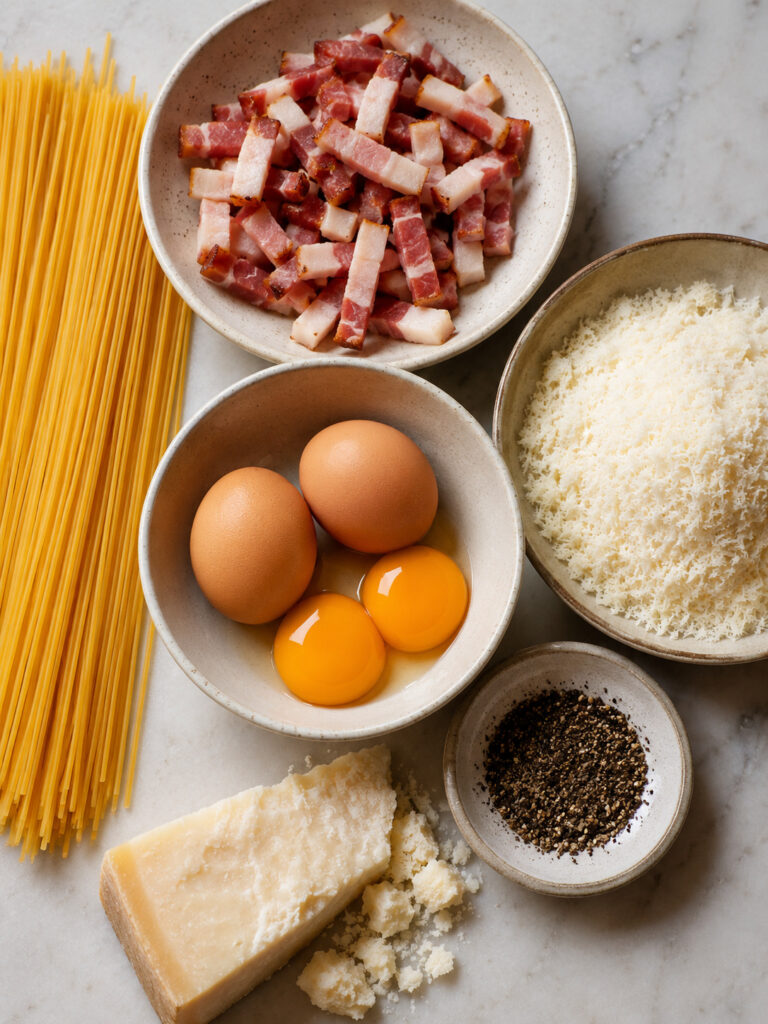
Guanciale – This is the traditional cured pork for carbonara, and it has a rich, sweet-fatty flavor that’s fuller than pancetta. Look for thick slices with a good balance of meat and creamy fat. The final dish tastes deeper and more rounded with guanciale, while pancetta gives a slightly cleaner, less intense pork note.
Pecorino Romano – Use finely grated Pecorino Romano, not thick shreds. Its salty, tangy sheep’s-milk flavor gives carbonara its signature edge. Parmesan can stand in, but the sauce will taste milder and less punchy.
Eggs – A mix of whole eggs and yolks gives a sauce that’s silky and stable, with enough richness to feel lush but not overly dense. Fresh eggs matter here because their flavor stays front and center. Pasteurized shell eggs are a practical choice if you want extra reassurance.
Black pepper – Freshly cracked black pepper is more than a garnish here; it’s one of the main flavors. Coarser grinding gives little bursts of heat and aroma throughout the sauce. Pre-ground pepper tends to taste flatter and less fragrant.
Spaghetti – Classic spaghetti gives that signature draped, glossy look. Bronze-cut dried spaghetti usually holds the sauce a little better because of its rougher surface. A very smooth pasta still works, but the coating feels slightly more slippery.
Storage
Fridge – Cool promptly, refrigerate within 2 hours, and eat within 3 to 4 days.
Freezer – Freeze for up to 3 months for safety, though the sauce will lose some of its silky texture after thawing.
Reheat – Warm gently in a skillet over low heat with a small splash of water until loosened and hot; for full food-safety guidance, leftovers should reach 165°F / 74°C.
Allergens & Substitutions
Contains: eggs, milk, wheat, pork
Guanciale: Pancetta is the closest swap at 1:1 by weight. Bacon works in a pinch, but use 3 oz / 85 g and expect a smokier, saltier result.
Pecorino Romano: Parmesan can replace it at 1:1 by weight. The sauce will be less sharp and a little more buttery in flavor.
Spaghetti: Rigatoni or tonnarelli can replace it at 12 oz / 340 g. Short pasta gives a more chunky, fork-and-bowl feel, while long pasta keeps the classic silky drape.
Eggs: Pasteurized shell eggs are a good option if you want extra reassurance. A fully egg-free substitute needs a different formula, not a direct swap.
Spaghetti Carbonara
- Total Time: 25 min
- Yield: 4 servings
Description
Spaghetti carbonara is a Roman pasta classic with a glossy egg-and-cheese sauce, crisp bites of cured pork, and plenty of black pepper. The silky texture comes from residual heat and starchy pasta water rather than cream, which keeps the sauce rich but still elegant.
Ingredients
🥓🍝 Pork & Pasta
- 4 oz / 115 g – guanciale (or pancetta/bacon), cut into short strips or small batons
- 12 oz / 340 g – dried spaghetti
🧀 Egg & Cheese
- 2 large eggs
- 2 large egg yolks
- 1 cup / 85 g – finely grated Pecorino Romano
- 1½ tsp / 3 g – freshly cracked black pepper, plus more for serving
Instructions
Build the base
- Bring a large pot of water to a boil. Salt it lightly rather than aggressively, since the cheese and pork already bring plenty of salt.
- Put the guanciale in a large skillet over medium-low heat. Cook for 6 to 8 minutes, stirring now and then, until the fat is rendered and the edges are crisp but not dark.
- In a medium bowl, whisk together the eggs, yolks, Pecorino Romano, and 1 tsp / 2 g of the black pepper until you have a thick paste.
Cook the pasta
- Add the spaghetti to the boiling water and cook until 1 minute shy of al dente, usually 8 to 10 minutes depending on the brand. Scoop out 1 cup / 240 ml pasta water before draining.
- Transfer the drained spaghetti straight to the skillet with the rendered guanciale and its fat. Toss for 20 to 30 seconds so every strand gets coated.
Finish the carbonara
- Take the skillet completely off the heat. Let it sit for about 15 seconds so the pan is still very hot but no longer fiercely sizzling.
- Add ¼ cup / 60 ml of the reserved pasta water and toss well.
- Add the egg-and-cheese mixture and toss quickly and constantly with tongs for 1 to 2 minutes. Add more pasta water, 1 tbsp / 15 ml at a time, until the sauce loosens into a glossy coating that clings to the pasta in a silky ribbon. The sauce should look shiny and fluid, not wet at the bottom of the pan and not curdled in little bits.
- Taste and add the remaining ½ tsp / 1 g black pepper if you want a stronger pepper bite.
- Serve immediately with extra Pecorino Romano and more black pepper on top. Success looks like glossy strands, crisp-edged pork, and a sauce that hugs the pasta without scrambling or pooling.
Notes
- Reserve a little more pasta water than you think you’ll need, because carbonara texture can change fast in the last minute.
- Take the eggs and cheese out a bit ahead of time so the mixture isn’t fridge-cold when it meets the pasta.
- Warm your serving bowls if you can, because the sauce stays glossy longer instead of tightening on contact.
- Use tongs, not a spoon, so you can lift and toss fast enough to build that smooth emulsion.
- Bloom some of the black pepper in the rendered pork fat for a few seconds to make the peppery aroma deeper and rounder.
- Taste only after the final toss, because the salt from the cheese and pork shows up more clearly once the sauce settles.
- Serve right away, since carbonara is at its silkiest the moment the sauce finishes.
- Prep Time: 10 min
- Cook Time: 15 min
- Cuisine: Italian
Nutrition & Dietary Information
Nutrition Facts
Low carb | ❌ |
Keto | ❌ |
High Protein | ✅ |
Gluten free | ❌ |
Low sugar | ✅ |
Dairy-free / Lactose free | ❌ |
Vegetarian | ❌ |
Vegan | ❌ |
Low sodium | ❌ |
Low Fat | ❌ |
Paleo | ❌ |
Pescatarian | ❌ |
Nut Free | ✅ |
Egg Free | ❌ |
Soy Free | ✅ |
Sesame free | ✅ |
Nutrition information is an estimate and may vary based on ingredients, brands, and portion sizes. This information is not intended as medical advice. For medical or dietary needs, calculate with your specific ingredients and consult a professional.
Diet-Friendly Swaps
Gluten Free: Use a certified gluten-free spaghetti that cooks to a springy al dente texture.
Vegetarian: Swap the guanciale for deeply browned mushrooms cooked until concentrated and savory.
Dairy/Lactose Free: Use a dairy-free hard cheese alternative or a lactose-free aged grating cheese, knowing the flavor will shift.
Low Carb: Use a low-carb noodle or a vegetable noodle base, then keep the sauce amount generous.
Pesceterian: Replace the pork with crisped seafood-friendly salty accents, such as well-drained tinned fish or bottarga, for a different but still savory direction.
Common Problems & Fixes
Likely cause: The pan or pasta was still too hot when the egg mixture went in, or the pasta wasn’t tossed quickly enough.
Fix: Pull the pan fully off the heat, wait a few seconds, then toss constantly while adding a splash of pasta water to gently bring the sauce together.
Likely cause: There wasn’t enough starchy pasta water to loosen the egg-and-cheese mixture.
Fix: Add reserved pasta water 1 tablespoon at a time while tossing until the sauce loosens into a shiny coating.
Likely cause: Too much pasta water went in before the emulsion had a chance to form.
Fix: Keep tossing off heat for a little longer so the sauce can tighten around the pasta, and next time add the water in smaller splashes.
Likely cause: The pork and Pecorino already bring a lot of salt, and the pasta water may have been salted like standard pasta water.
Fix: Salt the pasta water lightly, then taste only after tossing before deciding whether it needs anything else.
Likely cause: The cheese was grated too coarsely, or the mixture was too cold and dense when it hit the pasta.
Fix: Use very finely grated cheese and loosen the mixture with a little warm pasta water if it looks too stiff before tossing.
Likely cause: It cooked too fast over high heat before enough fat rendered.
Fix: Start it over medium-low heat and let the fat slowly melt out before the pieces take on color.