
This bright, basil-forward sauce is the Ligurian classic built from basil, pine nuts, garlic, olive oil, Parmigiano Reggiano, and Pecorino. The best home-cook version keeps the mixture cool and slightly textured, so the pesto stays vivid, sweet, and glossy instead of dark or oily.
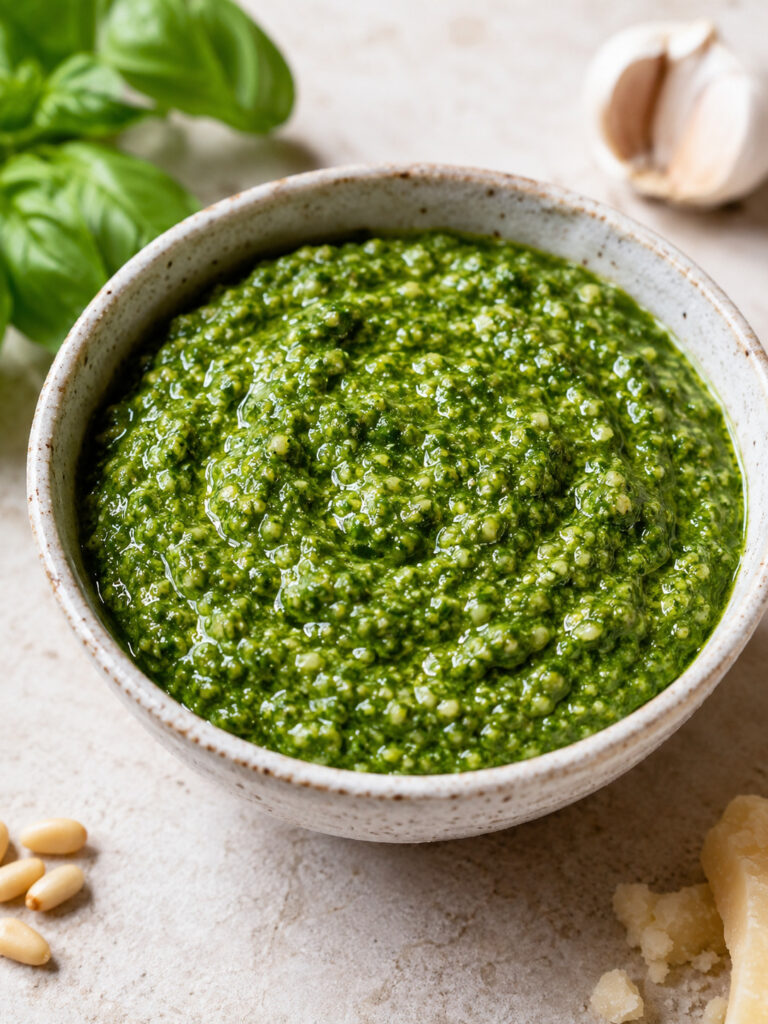
Pesto alla Genovese is one of the most beloved pasta sauces for a reason. It tastes intensely fresh and green from basil, rich and rounded from olive oil, gently warm from garlic, and deeply savory from parmesan and pecorino. Pine nuts give it that soft, buttery texture that makes the sauce feel creamy even though there is no cream in it. A good pesto should look vivid green, smell fragrant the moment it hits warm pasta, and feel lightly textured rather than fully smooth. That little bit of texture is part of what makes it feel homemade and full of character.
This sauce is especially loved with pasta because it coats noodles so well without feeling heavy. It clings beautifully to trofie, trenette, linguine, or gnocchi, and it also works in the classic Ligurian combination with potatoes and green beans. The flavor is rich, but it still feels fresh and lively, which is why it tastes so special with simple pasta dishes. At its core, this is a very short ingredient list, so each part matters: sweet basil, buttery pine nuts, sharp garlic, good olive oil, and a balanced mix of parmesan and pecorino. When those ingredients stay in harmony, the pesto tastes clean, savory, nutty, and unmistakably like the kind of sauce you want tossed straight through hot pasta and eaten right away.
What to Serve With: This is first and foremost a pasta sauce, and it’s especially good with trofie, trenette, linguine, or gnocchi. For a more classic Ligurian-style plate, serve it with pasta plus tender potatoes and green beans. It’s also lovely spooned into minestrone or spread lightly on warm focaccia, but pasta should absolutely be the main pairing here.
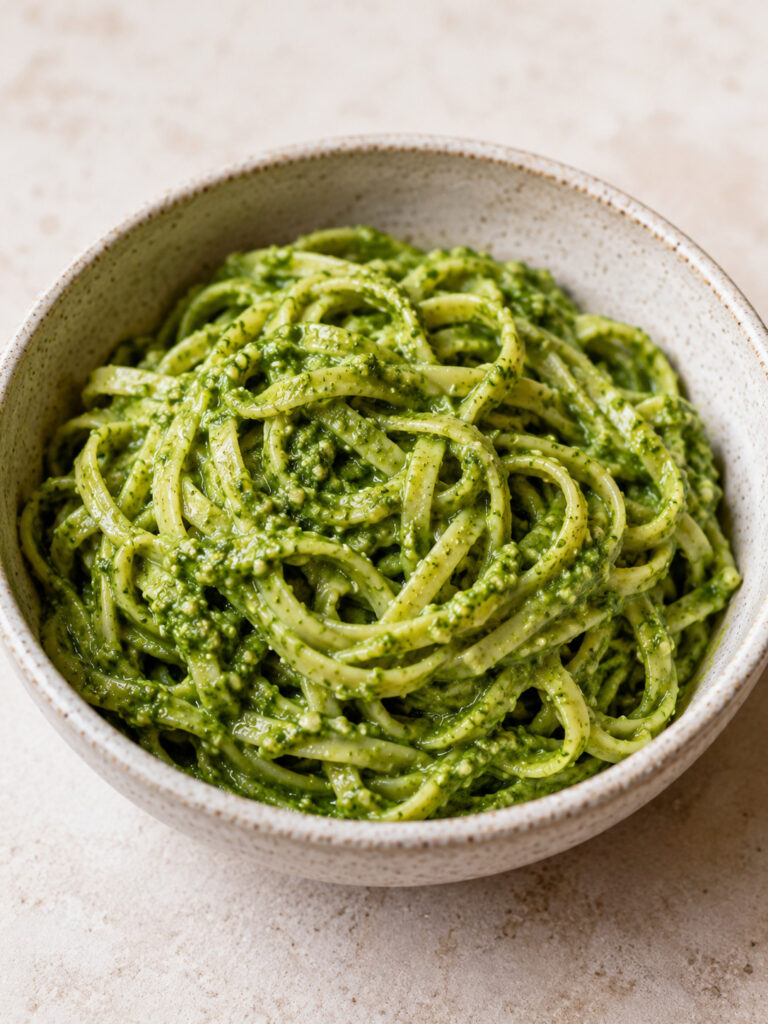
Table of contents
Basil Pesto Ingredients
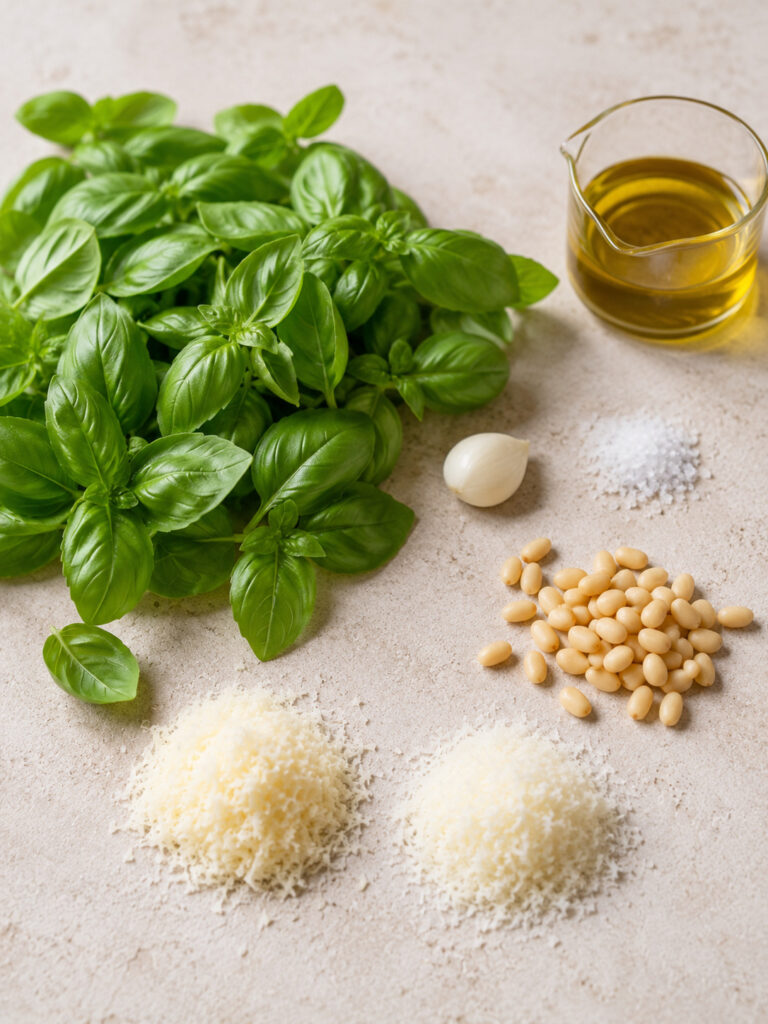
Basil – Look for very fresh, tender leaves with a sweet smell and no black spots. Smaller, younger leaves usually give a softer, sweeter pesto, while larger leaves can taste a little stronger and more peppery in the finished sauce.
Olive oil – A mild, fruity extra-virgin olive oil works best here. Because pesto is uncooked, a very bitter or aggressively peppery oil can take over and make the sauce taste harsher instead of rounded and fresh.
Parmesan and pecorino – This mix gives pesto its classic balance of nutty depth and salty sharpness. Using only parmesan makes the sauce milder and rounder, while more pecorino makes it saltier and a little more assertive.
Pine nuts – Raw pine nuts give the sauce its signature buttery feel. If they taste stale, the pesto will taste flat and slightly bitter, so freshness matters a lot here.
Garlic – One small clove is enough for a balanced pesto. Too much garlic can easily dominate the basil and push the sauce away from that softer, more classic Genovese style.
Storage
Fridge: Store in an airtight container with a thin layer of olive oil on the surface for up to 3 days.
Freezer: Freeze in a tightly sealed container or in small portions for up to 3 months for best quality.
Reheat: Do not simmer. Let chilled pesto lose its fridge chill for a few minutes, then loosen with warm water or pasta water just before serving.
Basil Pesto Variations
- Pasta-ready pesto
Change: Increase the olive oil to 1/2 cup / 120 ml. When serving, loosen with 1/4 to 1/2 cup / 60 to 120 ml warm pasta water instead of just 2 to 4 tbsp / 30 to 60 ml.
Result: A looser, silkier pesto that coats pasta more evenly and feels less dense, especially with linguine or trenette. - Thick pesto for sandwiches and vegetables
Change: Reduce the olive oil to 1/4 cup / 60 ml and increase the parmesan to 1/3 cup / 30 g. Do not thin with water before serving.
Result: A thicker, more concentrated pesto that spreads well on focaccia, holds up better in sandwiches, and works nicely spooned over roasted vegetables. - Walnut basil pesto
Change: Replace the pine nuts with 2 tbsp / 16 g walnuts. Keep the rest of the recipe the same.
Result: Less buttery and more earthy, with a slightly deeper, nuttier flavor. It’s not the classic version, but it’s a useful, more budget-friendly variation with a stronger nut profile.
Fresh Homemade Basil Pesto (Pesto alla Genovese)
- Total Time: 15 min
- Yield: 4 servings
Description
This bright, basil-forward pesto is a classic Ligurian sauce built for pasta, with basil, pine nuts, garlic, olive oil, parmesan, and pecorino. The best home version stays slightly textured and cool while blending, so it keeps its fresh color and sweet, nutty flavor instead of turning dark or oily.
Ingredients
🌿 Basil and aromatics
- 2 packed cups / 50 g – basil leaves
- 1 small – garlic clove
- 1 pinch – coarse salt
🧀 Base
- 2 tbsp / 18 g – pine nuts
- 1/4 cup / 20 g – finely grated parmesan
- 2 tbsp / 10 g – finely grated pecorino
- 1/3 cup / 80 ml – extra-virgin olive oil
Instructions
Prep the basil
-
Pick the basil leaves from the stems. Rinse only if needed, then dry them very well so the pesto stays thick and bright.
-
If your kitchen is warm, chill the processor bowl and olive oil for 10 minutes before starting. This helps keep the pesto greener and fresher-tasting.
-
Grate the parmesan and pecorino finely so they blend in quickly without forcing you to overwork the basil.
-
(Optional) Upgrade: Briefly blanch the basil leaves for a few seconds, shock them in ice water, and dry them extremely well before blending. It softens the raw edge just a little, but it gives you a brighter green pesto that keeps its color longer.
Build the pesto
-
Add the pine nuts, garlic, and salt to the processor and pulse until finely chopped.
-
Add the basil and pulse in short bursts, scraping down as needed, until you have a loose, coarse green mixture. Stop before it turns fully smooth.
-
Add the olive oil in 2 to 3 additions, pulsing briefly between each, until the pesto loosens into a thick, spoonable paste.
Finish and serve
-
Scrape the pesto into a bowl and stir in the parmesan and pecorino by hand.
-
Taste and adjust with another tiny pinch of salt only if needed.
-
To serve with pasta, loosen the pesto with 2 to 4 tbsp / 30 to 60 ml warm water or pasta water until glossy.
-
Toss right away with hot trofie, trenette, linguine, or gnocchi. Success looks like a bright green sauce with a lightly textured finish that clings to the pasta instead of turning oily or watery.
Notes
- Basil bruises fast, so short pulses are kinder than one long blend and help keep the flavor sweeter.
- A cool processor bowl really does help pesto stay greener, especially in a warm kitchen.
- Fresh pesto is usually best a tiny bit thicker than you think, because warm pasta water loosens it quickly.
- Adding the cheese by hand at the end helps protect the basil from over-processing and keeps the texture more lively.
- Taste the pine nuts before using them, because even a slightly stale batch can make the whole pesto taste flat.
- Finely grated cheese disappears into the sauce faster, which means less blending and a fresher basil flavor.
- A very small extra pinch of salt can wake the basil up, but add it carefully because pecorino brings salt fast.
- Pesto is happiest with gentle warmth, not direct heat, so let the pasta carry the heat instead of cooking the sauce.
- Prep Time: 15 min
- Cook Time: 0 min
- Cuisine: Italian
Nutrition & Dietary Information
Nutrition Facts
Low carb | ✅ |
Keto | ✅ |
High Protein | ❌ |
Gluten free | ✅ |
Low sugar | ✅ |
Dairy-free / Lactose free | ❌ |
Vegetarian | ❌ |
Vegan | ❌ |
Low sodium | ✅ |
Low Fat | ❌ |
Paleo | ❌ |
Pescatarian | ✅ |
Nut Free | ❌ |
Egg Free | ✅ |
Soy Free | ✅ |
Sesame free | ✅ |
Nutrition information is an estimate and may vary based on ingredients, brands, and portion sizes. This information is not intended as medical advice. For medical or dietary needs, calculate with your specific ingredients and consult a professional.
Diet-Friendly Swaps
High Protein: Stir in more Parmesan, pair it with a higher-protein base like beans or chicken, or use it as a finishing sauce instead of the main bulk of the dish.
Dairy/Lactose Free: Replace the cheeses with a dairy-free Parmesan-style alternative and keep the rest of the sauce the same.
Vegetarian: Use vegetarian Parmesan-style and pecorino-style cheeses made without animal rennet.
Vegan: Replace both cheeses with vegan hard-cheese alternatives or nutritional yeast plus a small extra pinch of salt.
Paleo: Skip the cheeses and lean on extra pine nuts, garlic, basil, and olive oil for body and savoriness.
Nut Free: Replace the pine nuts with sunflower seeds or pumpkin seeds for a similar texture, even though the flavor will shift a little.
Common Problems & Fixes
Likely cause: The basil stayed wet, the mixture got warm, or it was processed too long.
Fix: Dry the basil very well, keep the bowl and oil cool, and pulse in short bursts instead of running the machine continuously.
Likely cause: The olive oil is too aggressive, the garlic is too strong, or the basil was overworked.
Fix: Use a milder fruity oil, keep the garlic small and balanced, and stop blending while the pesto still has a little texture.
Likely cause: Too much oil sat on top because the basil and nuts were not chopped enough before the oil went in.
Fix: Build the paste first, then add the oil in a few small additions so it has something to bind to.
Likely cause: The basil held onto rinse water, or too much warm water was added when loosening it.
Fix: Dry the basil thoroughly and add any loosening liquid a spoonful at a time until it just turns glossy.
Likely cause: The clove was too large or too raw for the amount of basil.
Fix: Start with a small clove and taste before adding more, because pesto gets punchier as it sits.
Likely cause: The pesto went straight into a very hot pan or was not loosened before tossing.
Fix: Stir in a little warm water first and toss off the direct heat so the sauce stays creamy instead of seizing.