Description
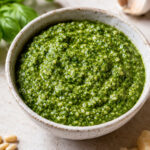
This bright, basil-forward pesto is a classic Ligurian sauce built for pasta, with basil, pine nuts, garlic, olive oil, parmesan, and pecorino. The best home version stays slightly textured and cool while blending, so it keeps its fresh color and sweet, nutty flavor instead of turning dark or oily.
Ingredients
🌿 Basil and aromatics
- 2 packed cups / 50 g – basil leaves
- 1 small – garlic clove
- 1 pinch – coarse salt
🧀 Base
- 2 tbsp / 18 g – pine nuts
- 1/4 cup / 20 g – finely grated parmesan
- 2 tbsp / 10 g – finely grated pecorino
- 1/3 cup / 80 ml – extra-virgin olive oil
Instructions
Prep the basil
-
Pick the basil leaves from the stems. Rinse only if needed, then dry them very well so the pesto stays thick and bright.
-
If your kitchen is warm, chill the processor bowl and olive oil for 10 minutes before starting. This helps keep the pesto greener and fresher-tasting.
-
Grate the parmesan and pecorino finely so they blend in quickly without forcing you to overwork the basil.
-
(Optional) Upgrade: Briefly blanch the basil leaves for a few seconds, shock them in ice water, and dry them extremely well before blending. It softens the raw edge just a little, but it gives you a brighter green pesto that keeps its color longer.
Build the pesto
-
Add the pine nuts, garlic, and salt to the processor and pulse until finely chopped.
-
Add the basil and pulse in short bursts, scraping down as needed, until you have a loose, coarse green mixture. Stop before it turns fully smooth.
-
Add the olive oil in 2 to 3 additions, pulsing briefly between each, until the pesto loosens into a thick, spoonable paste.
Finish and serve
-
Scrape the pesto into a bowl and stir in the parmesan and pecorino by hand.
-
Taste and adjust with another tiny pinch of salt only if needed.
-
To serve with pasta, loosen the pesto with 2 to 4 tbsp / 30 to 60 ml warm water or pasta water until glossy.
-
Toss right away with hot trofie, trenette, linguine, or gnocchi. Success looks like a bright green sauce with a lightly textured finish that clings to the pasta instead of turning oily or watery.
Notes
- Basil bruises fast, so short pulses are kinder than one long blend and help keep the flavor sweeter.
- A cool processor bowl really does help pesto stay greener, especially in a warm kitchen.
- Fresh pesto is usually best a tiny bit thicker than you think, because warm pasta water loosens it quickly.
- Adding the cheese by hand at the end helps protect the basil from over-processing and keeps the texture more lively.
- Taste the pine nuts before using them, because even a slightly stale batch can make the whole pesto taste flat.
- Finely grated cheese disappears into the sauce faster, which means less blending and a fresher basil flavor.
- A very small extra pinch of salt can wake the basil up, but add it carefully because pecorino brings salt fast.
- Pesto is happiest with gentle warmth, not direct heat, so let the pasta carry the heat instead of cooking the sauce.
- Prep Time: 15 min
- Cook Time: 0 min
- Cuisine: Italian