
Tiramisu is a chilled Italian dessert with soft coffee-soaked ladyfingers, a cloudlike mascarpone filling, and a light veil of cocoa. What makes it so special is the contrast: bitter coffee, sweet cream, and a faint cocoa dryness that keeps every bite balanced instead of heavy.
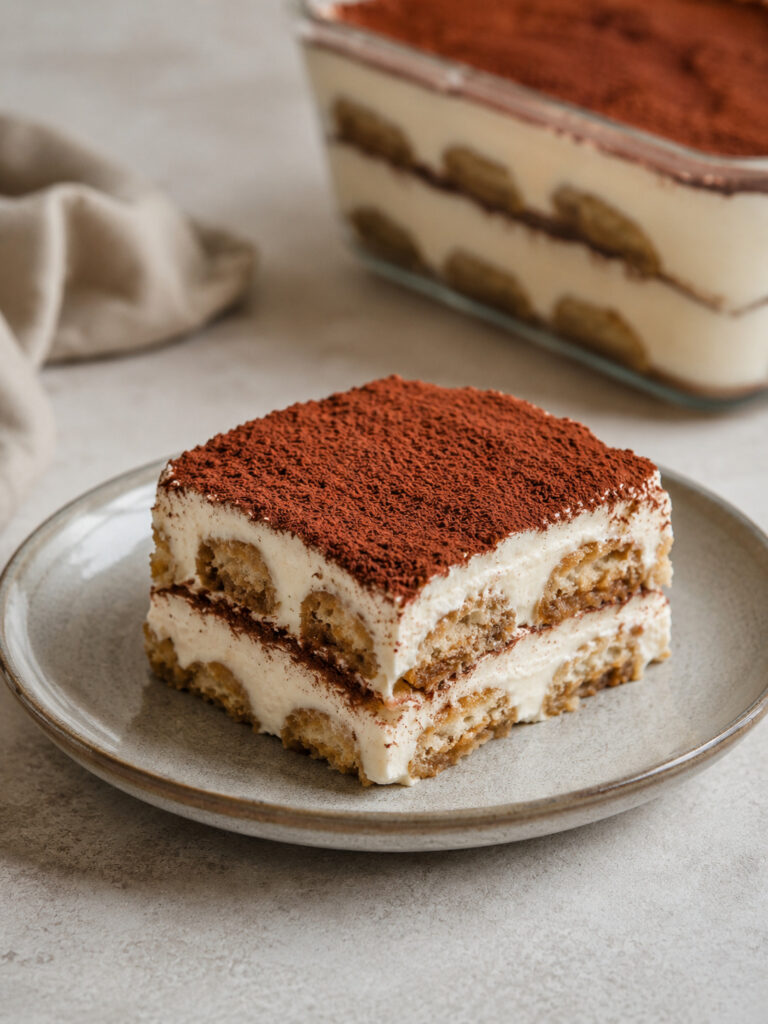
Tiramisu has a way of feeling both luxurious and relaxed at the same time. It’s rich, but not dense. It’s creamy, but not stodgy. Each spoonful gives you tender biscuits perfumed with coffee, a plush mascarpone layer that feels almost mousse-like, and a soft cocoa finish that adds just enough bitterness to sharpen the sweetness. The overall effect is cool, silky, and deeply comforting.
At its heart, this dessert is all about contrast and restraint. Mascarpone brings a mellow dairy richness that tastes buttery without becoming greasy. Coffee gives the dessert its grown-up backbone and keeps the cream from feeling too soft or sweet. Ladyfingers add structure, so the finished tiramisu feels layered rather than pudding-like. Cocoa on top may seem small, but it matters: it gives the final bite that dry, fragrant edge that makes you want another forkful immediately.
It’s also one of those desserts that feels especially welcome after a big meal. Because it’s served cold and cut into soft squares or scooped into loose portions, it lands gently after heavier mains. That’s part of why people love it so much. It’s elegant enough for a dinner party, easy enough for a family table, and familiar enough to please almost everyone. A good tiramisu tastes settled and harmonious, with every layer distinct but fully at ease with the others.
What to Serve With: Tiramisu is best served with something that balances its creamy, sweet texture. Sparkling water, unsweetened black coffee, or decaf coffee all work well because they refresh the palate between bites. If you want a fruit element, a few fresh raspberries or strawberries on the side add brightness without clashing.
Table of contents
Tiramisu Ingredients
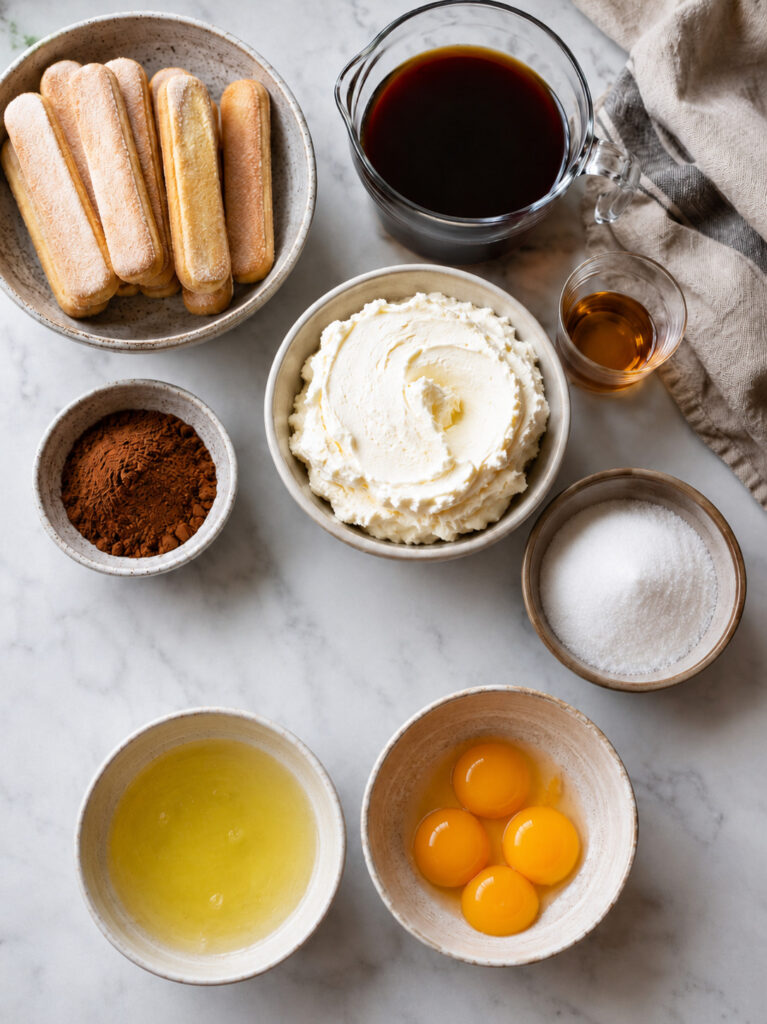
Mascarpone – Use full-fat mascarpone that feels thick, smooth, and cool straight from the fridge. It matters because mascarpone is the main body of the filling, so a rich, stable one gives you that plush, velvety texture tiramisu is known for. Cream cheese is tangier and firmer, so the finished dessert tastes less mellow and less classic.
Ladyfingers – Look for dry, crisp savoiardi rather than soft cake-style ladyfingers. The dry kind matters because they absorb coffee while still keeping some structure, which gives the dessert clean layers instead of a cakey, collapsed middle. Softer biscuits make the tiramisu feel looser and more pudding-like.
Coffee – Strong espresso or very strong brewed coffee gives the clearest, most traditional flavor. It matters because coffee is the dessert’s bitter backbone, balancing the cream and sugar so the whole thing tastes deep rather than merely sweet. Decaf works well if you want the same profile without the caffeine.
Eggs – Pasteurized shell eggs are the best choice for a classic no-bake tiramisu. They matter because the dessert keeps its traditional lightness and silkiness while giving you a safer option than standard raw eggs. Liquid pasteurized egg products can work, but the filling may be a little less airy.
Tiramisu Variations
- Marsala-forward tiramisu
Change: Increase the Marsala to 3 tbsp / 45 ml and reduce the coffee to 1⅓ cups / 315 ml. Keep the rest of the recipe the same.
Result: The dessert tastes warmer and more aromatic, with a rounder finish and a slightly more classic after-dinner feel. - Dark chocolate tiramisu
Change: Add 2 oz / 55 g finely chopped dark chocolate between the two mascarpone layers. Keep the rest of the recipe the same.
Result: You get little bittersweet flecks throughout the dessert, plus a slightly firmer bite and a more dessert-shop feel.
Storage
Fridge – Cover well and refrigerate for up to 3 to 4 days. For the cleanest texture, it’s at its best in the first 2 days.
Freezer – Freeze tightly covered for up to 1 month for best texture, though it will keep safely longer if well wrapped.
Reheat – Do not reheat. Thaw frozen tiramisu in the refrigerator overnight and serve cold.
Allergens & Substitutions
Contains: Dairy, eggs, wheat (gluten)
Eggs: Use pasteurized shell eggs for the closest classic result. For an egg-free version, this needs a dedicated formula rather than a direct swap.
Mascarpone: Full-fat cream cheese changes both flavor and texture, so it is not a clean 1:1 substitute for this recipe.
Ladyfingers: Crisp savoiardi are the right choice here. Soft sponge cake or homemade sponge layers need a dedicated formula rather than a direct swap.
Coffee: Strong decaf coffee works 1:1 and keeps the same overall balance with a gentler finish.
Marsala: Omit it or swap in dark rum 1:1. The dessert will taste a little less winey and a little more direct.
Tiramisu
- Total Time: 25 min
- Yield: 8 servings
Description
Tiramisu is a chilled Italian dessert with soft coffee-soaked ladyfingers, a cloudlike mascarpone filling, and a light veil of cocoa. What makes it so special is the contrast: bitter coffee, sweet cream, and a faint cocoa dryness that keeps every bite balanced instead of heavy.
Ingredients
🥚 Creamy Base
- 4 large eggs, separated
- ½ cup / 100 g granulated sugar
- 16 oz / 450 g mascarpone
☕ Layers & Finish
- 1½ cups / 360 ml strong espresso or very strong coffee, cooled
- 2 tbsp / 30 ml Marsala or dark rum (optional)
- 7 oz / 200 g crisp ladyfingers
- 2 tbsp / 30g sugar
- 2 tbsp / 10 g unsweetened cocoa powder (for the middle and top)
Instructions
Coffee base
- Pour the cooled coffee into a shallow bowl or pie plate and mix with 2 tbsp of sugar. Stir in the Marsala or rum, if using, and set the baking dish nearby.
- Separate the eggs, placing the yolks in one large bowl and the whites in another clean bowl.
Mascarpone filling
- Beat the egg yolks and sugar with a hand mixer on medium-high speed for 3 to 4 minutes, until the mixture looks pale, thick, and softly ribboned.
- Add the mascarpone and mix on low speed just until smooth and fully combined. Stop as soon as the mixture looks creamy and even.
- In the second bowl, beat the egg whites to medium-stiff peaks. When you lift the beaters, the peaks should stand up with a gentle curl at the tip.
- Fold the egg whites into the mascarpone mixture in 3 additions, using a spatula and a light hand, until no large white streaks remain.
Assemble and chill
- Dip half of the ladyfingers into the coffee one at a time, about 1 second per side, then arrange them in a snug single layer in the dish. Break a few as needed to fill gaps.
- Spread half of the mascarpone filling evenly over the ladyfingers, then dust with 1 tbsp / 5 g of the cocoa powder.
- Repeat with the remaining dipped ladyfingers and the remaining mascarpone filling. Cover and chill for at least 6 hours, or overnight for a more settled texture.
- Just before serving, dust the top with the remaining 1 tbsp / 5 g cocoa powder. Success looks like soft, distinct layers that hold their shape when spooned or sliced, with tender biscuits and a cream that feels plush rather than runny.
- (Optional) Upgrade: Mix a little very finely grated dark chocolate into the final cocoa dusting. It gives the top a deeper bittersweet finish and makes the coffee flavor feel a little more dramatic without changing the dessert’s classic feel.
Notes
- Use crisp savoiardi rather than soft cake-style ladyfingers, because they keep the layers cleaner and less pudding-like.
- Let the coffee cool fully before dipping, so the biscuits soften without turning fragile right away.
- Use a clean, grease-free bowl for the whites, because even a little residue can make them whip less reliably.
- Keep the coffee in a wide shallow bowl, which makes quick dipping easier and more even.
- Dust the final cocoa just before serving so the top stays dry-looking and fragrant.
- A fine-mesh sieve gives the cocoa a softer, more even finish instead of dark clumps.
- Wipe the knife between cuts if you want neater squares and cleaner layers.
- Prep Time: 25 min
- Category: Dessert
- Cuisine: Italian
Nutrition & Dietary Information
Nutrition Facts
Low carb | ❌ |
Keto | ❌ |
High Protein | ❌ |
Gluten free | ❌ |
Low sugar | ❌ |
Dairy-free / Lactose free | ❌ |
Vegetarian | ✅ |
Vegan | ❌ |
Low sodium | ✅ |
Low Fat | ❌ |
Paleo | ❌ |
Pescatarian | ✅ |
Nut Free | ✅ |
Egg Free | ❌ |
Soy Free | ✅ |
Sesame free | ✅ |
Nutrition information is an estimate and may vary based on ingredients, brands, and portion sizes. This information is not intended as medical advice. For medical or dietary needs, calculate with your specific ingredients and consult a professional.
Diet-Friendly Swaps
Gluten Free: Use crisp certified gluten-free ladyfingers or a gluten-free sponge baked and dried slightly before layering.
Dairy/Lactose Free: Use a dairy-free mascarpone-style alternative or a lactose-free creamy filling base, knowing the flavor will shift.
Vegan: Use a vegan mascarpone alternative, an egg-free whipped filling, and vegan ladyfingers or sponge.
Low Sugar: Use a reduced-sugar filling and unsweetened coffee, then swap in lower-sugar biscuits if you can find them.
Low Carb: Use a low-carb sponge or biscuit replacement and a sugar substitute that works smoothly in cold desserts.
Keto: Use a keto-friendly sponge, a keto sweetener, and keep the coffee soak unsweetened.
Egg Free: Use an egg-free tiramisu filling formula based on whipped cream or a plant-based alternative rather than trying a direct egg swap.
Paleo: Use a grain-free sponge, a dairy-free filling, and a paleo-friendly sweetener to move it closer to that style.
Common Problems & Fixes
Likely cause: The mascarpone was overmixed, or it sat too warm and lost structure.
Fix: Mix the mascarpone only until smooth, then stop right away and fold the whites in gently so the filling stays plush.
Likely cause: The mascarpone was beaten too hard or too long.
Fix: Add the mascarpone on low speed and stop as soon as it turns creamy and even.
Likely cause: The biscuits soaked too long in the coffee.
Fix: Dip very quickly, then move on, because they keep absorbing moisture after they leave the bowl.
Likely cause: The biscuits were dipped too lightly, or the coffee was too weak.
Fix: Use strong coffee and give each ladyfinger a quick but complete dip so the layers soften evenly.
Likely cause: The whites were under-whipped, over-whipped, or folded in too roughly.
Fix: Aim for medium-stiff peaks with a soft curl, then fold with a light hand just until the white streaks disappear.
Likely cause: It didn’t chill long enough to settle and firm up.
Fix: Give it a full chill until the layers feel set and the filling no longer shifts softly in the dish.